

Discover 15 effective ways to improve online visibility in 2026. Boost your SEO, social media, and ads for rapid growth!
Local Advertising Explained: Boosting Community Growth
Every service business owner knows the challenge of reaching customers who actually live nearby. Local advertising goes beyond simple promotion by focusing your efforts on people in your neighborhood, city, or region who are ready to hire or refer you now. By shaping consumer behavior through strategic communication, you turn awareness into genuine action. This guide clarifies the meaning and importance of local advertising so you can connect with the right customers and grow your reputation where it counts.
Table of Contents
Table of Contents
- Defining Local Advertising And Its Importance
- Types Of Local Advertising Channels
- Digital Versus Traditional Local Campaigns
- Implementing Effective Local Advertising Strategies
- Common Pitfalls And How To Avoid Them
Key Takeaways
| Point | Details |
|---|---|
| Local Advertising Focuses on Specific Regions | Target your advertising efforts to reach customers within your immediate geographic area, increasing the likelihood of engaging potential clients. |
| Builds Community Trust and Awareness | Local marketing fosters stronger relationships within the community, establishing your business as a trusted choice among local residents. |
| Utilize Both Digital and Traditional Channels | Combining digital and traditional advertising strategies allows for a broader reach and more effective targeting of your desired audience. |
| Measure and Adjust Campaigns Continuously | Regularly track the performance of your advertising efforts to identify what works, and optimize your strategy for better results. |
Defining Local Advertising and Its Importance
Local advertising is fundamentally about connecting your service business with customers in your immediate geographic area. Unlike national campaigns that cast a wide net, local advertising focuses your marketing efforts on people within a specific radius of your location, whether that’s your neighborhood, city, or region. This targeted approach means you’re spending money on reaching customers who can actually visit your business, use your services, or refer friends to you.
At its core, advertising shapes consumer behavior through strategic communication designed to influence purchasing decisions. For local service businesses, this translates directly into the customers walking through your door or calling your phone. A plumber in Phoenix doesn’t need to reach someone in Maine, so local advertising allows you to concentrate resources on the market that matters most to your bottom line.
Why Local Advertising Matters for Your Business
The importance of local advertising goes beyond simple visibility. When you market locally, several things happen that national brands can’t achieve as efficiently:
- Direct customer action: People searching for “electrician near me” or “local lawyer” are ready to make a decision right now, not months from now
- Cost efficiency: You’re not paying to reach audiences who can’t use your services
- Community trust: Local advertising builds genuine relationships within your neighborhood and strengthens your reputation where it counts
- Measurable results: You can track which local campaigns bring in actual customers and adjust your spending accordingly
- Competitive advantage: Many service businesses neglect local advertising, giving you space to dominate your market
Consider this: advertising drives economic growth through increased consumer spending while enabling companies to differentiate themselves in competitive markets. For your local service business, this means customers see you as distinct from competitors in your area, understand why they should choose you over others, and feel confident spending money with you.
Local advertising also builds what we call “market presence.” When someone needs a contractor, dentist, or accountant in your area, they think of you first. This mental positioning happens through consistent, strategic local advertising. You’re not just placing ads; you’re establishing your business as the go-to option in your community.
The Real Impact on Growth
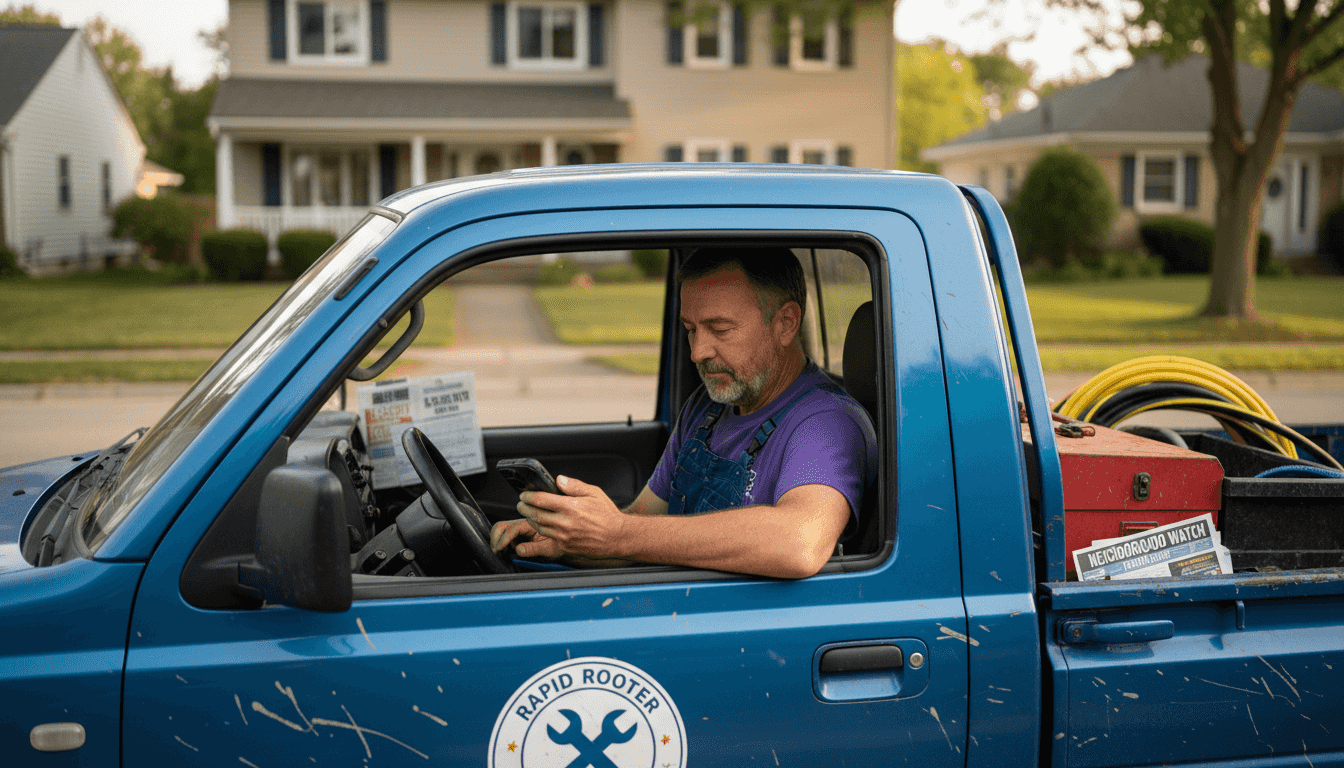
Here’s what many service business owners discover: local advertising directly fuels business growth by connecting you with high-intent customers. Someone searching for your services on Google Maps or seeing your ad on Facebook in their neighborhood isn’t passively browsing. They need what you offer, they’re in your service area, and they’re ready to hire someone.
This is why a guide on getting customers through local business advertising focuses on connecting with these motivated prospects rather than building abstract brand awareness. Every dollar you invest in local advertising should flow toward reaching people who can become paying customers this month, not hypothetically in the future.
The growth cycle works like this: targeted local ads reach nearby customers, those customers hire you, they pay you, and they often refer others in their community. Each successful customer becomes a node in your local network, amplifying your presence without additional advertising spend.
Local advertising isn’t about reaching everyone; it’s about reaching the right people at the right time in your service area.
Pro tip: Start by clearly defining your service area and identifying which neighborhoods or communities bring your most profitable customers, then concentrate your advertising budget on reaching those specific locations rather than spreading thin across a wider region.
Types of Local Advertising Channels
Local service businesses have access to a diverse range of advertising channels, each with its own strengths and audience reach. The key is understanding which channels align with where your potential customers spend their time and attention. Some businesses thrive using traditional methods, while others see better results with digital platforms. Most successful local advertisers use a combination of both.
When selecting channels, you’re essentially deciding how to spend your marketing budget based on coverage, cost, and whether you can reach the right people. Digital advertising channels like social media and search ads offer something traditional media cannot: real-time tracking of who sees your ads and whether they actually respond. This data matters because you can adjust campaigns mid-month if something isn’t working, rather than committing to a full print run or radio campaign.
Digital Advertising Channels
Digital channels dominate local advertising today because they’re cost-effective and measurable. Here’s what’s available to you:
- Google Local Services Ads: These appear at the top of Google search results when someone searches for your service type in your area. You pay per qualified lead, not per impression.
- Google Maps and Google Business Profile: Free to set up, these help you appear when people search nearby on maps or in local pack results.
- Social media advertising: Facebook, Instagram, and TikTok let you target by location, age, interests, and even past customer behavior.
- Search engine marketing (SEM): Paid ads on Google, Bing, and other search engines that appear when people actively search for what you offer.
- Local display ads: Banner ads on local websites, news sites, and community pages that reach people in your service area.
- Local online directories: Platforms like Yelp, Angie’s List, and HomeAdvisor connect you with customers seeking services in your area.
The advantage of digital channels is that you can measure audience targeting precision and adjust campaigns in real time. A contractor can run a Google Ads campaign, see which ad copy brings more calls, pause the underperforming version, and double down on the winner within hours.
Traditional Advertising Channels
Traditional media still works, especially when combined with digital efforts. Many service businesses overlook these because they seem old-fashioned, but local newspapers, radio, and outdoor advertising reach different audience segments.
- Local newspaper ads: Print ads in community papers reach homeowners actively reading news about local topics.
- Radio spots: Local radio reaches commuters and people with established habits in your community.
- Billboards and outdoor signage: Physical ads in high-traffic areas create brand awareness and work well for businesses with consistent locations.
- Direct mail: Postcards and letters to specific neighborhoods can drive phone calls and website visits, especially for home services.
- Local magazines: Community publications reach engaged readers interested in local businesses and recommendations.
Traditional channels work best when you have a stable budget and want broad visibility. You can’t measure immediate response as easily as with digital, but they build brand recognition over time.
Integrated Channel Strategy
The most effective approach combines multiple channels based on your target audience. Someone in their sixties might ignore your Facebook ad but respond to a direct mail postcard. A homeowner in their thirties probably finds you through Google search. A property manager might see your billboard during their commute.
Consider examples of online advertising approaches used by local businesses to understand how successful companies layer different channels. You might run Google Ads for immediate customer acquisition while building a radio presence for long-term brand awareness. The key is not spreading yourself too thin.
The best channel isn’t about what’s trendy; it’s about where your customers are looking when they need your service.
Pro tip: Start with one or two channels where you can commit consistent budget for at least three months, measure results carefully, then expand to additional channels only after proving ROI on your initial choices.
Digital Versus Traditional Local Campaigns
The debate between digital and traditional advertising doesn’t have a clear winner anymore. What works depends on your specific market, budget, and the customers you’re trying to reach. The reality is that traditional advertising still breaks through digital clutter and reaches broader audiences, while digital campaigns offer precision targeting and real-time measurement. Many service businesses thrive by using both.
Here’s what you need to know: traditional channels include TV, radio, print, and outdoor advertising. Digital channels encompass social media, search engines, email, and online directories. Each has distinct cost structures, reach capabilities, and measurement options. The question isn’t which is better, but which is right for your situation.
Strengths and Weaknesses of Each Approach
Digital campaigns deliver precision and speed.
- Targeting precision: You can show ads only to people within a specific zip code, age range, income level, or search behavior
- Real-time adjustments: Change ad copy, pause underperforming ads, and increase spending on winners within hours
- Measurable results: Track exactly how many people saw your ad, clicked it, called your number, or visited your website
- Lower cost per impression: You typically pay less to reach 1,000 people digitally than through traditional media
- Speed to market: Launch a campaign in days, not weeks
Traditional campaigns build broad awareness and cut through noise.
Here’s a comparison of digital and traditional advertising channels for local service businesses:
| Aspect | Digital Channels | Traditional Channels |
|---|---|---|
| Targeting Ability | Highly specific (zip code, age, interests) | Broad, based on media coverage area |
| Measurement Speed | Real-time data and analytics | Delayed or estimated reach |
| Cost Structure | Pay per click/lead/impression | Pay per placement or duration |
| Adaptability | Instant changes possible | Changes require new placements |
| Suited For | Immediate lead generation | Broad awareness and brand recall |
- Broad reach: A radio spot reaches everyone listening in your area, not just people matching specific criteria
- Less clutter: A billboard doesn’t compete with thousands of other ads the way a Facebook feed does
- Trusted medium: Many people still trust print newspapers, radio DJs, and established local media more than digital platforms
- Tangible presence: Direct mail and print ads create physical touchpoints people hold and remember
- Less dependent on privacy data: Traditional media doesn’t rely on personal data collection, making it less vulnerable to regulation changes
Why Privacy Changes Are Shifting the Balance
Recently, Apple’s privacy updates and Google’s movement away from third-party cookies have made digital targeting less precise than it once was. This sounds technical, but it matters to your wallet. Targeting used to mean showing ads only to homeowners in a specific neighborhood who searched for “roof repair” last week. Now that data collection is restricted, some digital campaigns cost more to reach the same person.
This shift is actually driving marketers back to traditional channels. If you can’t precisely target digitally anyway, a billboard in a high-traffic area or a direct mail piece to a specific neighborhood might deliver better returns than a digital campaign.
The Integrated Approach Works Best
Successful local advertisers combine both strategies. Here’s how it works in practice:
You might run Google Ads to capture people actively searching for your service right now (digital precision). At the same time, you maintain a radio presence or billboard in your service area to build brand awareness among people not actively searching yet (traditional reach). This combination means you’re getting immediate customers through digital while building long-term visibility through traditional channels.
Consider your customer journey. A homeowner might see your billboard while driving to work (traditional), then two weeks later when their roof leaks, they search Google for a contractor and find your paid ad (digital). Both touchpoints worked together to make the sale.
Deciding Which Approach for Your Budget
If your budget is under five hundred dollars monthly, focus on digital. You’ll reach more people and measure results better. If you have one thousand to two thousand dollars monthly, split between digital for immediate leads and one traditional channel like direct mail or radio. With larger budgets, layer multiple channels in both categories.
The key metric isn’t which channel brings the most clicks. It’s which channels bring the most profitable customers. A fifty-dollar radio ad that generates three roof repair jobs pays better than a five-hundred-dollar digital campaign that generates two.
The best advertising approach isn’t the trendiest channel; it’s the one that reaches your target customers where they are, at a cost that lets you profit from the sales it generates.
Pro tip: Test one digital channel and one traditional channel simultaneously for 60 days, track which customers come from each source, then double your budget in the channel that delivered profitable customers at the lowest cost per acquisition.
Implementing Effective Local Advertising Strategies
Knowing what local advertising is and which channels exist doesn’t automatically translate into results. You need a structured approach that moves you from planning to execution to measurement. The difference between a business owner who wastes money on ads and one who builds a profitable advertising engine comes down to following a clear strategy.
Effective local advertising requires defining clear objectives, selecting appropriate media channels, crafting compelling messages, and budgeting effectively. This isn’t complicated, but it does require intentionality. You need to know what you’re trying to achieve, how much you’re willing to spend, and how you’ll measure whether it worked. Without these foundations, you’re essentially throwing money at channels and hoping something sticks.
Step One: Define Your Objectives and Target Audience
Start by answering one question: What exactly do you want your advertising to accomplish? “Get more customers” is a start, but it’s too vague. Get specific.
- Lead generation: Attract phone calls, form submissions, or appointment requests
- Location traffic: Get people to visit your physical location
- Service-specific awareness: Make people in your area know you offer a specific service they might need
- Reputation building: Establish yourself as the trusted provider in your community
- Customer retention: Keep existing customers engaged and likely to refer
Once you’ve defined your objective, identify your target audience with precision. Don’t say “homeowners.” Say “homeowners aged 45 to 65 in zip codes 85001 to 85008 who own homes worth over 300,000 dollars and have searched for roofing services in the past month.” This specificity allows you to choose the right channels and craft messages that resonate.
Your competitive environment matters too. If five other plumbers advertise heavily in your market, you need a different message or channel to stand out. Research what competitors are doing and find gaps.
Step Two: Select Channels Based on Your Audience
Now that you know who you’re targeting and what you want to achieve, match that to channels where those people actually are. A 65-year-old homeowner probably won’t see your TikTok ad, no matter how well-targeted. But they might see a Facebook ad or a billboard.
Consider audience behavior:
- Emergency service seekers: Use Google Local Services Ads and Google Maps to capture people searching right now
- Neighborhood-specific targeting: Use direct mail, local radio, or billboards to reach people in specific zip codes
- Younger demographics: Facebook and Instagram deliver better results
- Established businesses seeking service: LinkedIn or industry-specific directories work better
- Cost-conscious customers: Coupon-based ads on Google or Yelp attract deal hunters
Multi-channel integration across digital and traditional platforms enhances engagement and conversion by reaching audiences through multiple touchpoints. This doesn’t mean use every channel. It means if you’re serious about local growth, use at least two channels that complement each other.
Step Three: Craft Your Message and Set Your Budget
Your advertising message should answer one question from your customer’s perspective: “Why should I hire you instead of someone else?” Not “we’ve been in business for 20 years” or “we offer quality work.” Every contractor says that. What’s actually different about you?
Maybe you’re the only plumber offering same-day emergency service. Maybe you provide a written guarantee others don’t. Maybe you’ve never had a complaint in your local Better Business Bureau listing. Lead with your actual competitive advantage.
For budgeting, follow this rule: commit enough money to test properly. If you allocate only fifty dollars monthly to a digital campaign, you won’t generate enough data to know if it works. Budget at least two hundred to five hundred dollars monthly per channel for 60 to 90 days. This gives you enough volume to see patterns and make informed decisions about scaling.
Step Four: Measure and Optimize
This is where most local advertisers fail. They launch a campaign, run it for a month, then either kill it or keep running it without checking results. Instead, track everything.
For digital ads, use:
- Click-through rates
- Cost per lead
- Phone call volume and duration
- Website form submissions
- Cost per conversion
For traditional ads, use:
- Coupon code redemption rates
- Asking customers “How did you hear about us?”
- Tracking phone numbers specific to each campaign
- Comparing sales volume before and after launching the campaign
Rapid experimentation and testing improve campaign efficiency and return on investment in local markets. If one ad creative underperforms, swap it for a new version within weeks. If a channel isn’t generating profitable leads, pause it and reallocate budget to what works.
Many service business owners discover that one channel delivers customers at a much lower cost than others. Once you identify that winner, scale it before testing new channels.
The businesses that win at local advertising aren’t the ones with the biggest budgets. They’re the ones that measure results, adjust quickly, and keep more money in the channel that works.
Pro tip: Create a simple spreadsheet tracking which channel each customer came from and what they spent, then review it monthly to see which channels deliver the most profitable customers, and concentrate your budget there for the next 90 days.
Below is a summary of key steps to implement an effective local advertising strategy:
| Step | Description | Why It Matters |
|---|---|---|
| Define Objectives | Set clear, measurable goals | Guides channel and budget choices |
| Identify Audience | Specify demographics and location | Maximizes relevance and ROI |
| Select Channels | Match audience to best platforms | Improves campaign effectiveness |
| Craft Message | Highlight unique value propositions | Increases response rates |
| Set Budget | Allocate enough for testing | Ensures meaningful results |
| Measure Results | Track and analyze each channel | Drives continuous improvement |
Common Pitfalls and How to Avoid Them
Most local service businesses don’t fail at advertising because they pick the wrong channel. They fail because they make preventable mistakes that drain budgets and damage reputation. Understanding these pitfalls before you launch saves time, money, and frustration. The good news is that once you know what to avoid, you can sidestep these traps entirely.
Common mistakes include poor audience targeting, confusing or cluttered messages, unclear objectives, and running ads without checking whether they work. These aren’t accidents. They happen when business owners rush into advertising without planning. Poor targeting, message clutter, and lack of clear objectives lead to wasted spending and missed opportunities. The fix is straightforward: invest time upfront in planning so you don’t waste money during execution.
Pitfall One: Targeting Everyone Instead of Someone Specific
This is the most common mistake. A business owner thinks “Anyone who needs my service is a potential customer,” so they run ads with minimal targeting. The result is paying to reach people who will never hire you.
Here’s what this looks like in practice:
- You run a Facebook ad to “everyone in your city” instead of homeowners aged 35 to 65
- You advertise on Google without geographic restrictions, reaching people hundreds of miles away
- Your direct mail campaign goes to every residential address instead of neighborhoods where your existing customers live
- You use broad keywords on Google Ads like “service” instead of “emergency plumbing service in Phoenix”
This wastes money because you’re paying to reach people outside your service area or who don’t match your ideal customer profile. A young renter in an apartment won’t hire your roofing company. Someone who bought their home two years ago and recently had foundation work done probably doesn’t need foundation repair again.
The fix is specificity. Define exactly who your best customers are: their age range, home value, location, and what problem they’re currently facing. Then target only those people. You’ll spend less and get better results.
Pitfall Two: Confusing or Generic Messaging
Your ad reaches the right person, but they scroll past because your message doesn’t stand out or makes no sense. This happens when businesses try to appeal to everyone with generic statements.
Generic messages that don’t work:
- “Quality service at competitive prices”
- “Professional and reliable”
- “We’ve been in business for 25 years”
- “Serving the community since 1998”
Every competitor says the same thing. Your ad disappears into noise. Instead, lead with something specific that actually solves a problem or addresses a concern.
Strong local advertising messages:
- “Same-day emergency plumbing or your money back”
- “Licensed electrician. No service call charge if you hire us.”
- “Roofing contractor with zero complaints on Better Business Bureau”
- “Property manager approved. Rent-ready in 48 hours or we refund 50 percent.”
These work because they’re specific, they address actual customer concerns, and they differentiate you from competitors. Craft your message around what you actually do differently, not generic claims everyone makes.
Pitfall Three: Insufficient Budget or Wrong Budget Allocation
You run a digital ad for one week with a fifty-dollar budget, see no results, and declare that channel doesn’t work. The problem isn’t the channel. You didn’t spend enough to generate meaningful data.
To properly test a channel, commit at least two hundred to five hundred dollars monthly for 60 to 90 days. This gives enough volume to see patterns and determine if the channel works for your business. If you allocate only fifty dollars monthly across four channels, no single channel gets tested properly.
Allocate budget strategically:
- Start with one channel where you can commit meaningful budget
- Run it for at least 60 days with two hundred to five hundred dollars monthly
- Track results carefully
- If it works, scale it before testing new channels
- If it doesn’t work, try a different channel with the same budget commitment
This approach prevents the trap of spreading thin across many channels and declaring all of them failures.
Pitfall Four: Ignoring Your Local Community’s Values
This is where many national advertisers stumble when entering new local markets. Cultural insensitivity and failing to respect local customs damages brand reputation and loses customer trust. Your ad might offend people or misrepresent what matters to your community.
Before launching any campaign, research your local market:
- What holidays or events matter most to your community?
- Are there cultural or religious considerations in your messaging?
- What language do residents speak at home?
- What local issues or causes do community members care about?
- Who are respected figures or organizations in your area?
A contractor advertising in a community where recent floods damaged homes should emphasize water damage restoration, not general remodeling. An accountant in a neighborhood with many retirees should mention tax optimization for fixed incomes. This shows you understand your community, not just that you want their money.
Pitfall Five: Never Measuring or Adjusting
You launch a campaign, run it for three months, and never check whether it actually generated customers. This is like driving cross-country without looking at the map. You might end up in the right place, but probably not.
Set up measurement from day one. For digital ads, use built-in analytics. For traditional ads, ask customers “How did you hear about us?” or create campaign-specific phone numbers. Review data weekly and adjust if something isn’t working.
Quick wins often emerge in the first 30 days. Maybe one ad creative generates twice as many clicks as others. Maybe one time of day gets better response rates. Using data-driven insights and testing helps identify issues early and refine campaigns for maximum impact. Make small adjustments based on what you observe, then measure the results of those changes.
The difference between a business that wastes money on advertising and one that builds a profitable system is simply paying attention to what’s working and doing more of it.
Pro tip: Before launching any local advertising campaign, spend two hours researching your community’s values, recent concerns, and what language or messaging resonates locally, then build your ads around that insight rather than generic national messaging.
Unlock Your Local Advertising Potential with Expert Digital Strategies
Struggling to pinpoint exactly where your local advertising budget will have the greatest impact is a common challenge for service businesses. This article highlights the importance of targeting the right community segments, crafting clear messages, and choosing the most effective channels. If you want to avoid wasted spend on broad or ineffective campaigns and instead maximize ROI through precisely tailored ads and measurable results consider exploring proven approaches in PPC & Paid Ad Strategies and Digital Advertising Tips & Strategies. City Web Company specializes in helping local businesses overcome these specific hurdles by deploying targeted digital campaigns combined with strong local SEO practices.

Take control of your local advertising today and see real growth in your community presence. Our team crafts custom marketing solutions built to connect you with high-intent customers exactly when and where they need your services. Don’t let unclear objectives or inefficient ad spending hold your business back. Visit City Web Company Contact now to start building a local advertising strategy that delivers measurable leads and sustainable revenue growth.
Frequently Asked Questions
What is local advertising?
Local advertising involves marketing efforts that focus exclusively on reaching customers within a specific geographic area, promoting businesses that can serve those local audiences directly.
Why is local advertising important for service businesses?
Local advertising is crucial as it connects service businesses directly with high-intent customers in their area, enhances community trust, and leads to measurable results, all while being more cost-efficient than national campaigns.
What types of channels can I use for local advertising?
You can use a combination of digital channels like Google Local Services Ads, social media advertising, and online directories, as well as traditional channels like local newspapers, radio spots, and direct mail to reach your audience effectively.
How do I define my target audience for local advertising?
To define your target audience, specify demographics such as age range, income level, and specific needs, then align your advertising message and channels to match where they are most likely to engage with your ads.
Recommended
- Online Advertising Explained: Boosting Local Business
- Why Choose Local Marketing for Service Businesses
- Local Business Advertising: The Ultimate Guide to Getting Customers – City Web Company | Digital Marketing Agency
- Role of Social Media Ads for Local Service Brands
- 7 beneficios clave del SEO local para tu negocio hoy
These articles were popular with other readers too: