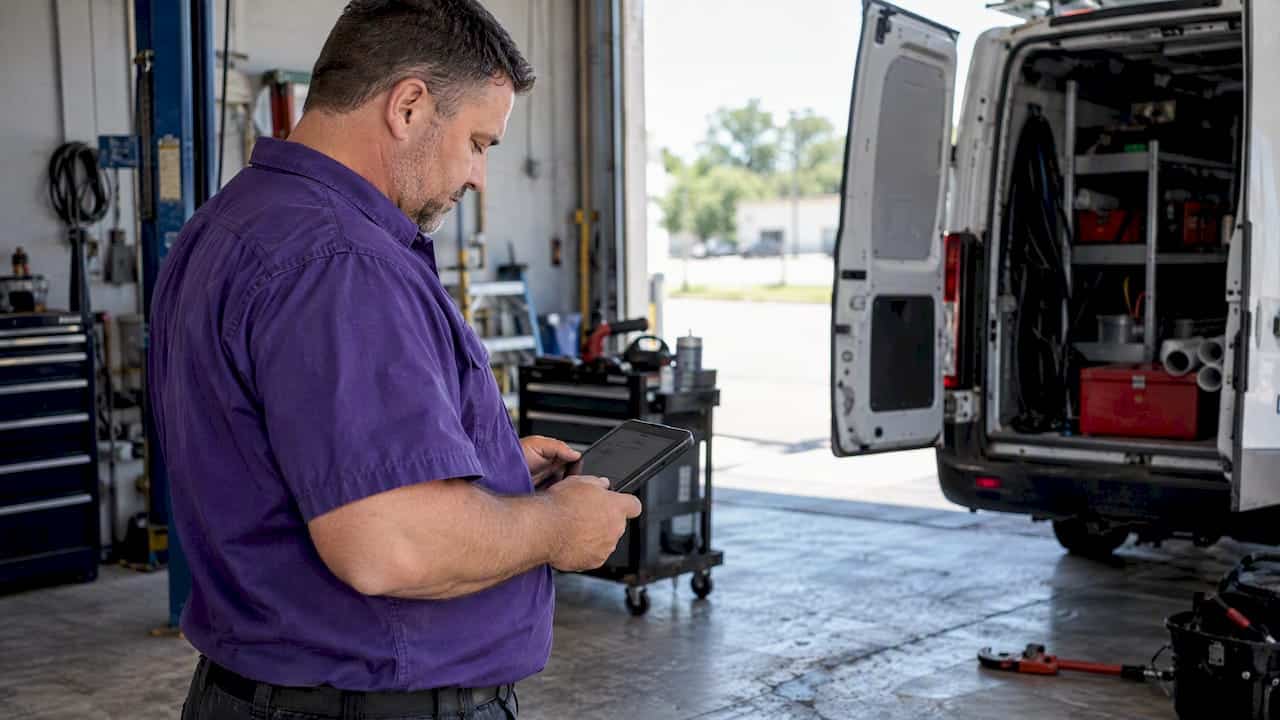

See how plumbers can turn Facebook scrollers into booked jobs with clear offers, local targeting, a 30 day test budget, fast follow up, and a path to scale.
Social Media Tips for Service Providers That Drive Real Growth
The most effective social media tips for service providers come down to three things: post content your local clients actually care about, show up on one or two platforms consistently, and respond fast. Everything else is refinement.
Field service businesses, HVAC companies, landscapers, pest control operators, and home service pros all share the same challenge. You are great at the work, but social media feels like a second job with no clear payoff. The fix is not posting more. It is posting smarter, on the right platforms, with content that builds trust before a prospect ever calls you.
Here is what works in 2026.
Table of Contents
Social media tips for service providers that actually move the needle
The core of any effective social media strategy for a service business is relevance. You are not trying to go viral. You are trying to be the first name a homeowner in your zip code thinks of when their furnace dies in January.
- Focus on one or two platforms where your ideal clients already spend time, rather than spreading thin across five networks with mediocre content on each.
- Post on a consistent schedule even if that means only three times a week. Accounts that stop posting see a measurable drop in reach, while regular posting compounds over time.
- Lead with helpful content, not promotional content. A plumber who posts “three signs your water heater is failing” earns more trust than one who posts “call us today” every week.
- Respond to every comment and message within a few hours. Replying consistently to comments drives up to a 42% performance increase on some platforms.
- Use geo-tags and local references in every post to signal relevance to nearby prospects and local search algorithms.
- Collect and share customer reviews on your profiles. For service businesses, social proof is the single most persuasive piece of content you can publish.
- Track what works using native analytics on each platform. Adjust your content mix based on what generates saves, shares, and direct messages, not just likes.
How to develop a social media content strategy for service businesses
Random posting produces random results. A content strategy gives every post a purpose and keeps you from burning out after three weeks of effort.

Define your audience first
Before you write a single caption, get specific about who you are trying to reach. A residential HVAC company in Phoenix serves a very different audience than a commercial cleaning company in Chicago. Write down the age range, homeownership status, neighborhood, and most common pain points of your best clients. That profile shapes every content decision that follows.
Set SMART goals
SMART goals are Specific, Measurable, Achievable, Relevant, and Time-bound. “Get more followers” is not a goal. “Generate 20 inbound messages per month from Facebook by September 30” is. Service businesses typically benefit most from goals tied to lead generation, booking requests, and review volume rather than vanity metrics like impressions.
Build content pillars
Content pillars are the three to five recurring themes your account covers. For a local service provider, strong pillars usually include:
- Education: How-to tips, maintenance reminders, and seasonal advice your clients genuinely need.
- Social proof: Customer reviews, before-and-after photos, and project spotlights.
- Behind the scenes: Your crew at work, your equipment, your process. This builds familiarity and trust faster than any ad.
- Community: Local events, neighborhood shoutouts, and content that shows you are part of the area you serve.
- Offers and updates: New services, seasonal promotions, and booking availability. Keep this to no more than 20% of your total posts.
Build a content calendar
A content calendar does not need to be complicated. A simple Google Sheet with columns for date, platform, content type, caption, and image works fine. The goal is to plan two to three weeks ahead so you are never scrambling for something to post on a Tuesday morning. Batch your content creation on one day per week and schedule posts in advance using a tool like Buffer or Meta Business Suite.

Pro Tip: Repurpose one piece of content across formats. A customer review becomes a graphic for Instagram, a caption for Facebook, and a highlight for your Google Business Profile. One piece of content, three placements, a fraction of the effort.
Which social media platforms should service providers focus on?
Platform choice is one of the highest-leverage decisions you make. Pick wrong and you spend hours creating content for an audience that will never hire you.
The table below maps the most relevant platforms to the service business use cases where they perform best.
| Platform | Best for | Primary strength |
|---|---|---|
| Local home services, HVAC, plumbing, landscaping | Community groups, local ads, booking, reviews | |
| Visual trades: remodeling, landscaping, cleaning | Before-and-after photos, Reels, local discovery | |
| Google Business Profile | All local service providers | Search visibility, reviews, directions, calls |
| YouTube | Complex services: roofing, restoration, HVAC | Long-form how-to content, trust building |
| B2B services: commercial cleaning, IT, consulting | Professional credibility, referral network | |
| Nextdoor | Hyper-local residential services | Neighborhood recommendations, word of mouth |
Facebook and Instagram lead for most local service businesses
Facebook and Instagram excel as contact channels for local service companies because customers already expect fast replies there and can message, book, or review directly in the app. If you only have bandwidth for one platform, Facebook is the default choice for most residential service providers because of its local group features and the age demographic of homeowners.
Avoid platform fragmentation
Trying to maintain five or more platforms leads to diluted engagement and content that feels rushed on every channel. A pest control company with a sharp, active Facebook presence will out-convert a competitor who posts sporadically across Facebook, Instagram, TikTok, LinkedIn, and Twitter. Depth beats breadth every time for small service teams.
Match the platform to your content type
If your work is highly visual, like landscaping, remodeling, or cleaning, Instagram Reels and before-and-after posts will outperform text-heavy updates. If you serve commercial clients or want to build referral relationships with property managers and contractors, LinkedIn is worth the investment. The best platform is the one where your specific clients already spend time and where your content format fits naturally.
How to engage your audience and build trust on social media
Posting content is only half the job. The other half is showing up in the comments, the inbox, and the review section. That is where buying decisions actually get made.
A post earns visibility. The response layer earns conviction. For a local service business, the comment section and inbox often carry more sales influence than the post itself because that is where prospects check your responsiveness before they book.
- Reply to every comment, even a simple “thanks.” Accounts that reply consistently to comments see up to a 42% performance increase on some platforms.
- Answer direct messages within two hours. Customers who message a local business on Facebook or Instagram expect a fast reply. A slow response is a lost booking.
- Use polls and questions to generate easy engagement. “What’s your biggest home maintenance headache this fall?” costs nothing to post and tells you exactly what content to create next.
- Spotlight your customers. Share their reviews, tag them in project photos (with permission), and celebrate their results. This creates social proof and gives clients a reason to share your content with their own networks.
- Engage with local community content. Comment on neighborhood group posts, share local events, and tag nearby businesses when relevant. This builds your local presence beyond your own followers.
Build a response system around customer intent
Intent-based responses close the loop faster than generic replies. When someone asks about pricing, give the price range or a clear path to a quote. When someone is comparing options, help them understand what sets you apart. When someone is ready to book, give them the direct link. When a complaint is public, acknowledge it calmly and move the resolution to a private channel.
Pro Tip: Set up a saved reply folder in Facebook Messenger and Instagram DMs with your most common responses: service area, pricing range, booking link, and hours. You can personalize the first line and send the rest in seconds. This alone cuts response time in half.
Manage negative feedback professionally
Negative reviews and complaints on social media are public auditions. Every prospect who reads your response is deciding whether they trust you. Respond within 24 hours, acknowledge the issue without being defensive, and offer a clear next step. Never argue in the comments. A well-handled complaint often builds more trust than a page full of five-star reviews with no owner responses.
How to set goals and measure social media success
Without measurement, you are guessing. With the right metrics tracked consistently, you can see exactly which content generates leads and which generates nothing but likes.
Start with the right KPIs for service businesses
Not all metrics matter equally. For a local service provider, the metrics that connect most directly to revenue are:
| KPI | What it measures | Why it matters for service businesses |
|---|---|---|
| Inbound messages | Direct contact from prospects | Most direct signal of lead generation |
| Profile visits | Interest in your business | Indicates awareness and consideration |
| Link clicks | Traffic to booking or contact page | Measures intent to take action |
| Review volume and rating | Social proof quality | Directly influences booking decisions |
| Response time | Speed of replies to messages | Affects customer satisfaction and conversions |
| Reach | How many unique accounts see your posts | Tracks brand awareness growth |
| Engagement rate | Likes, comments, shares per post | Signals content relevance to your audience |
Use native analytics tools
Every major platform provides free analytics. Facebook Insights, Instagram Insights, and LinkedIn Page Analytics all show you who is engaging, when they are most active, and which posts perform best. Check these weekly, not monthly. Patterns emerge faster than most business owners expect, and adjusting your content mix based on real data takes less than 30 minutes a week.
Review and adjust quarterly
Set a calendar reminder every 90 days to review your goals against your actual numbers. Did your inbound messages increase? Did your review count grow? Did your profile visits translate into website traffic? If a content type consistently underperforms, cut it. If a format drives messages every time you post it, do more of it. Social media rewards consistency and adaptation, not perfection.
15 practical social media tips for service providers in 2026
These are the tactics that local and field service businesses are using right now to generate consistent client inquiries without large advertising budgets.
1. Post before-and-after content every week
Before-and-after photos are the single highest-converting content format for visual service businesses. A landscaper’s overgrown yard transformed into a clean, mulched bed. A restoration company’s water-damaged ceiling made whole. These posts stop the scroll and prove your work better than any written description.
2. Use short-form video for process storytelling
Short-form video is the most used content format in 2026, with 60.1% of marketers using it and 48.6% saying it delivers the highest return of any content type. A 30-second Instagram Reel showing your crew arriving, doing the work, and leaving a satisfied customer is more persuasive than a paragraph of copy.
3. Geo-tag every post
Tagging your city, neighborhood, or service area in every post and story puts your content in front of local discovery feeds. For brick-and-mortar and field service businesses, consistent geo-tagging is one of the fastest ways to appear in local search results on Instagram and Facebook.
4. Build a neighborhood-specific content series
Hyperlocal content targeting specific neighborhoods builds immediate relevance and converts local prospects more effectively than generic posts. A pest control company could run a “Neighborhood Spotlight” series covering seasonal pest trends by zip code. A landscaper could post “What’s growing in [Neighborhood Name] this month.” This content is genuinely useful and nearly impossible for a non-local competitor to replicate.
5. Use AI tools to maintain content consistency
AI content tools cut the time required to produce professional-quality posts, letting service professionals maintain a publishing schedule without sacrificing billable work hours. Use AI to draft captions, generate content ideas, and repurpose existing material into new formats. Always edit the output in your own voice before posting.
6. Share customer reviews as graphics
Screenshot or design a graphic from your best Google and Facebook reviews and post them as standalone content. This turns passive social proof into active marketing. Tag the reviewer when possible and add a short caption about the job. These posts consistently generate saves and shares because they feel authentic rather than promotional.
7. Respond to every comment within a few hours
Accounts that reply consistently to comments see up to a 42% performance increase on Threads and 30% on LinkedIn. The same pattern holds across Facebook and Instagram. Responding is not just good customer service. It is one of the strongest signals to platform algorithms that your content deserves wider distribution.
8. Run targeted paid ads for specific services
Paid advertising lets you target prospects by location, interest, and behavior, putting your offer in front of the exact homeowners or business owners most likely to need your service. A roofing company can target homeowners within 15 miles who have shown interest in home improvement. A moving company can target people who have recently indicated a life change. Even a modest daily budget produces measurable results when the targeting is tight and the offer is specific. For a deeper look at how paid ads work for local businesses, City Web Company’s paid advertising guide covers the mechanics clearly.
9. Create a content calendar and schedule posts in advance
Consistency is more important than frequency. Posting three times a week every week beats posting seven times one week and going silent for two. Use a scheduling tool to queue posts in advance so your presence stays steady during your busiest service weeks.
Pro Tip: Batch your content creation on one day per week. Shoot five to seven photos or short videos on a job site, write the captions that evening, and schedule everything for the next two weeks. This system takes about two hours a week and eliminates the daily scramble.
10. Optimize your profile for local search
Your social media bio is searchable. Include your city, service type, and a clear call to action in every profile. “Licensed HVAC contractor serving Denver, CO. Call or message for a free estimate.” This is basic but most service businesses skip it. A complete, keyword-rich profile shows up in both platform search and Google results.
11. Use Facebook and Nextdoor groups
Local Facebook groups and Nextdoor neighborhoods are where homeowners ask for service recommendations. Join the groups in your service area, participate genuinely, and make sure your profile clearly shows what you do. When someone asks for a plumber recommendation, your name comes up because you are already a recognized member of that community.
12. Collect and post video testimonials
Written reviews are good. A 30-second video of a satisfied customer explaining what you fixed and why they would recommend you is better. Ask your best clients to record a quick clip on their phone after a job. Post it with their permission. Video testimonials are among the most trusted forms of social proof available to a local service business.
13. Integrate your Google Business Profile with social media
Your Google Business Profile and your social media accounts should tell the same story. Use the same photos, the same service descriptions, and the same tone. Post your social media content to your Google Business Profile as well. This reinforces your local SEO signals and gives prospects a consistent experience wherever they find you. City Web Company’s Google Business Profile guide walks through the full optimization process.
14. Build an email list from your social media audience
Email marketing remains one of the highest-return strategies for service businesses because it builds a direct, owned audience that no algorithm can cut off. Use your social media posts to drive followers to a simple opt-in offer, a seasonal maintenance checklist, a discount on first service, or a free estimate. Your email list becomes a reliable channel for repeat business and referrals.
15. Track what drives actual inquiries, not just engagement
Likes and follows feel good but they do not pay invoices. Every month, look at which posts generated direct messages, profile visits, or link clicks to your booking page. Those are your best-performing content types. Double down on them and cut the formats that generate passive engagement but no real contact.
Statistic callout: Social accounts that reply consistently to comments see up to a 42% performance increase on some platforms. For a local service business, that lift in algorithmic reach translates directly into more local prospects seeing your content without spending a dollar on ads.
What local digital marketing expertise actually looks like in practice
The gap between a service business that gets consistent leads from social media and one that does not usually comes down to one thing: whether the strategy was built around the business’s actual clients or copied from a generic template.
City Web Company works specifically with local and field service businesses, including HVAC companies, pest control operators, landscapers, moving companies, and disaster restoration firms. The agency’s approach starts with identifying where a client’s best customers actually spend time online, then building content and ad strategies around that behavior rather than around what is trending on social media generally.
That kind of outcome comes from combining local SEO, Google Business Profile optimization, and social media advertising into a single, coordinated strategy. When a prospect searches for your service, finds your Google listing, sees your recent social posts, and reads your reviews, all in one sequence, the trust is built before the first conversation. That is the difference between a business that competes on price and one that competes on reputation.
For service businesses that want to understand how these channels work together, City Web Company’s digital marketing guide for local businesses covers the full picture. The social media marketing agency guide is also worth reading if you are deciding whether to manage social in-house or bring in outside help.
Authenticity consistently outperforms production polish in social media marketing, especially for small service providers working with limited budgets. A phone video of your crew finishing a job, with a genuine caption about the problem you solved, will outperform a polished stock-photo graphic almost every time. Clients hire people they trust, and trust comes from seeing real work done by real people.
Ready to turn your social media into a lead generation channel?
City Web Company helps local service businesses build social media strategies that generate real inquiries, not just followers. From Facebook and Instagram advertising to Google Business Profile optimization and local SEO, the agency handles the digital marketing so you can focus on the work.
Get more local leads with a strategy built specifically for your service area and your clients. City Web Company’s full suite of digital marketing services is designed for exactly the kind of business you run.
Key Takeaways
Consistent engagement and platform focus are the two factors that separate service businesses generating steady leads from social media and those spinning their wheels.
| Point | Details |
|---|---|
| Platform focus beats breadth | Master one or two platforms where your clients are active rather than posting sporadically across five. |
| Replies drive reach | Accounts that reply consistently to comments see up to a 42% performance increase on some platforms. |
| Hyperlocal content converts | Neighborhood-specific posts build immediate relevance and drive inquiries from prospects in your service area. |
| SMART goals guide measurement | Tie social media goals to lead generation and booking requests, not vanity metrics like impressions. |
| Authenticity outperforms polish | Real job photos and genuine captions build more trust than produced graphics, especially on limited budgets. |
FAQ
What is the 5-3-2 rule for social media?
The 5-3-2 rule is a content mix guideline: for every 10 posts, five should be curated content useful to your audience, three should be original content you created, and two should be personal or behind-the-scenes posts. For service providers, this ratio keeps your feed helpful and human rather than purely promotional.
How often should a local service business post on social media?
Posting three to five times per week per platform is a sustainable goal for most small service businesses. Consistency matters more than frequency, so a steady three-day-per-week schedule will outperform a burst of daily posts followed by two weeks of silence.
Which platform works best for home service businesses?
Facebook is the strongest starting point for most residential service providers because of its local group features, built-in review system, and the homeowner demographic that dominates the platform. Instagram is the best complement for visually driven trades like landscaping, remodeling, and cleaning.
How do service providers get leads from social media without paid ads?
Local service professionals generate consistent inquiries through a combination of hyperlocal content, regular posting, fast comment responses, and community group participation. Accounts with a highly engaged local following regularly produce client inquiries when the content is geographically relevant and the owner responds promptly.
How should a service business handle a negative review on social media?
Respond within 24 hours, acknowledge the issue calmly, and offer to resolve it through a private channel such as a phone call or direct message. Never argue publicly. A professional, measured response to a complaint often builds more trust with future prospects than a page of uncontested five-star reviews.
Recommended
These articles were popular with other readers too: