

Pass Google Business verification with a video-first checklist. Film one continuous 30 second take, fix flagged issues, and know when to hire help.
Role of Social Media Ads for Local Service Brands
Local service business owners know how competitive it can be to stand out in your city or region. Finding reliable ways to connect with customers and keep your phones ringing is a constant challenge. By using granular audience segmentation and platform-specific ad tools, you can reach people in your neighborhood with messages that truly matter to them. This guide explains how social media advertising gives you direct control, smarter targeting, and clear options for growing your home service business.
Table of Contents
Table of Contents
- Defining Social Media Ads In Local Marketing
- Major Ad Types And Platform Differences
- Effective Targeting And Audience Segmentation
- Measuring ROI And Key Performance Metrics
- Costs, Budgeting, And Common Pitfalls
- Legal And Platform Compliance Requirements
Key Takeaways
| Point | Details |
|---|---|
| Targeted Advertising | Leverage social media ads for highly targeted marketing based on demographics, location, and user behavior to reach local audiences effectively. |
| Platform-Specific Strategies | Understand the unique advertising capabilities of each social media platform to create tailored content that resonates with distinct user bases. |
| Performance Measurement | Focus on comprehensive tracking of key performance metrics to evaluate ad effectiveness and optimize marketing investment. |
| Budget Management | Develop flexible budgeting strategies that allow for adjustments based on campaign performance and avoid overspending in competitive ad environments. |
Defining Social Media Ads in Local Marketing
Social media advertising represents a targeted digital marketing strategy where local service brands leverage platform-specific tools to reach potential customers within specific geographic regions. These ads combine sophisticated targeting capabilities with visual content to connect businesses directly with local audiences. Strategic digital marketing frameworks demonstrate how social media platforms transform traditional advertising models through precision targeting.
Local service businesses can utilize social media ads through multiple platform-specific approaches:
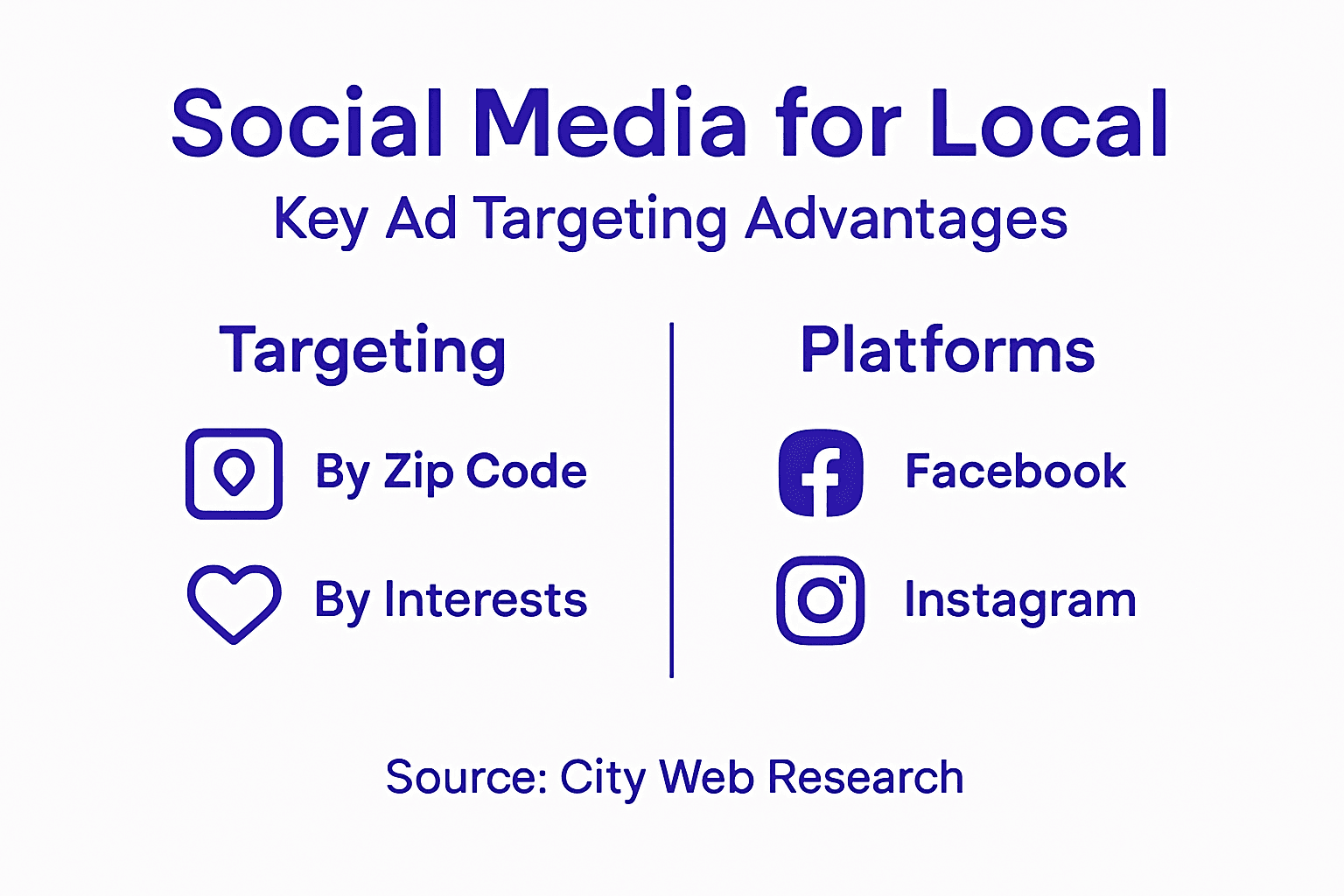
- Demographic targeting by age, location, and interests
- Geographically restricted ad placements
- Custom audience development using customer data
- Retargeting campaigns for previous website visitors
- Budget-controlled spending mechanisms
The core mechanics of social media advertising differ significantly from traditional marketing channels. Unlike broadcast media, these digital platforms allow granular audience segmentation and real-time performance tracking. Local businesses can now reach precisely defined customer segments with minimal financial investment, transforming how small service providers market their offerings.
Digital advertising strategies on social media platforms enable hyper-local targeting that traditional marketing channels cannot match. Social network marketing techniques allow businesses to create ads that speak directly to community-specific needs and preferences, increasing engagement and conversion potential.
Pro tip: Start with small, targeted ad budgets and progressively optimize based on performance metrics to minimize initial financial risk.
Major Ad Types and Platform Differences
Social media advertising encompasses diverse ad types that vary significantly across different digital platforms. Social network advertising frameworks reveal complex interactions between platform algorithms, user behaviors, and ad delivery mechanisms that determine marketing effectiveness for local service brands.
Key social media ad types include:
- Image and video ads: Visual content targeting specific demographics
- Carousel ads: Multiple images or videos in a single ad unit
- Stories ads: Temporary full-screen vertical advertisements
- Sponsored content: Native ads blending with platform’s organic content
- Messenger/Direct message ads: Personalized communication-based promotions
Each social media platform offers unique advertising capabilities tailored to its specific user experience. Facebook provides extensive demographic targeting, Instagram emphasizes visual storytelling, LinkedIn focuses on professional networking, and Twitter enables real-time engagement. Digital communication strategies highlight how these platforms create distinct advertising ecosystems with specialized targeting options.

The fundamental difference between platforms lies in their audience composition, engagement patterns, and technical capabilities. Local service businesses must understand these nuanced variations to craft platform-specific strategies that maximize reach and conversion potential. Some platforms offer hyper-local targeting, while others provide broader regional advertising options.
Here’s how major social media platforms differ for local service advertising:
| Platform | Targeting Strength | Typical Audience | Best For |
|---|---|---|---|
| Advanced demographics | Broad age groups | Community-building ads | |
| Interests and visuals | Millennials, Gen Z | Visual storytelling | |
| Professional filters | Professionals | B2B local services | |
| Real-time engagement | News-seekers | Promotions, quick polls |
Pro tip: Conduct platform-specific audience research and create custom ad content that matches each social media platform’s unique user expectations and interaction styles.
Effective Targeting and Audience Segmentation
Audience segmentation represents a critical strategic approach for local service brands leveraging social media advertising. Strategic content targeting techniques reveal that precise audience definition dramatically improves ad performance and engagement rates for businesses seeking to maximize their marketing investments.
Key audience segmentation strategies include:
- Demographic targeting: Age, income, education level
- Geographic segmentation: Local neighborhoods, zip codes, cities
- Behavioral targeting: Past purchase history, website interactions
- Psychographic segmentation: Lifestyle, interests, values
- Technological proficiency: Device usage, platform preferences
Local service businesses can create more effective marketing campaigns by understanding nuanced audience characteristics. Target audience identification methods demonstrate that successful segmentation goes beyond basic demographics, incorporating complex behavioral and motivational data that reveal deeper consumer insights.
Advanced targeting techniques allow businesses to craft hyper-personalized advertising experiences. By analyzing user interactions, preferences, and historical engagement patterns, local service brands can develop sophisticated audience segments that increase conversion potential and marketing efficiency. The most successful social media ads speak directly to specific audience subgroups, addressing their unique needs and pain points.
Pro tip: Develop detailed customer personas that include not just demographic data, but comprehensive insights into motivations, challenges, and communication preferences.
Measuring ROI and Key Performance Metrics
Return on investment in social media advertising requires comprehensive tracking of multiple performance indicators. Digital marketing performance metrics demonstrate that local service brands must move beyond simple click counting to understand true advertising effectiveness.
Key performance metrics for social media ads include:
- Reach: Total number of unique users who viewed the ad
- Click-through rate (CTR): Percentage of viewers who clicked on the ad
- Conversion rate: Percentage of clicks resulting in desired action
- Cost per acquisition: Total ad spend divided by new customer conversions
- Engagement rate: Likes, shares, comments, and interactions
Social media advertising performance evaluation reveals that calculating ROI involves more than simple financial calculations. Local service businesses must track comprehensive metrics that demonstrate both immediate and long-term marketing impact, considering factors like brand awareness, customer lifetime value, and indirect revenue generation.
Successful ROI measurement requires establishing clear baseline metrics and implementing robust tracking systems. By integrating advanced analytics tools and setting specific, measurable goals, local service brands can develop a nuanced understanding of their social media advertising performance, enabling continuous optimization and strategic refinement.
Below is a summary of key social media ad performance metrics and their business importance:
| Metric | What It Measures | Marketing Implication |
|---|---|---|
| Reach | Unique users exposed | Gauges brand awareness potential |
| Click-through Rate | Engagement with ad | Shows message relevance |
| Conversion Rate | Actions after clicking | Indicates lead or sale effectiveness |
| Cost per Acquisition | Expense per new customer | Reflects campaign efficiency |
Pro tip: Create a dedicated dashboard that tracks multiple performance metrics simultaneously, allowing real-time insights and rapid campaign adjustments.
Costs, Budgeting, and Common Pitfalls
Social media advertising for local service brands requires strategic financial planning and nuanced understanding of platform-specific cost structures. Digital advertising budget dynamics reveal complex economic principles that significantly impact marketing spend and return on investment.
Common budgeting challenges for local service brands include:
- Platform-specific cost variations: Different social media platforms have unique pricing models
- Ad auction complexity: Competitive bidding affecting advertisement costs
- Audience targeting expenses: More precise targeting typically increases per-click costs
- Seasonality impact: Fluctuating advertising rates during peak business periods
- Unexpected budget drain: Hidden fees and algorithm-driven pricing changes
Advertising budget allocation strategies emphasize the importance of establishing clear financial boundaries and performance benchmarks. Local service businesses must develop flexible budgeting approaches that allow rapid reallocation of resources based on real-time performance metrics and emerging market opportunities.
Successful social media advertising requires continuous monitoring and strategic adjustment. Businesses should start with conservative budgets, carefully track performance indicators, and incrementally increase investment only after demonstrating consistent positive outcomes. Understanding the intricate relationship between spending and results helps local service brands maximize their marketing efficiency and minimize financial risks.
Pro tip: Implement a 70-20-10 budget rule where 70% goes to proven advertising channels, 20% to experimental strategies, and 10% to innovative approaches.
Legal and Platform Compliance Requirements
Platform advertising regulations represent a complex landscape of legal requirements that local service brands must carefully navigate. Digital services compliance frameworks outline critical legal standards that govern social media advertising practices across different digital environments.
Key legal compliance requirements include:
- Transparency in advertising: Clear disclosure of sponsored content
- User data protection: Strict handling of personal information
- Age-restricted content controls: Preventing exposure to inappropriate advertisements
- Accurate targeting practices: Avoiding discriminatory ad placement
- Content moderation standards: Adhering to platform-specific guidelines
Digital advertising legal obligations emphasize the importance of understanding platform-specific regulations that vary across different social media networks. Local service brands must develop comprehensive compliance strategies that address nuanced legal requirements, including user consent, data transparency, and ethical targeting practices.
Successful legal compliance requires ongoing education and proactive monitoring of changing regulations. Businesses should establish internal review processes that regularly assess advertising content against current platform guidelines and legal standards. This approach minimizes the risk of potential violations and ensures consistent, responsible marketing practices.
Pro tip: Implement a quarterly legal compliance audit for your social media advertising strategies to stay ahead of regulatory changes and platform policy updates.
Maximize Your Local Reach with Expert Social Media Advertising
Struggling to connect with your local audience through social media ads can be frustrating. Many local service brands face challenges like precise audience targeting, budgeting effectively, and measuring real return on investment. This article highlights essential strategies such as granular audience segmentation, platform-specific content, and data-driven campaign optimization that can transform your advertising efforts into powerful community engagement and lead generation.
Our team at City Web Company specializes in tailored paid media management and digital advertising solutions that help local businesses overcome these exact pain points. Whether you need guidance on creating impactful social media ads, mastering budget allocation, or improving performance tracking we have proven strategies to boost your visibility and conversions. Start exploring effective PPC & Paid Ad Strategies and leverage our insights from Social Media Marketing Tips & Tools to craft campaigns that resonate.
Take control of your local marketing success today. Reach out to the experts who understand the nuances of social media advertising for service brands and get a customized plan designed to increase your leads and sales. Contact City Web Company now at https://citywebcompany.com/contact and transform your social ads into a direct path to growth.
Frequently Asked Questions
What are the main benefits of using social media ads for local service brands?
Social media ads offer targeted reach, cost-effectiveness, and the ability to engage with local audiences. They allow businesses to utilize advanced demographic targeting and track performance in real-time, helping to optimize marketing efforts.
How can local service brands effectively target their audience on social media?
Local service brands can effectively target their audience using strategies such as demographic targeting based on age and location, geographic segmentation by specific neighborhoods, and behavioral targeting based on past interactions and purchase history.
What types of ads are most effective on social media for local services?
Effective ad types include image and video ads for visual engagement, carousel ads for showcasing multiple offerings, and sponsored content that blends with organic posts. The choice depends on the platform and the specific goals of the campaign.
How should local service brands measure the success of their social media ads?
Brands should measure success through key performance metrics like reach, click-through rate (CTR), conversion rate, and cost per acquisition. Establishing clear goals and tracking these metrics helps evaluate the effectiveness of their advertising campaigns.
Recommended
- Why Choose Local Marketing for Service Businesses
- 7 Examples of Online Advertising for Local Businesses
- Why Invest in Google Ads for Local Services
- Local Business Advertising: The Ultimate Guide to Getting Customers – City Web Company | Digital Marketing Agency
- How Real Estate Agents Can Leverage Technology in the Post-NAR Settlement Landscape – Bold Street AI
These articles were popular with other readers too: