
Discover 15 effective ways to improve online visibility in 2026. Boost your SEO, social media, and ads for rapid growth!
Proven Social Media Examples for Local Service Businesses
TL;DR:
- Local service businesses achieve better social media results through relevant content, audience targeting, and consistent posting.
- Successful campaigns utilize visual storytelling like before-and-after images, short tips, and seasonal content to build trust and generate leads.
- Automating scheduling and responses, plus targeted paid ads, enhances efficiency and boosts local leads significantly.
If you run a landscaping, plumbing, or HVAC company, you already know that social media feels like a gamble. You post something, get a handful of likes, and wonder if any of it actually brings in calls. The problem isn’t effort. It’s that most local service businesses copy tactics built for retail brands or influencers, not for neighborhood-based service companies. This guide cuts through that noise. You’ll see real campaign examples, hard numbers, and a clear decision framework so you can stop guessing and start building a social presence that actually fills your schedule.
Table of Contents
Table of Contents
- How to spot winning social media strategies for local services
- Real-world social media marketing examples from local service brands
- Head-to-head: Best platforms and content types for service businesses
- How to systematize and scale your social strategy for lasting ROI
- Why most local service businesses underperform on social—and how to break the mold
- Ready to put proven strategies into action?
- Frequently asked questions
Key Takeaways
| Point | Details |
|---|---|
| Target your local audience | Defining and targeting the right local audience with tailored content is essential for social media success. |
| Use visual and video content | Videos and transformation images consistently drive more engagement and leads for service businesses. |
| Leverage automation tools | Automating social posting and reputation management drastically saves time and boosts results. |
| Geo-target your ads | Paid ads focused on specific neighborhoods return far higher ROI than broad campaigns. |
| Respond and adapt | Quick response to comments and reviews helps build trust and increase local referrals. |
How to spot winning social media strategies for local services
Before you study what works, you need to know what to look for. Effective social media marketing for a local service business looks very different from what a national brand does. Your goal isn’t brand awareness in the abstract. It’s getting the right homeowner in your service area to call you when their pipe bursts or their lawn looks like a jungle.
The foundation starts with knowing your audience. A plumber in Phoenix serves a different demographic than a landscaper in suburban Boston. Before you create a single post, define who your ideal client is, what neighborhoods they live in, and what problems they’re actively searching for help with. That specificity shapes every content decision you make.
Once you know your audience, platform choice becomes clearer. Core methodologies for local service businesses include audience targeting, visual platforms, consistent posting, and geo-targeted ads. Facebook and Instagram are built for visual storytelling and neighborhood-level targeting. YouTube rewards businesses that can teach or demonstrate. Each platform has a role, and choosing the wrong one wastes time and budget.
Content format matters just as much as platform. The formats that consistently outperform generic posts in local service industries include:
- Before-and-after images showing dramatic transformations (a flooded basement restored, a patchy lawn made lush)
- Short tip videos under 60 seconds that solve a common problem your clients face
- Video walkthroughs of a completed job that build trust through transparency
- Seasonal or emergency content that meets clients at the moment of highest need
- Customer testimonial clips that let real clients do the selling for you
Consistency beats frequency. Posting three times a week, every week, outperforms a burst of daily posts followed by silence. Your audience needs to see you regularly to remember you when the need arises.
Geo-targeted paid ads are where local service businesses gain a real edge. Instead of broadcasting to an entire city, you can target homeowners within a specific zip code or radius around your service area. This precision means your ad budget goes toward people who can actually hire you.
“The businesses that win on social aren’t the ones posting the most. They’re the ones posting the most relevant content to the most relevant audience at the right time.”
Pro Tip: Before running any paid ad, test your content organically first. If a post earns strong engagement without spending a dollar, it’s a strong candidate for a paid boost.
If you want a deeper look at what separates high-performing local campaigns from mediocre ones, these social media marketing tips for local service businesses break it down further. And if you’re considering outside help, an agency hiring guide can help you evaluate your options before committing.
Real-world social media marketing examples from local service brands
Theory only gets you so far. Let’s look at what actually happened when local service companies applied these principles with intention and consistency.
The plumbing company that went viral (on purpose)
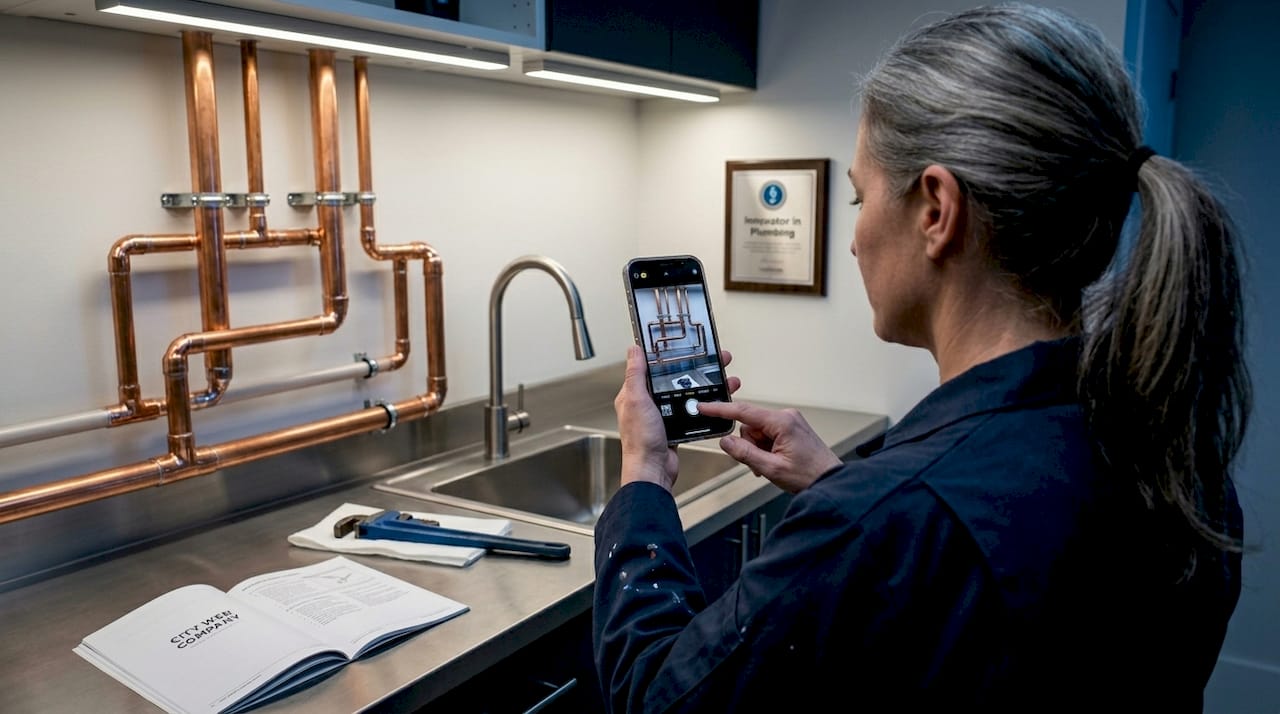
One plumbing business overhauled its social strategy by combining short educational videos, before-and-after job photos, and geo-targeted paid ads on Facebook and Instagram. The results were staggering. Social views grew 28,408%, engagement jumped 227%, and landscaping companies using similar models saw leads climb 195%. This wasn’t luck. It was a repeatable system built on the right content types and precise audience targeting.
The landscaping company that doubled leads with time-lapse
A regional landscaping company started posting time-lapse videos of full yard transformations from overgrown to pristine. They paired these clips with Facebook neighborhood offers targeting homeowners within five miles of completed projects. The visual proof was undeniable, and neighbors who saw the transformation in their own community converted at a much higher rate than cold audiences.
The HVAC company that turned seasons into a lead engine
An HVAC service provider built a content calendar around seasonal triggers. Before summer, they posted air conditioning tune-up tips. Before winter, furnace prep checklists. During heat waves and cold snaps, they pushed emergency service content. By automating posts and responses, they saved hours each week while boosting leads by 156%.
Here’s how these three campaigns compared across key performance metrics:
| Business type | Primary tactic | Lead increase | Engagement growth |
|---|---|---|---|
| Plumbing | Video + geo-targeted ads | 28,408% more views | +227% |
| Landscaping | Time-lapse + Facebook offers | +195% leads | High local reach |
| HVAC | Seasonal content + automation | +156% leads | Consistent weekly growth |
What all three campaigns shared was an active response strategy. They didn’t just post and disappear. They replied to every comment, responded to reviews within hours, and followed up with offer reminders to people who engaged but didn’t convert.
Pro Tip: Track your cost-per-lead (CPL) and return on ad spend (ROAS) from day one. These numbers tell you which content is actually generating revenue, not just likes.
For a closer look at how paid campaigns work in practice, these social media ads for services pages show real formats and targeting setups. You can also browse online advertising examples from local businesses to see what high-converting campaigns look like in the wild.
Head-to-head: Best platforms and content types for service businesses
Not every platform deserves your time. Here’s how the major channels stack up for local service marketing, so you can put your energy where it counts.
Facebook remains the strongest platform for neighborhood-level targeting. Its ad system lets you reach homeowners by zip code, income level, and even homeownership status. Community groups and local pages also give you organic reach that other platforms can’t match. Reviews on your Facebook Business page directly influence purchasing decisions.
Instagram is built for visual impact. Landscapers, painters, and remodelers thrive here because the work speaks for itself. Reels (short video clips) consistently outperform static images in reach and saves. If your service produces a visible transformation, Instagram should be in your mix.
YouTube builds authority over time. A library of how-to videos and emergency repair walkthroughs positions you as the expert in your area. Homeowners searching “how to fix a leaking faucet” on YouTube are high-intent viewers. If your video solves their problem, you become the trusted name they call when the job is too big to DIY.
Google Business Profile isn’t a social platform in the traditional sense, but it functions like one. Video outperforms static images, and integrating your social content with your Google Business Profile boosts local search visibility while building credibility through reviews and photo updates.
Here’s a direct comparison to help you prioritize:
| Platform | Best for | Content type | Targeting strength |
|---|---|---|---|
| Lead generation, reviews | Video, offers, photos | Neighborhood, demographic | |
| Visual services | Reels, before/after | Interest, hashtag | |
| YouTube | Authority building | How-to, walkthroughs | Search intent |
| Google Business Profile | Local search | Photos, posts, reviews | Location-based |
Statistic to know: Video content generates significantly higher engagement than photos or text posts across every major platform. For service businesses where the work is visual, this is a direct competitive advantage.
A few content types that consistently convert across platforms:
- Emergency service alerts during weather events
- Client spotlight posts featuring a real project and a short quote
- “Did you know?” posts that educate without selling
- Seasonal checklists homeowners can save and reference
Optimizing your Google Business Profile alongside your social channels creates a reinforcing loop where your social activity feeds your local search rankings. If you’re still on the fence about paid social, this breakdown of why use social ads for local businesses in 2026 makes the case with real numbers.
How to systematize and scale your social strategy for lasting ROI
Knowing what works is only half the battle. The other half is building a system so your social presence doesn’t collapse the moment you get busy with jobs.
Here’s a step-by-step framework for turning social media into a consistent growth engine:
- Build a content calendar. Map out your posts four weeks in advance. Include seasonal triggers, local events, and planned promotions. A calendar removes the daily guesswork that leads to inconsistent posting.
- Use scheduling tools. Platforms like Meta Business Suite let you schedule posts across Facebook and Instagram in one place. Set it up once and let it run while you’re on the job.
- Automate lead capture. Connect your social profiles to a CRM or lead form so inquiries go directly into your pipeline without manual follow-up.
- Respond to every review and comment. Fast responses signal to both the algorithm and potential clients that you’re active and trustworthy. Aim to reply within two hours during business hours.
- Micro-target your paid ads. Instead of targeting an entire city, run separate ad sets for your top three or four highest-value neighborhoods. This increases relevance and lowers your cost per lead.
- Review your metrics weekly. Check CPL, click-through rate, and total conversions every week. Kill underperforming ads fast and scale what’s working.
Automation reduces time spent on social management by 72% while boosting leads by 156%, and emergency or seasonal content drives 41% higher conversions than evergreen posts alone.
“The businesses that scale on social aren’t working harder. They’re working inside a system that does the repetitive work for them.”
Pro Tip: Batch-create your content once a week. Shoot three to five short videos in one session, write captions in bulk, and schedule everything at once. This single habit saves hours every month.
For a hands-on walkthrough of setting up paid campaigns, this social ads tutorial walks through the setup step by step. If managing all of this feels like too much on top of running your business, outsourcing social management to a dedicated professional is a legitimate option many growing service companies choose.
Why most local service businesses underperform on social—and how to break the mold
Here’s an uncomfortable truth: most local service businesses that struggle on social media aren’t failing because of bad content. They’re failing because they treat social media as a megaphone instead of a conversation.
The typical pattern looks like this. A plumber posts a photo of a pipe repair with a caption like “Call us for all your plumbing needs!” It gets two likes, zero calls, and the owner concludes that social media doesn’t work for their industry. But the problem isn’t the platform. It’s the approach.
People don’t follow service businesses because they want to be sold to. They follow businesses that make them feel something, teach them something, or show them something worth seeing. A time-lapse of a yard going from dead grass to a lush landscape tells a story. A 45-second video of a technician explaining why your furnace makes that clicking sound builds trust before a single dollar changes hands.
The businesses that become local social media leaders share three traits. They show real work, real people, and real results. They respond to every comment and review like it matters, because it does. And they treat their social presence as a reputation asset, not just a marketing channel.
Turning your reviews and community engagement into a referral engine is one of the highest-ROI moves a local service business can make. When a homeowner sees your response to a negative review handled professionally, that response often converts them more effectively than any ad.
Everyone has access to the same tools. The difference is thoughtful execution. If you’re ready to choose local marketing strategies that actually fit your business model, start by asking what your best clients have in common and build your content around solving their specific problems.
Ready to put proven strategies into action?
The examples and frameworks in this article aren’t theoretical. They’re drawn from real campaigns run by local service businesses just like yours. But reading about strategy and executing it consistently are two very different things.
At City Web Company, we specialize in helping local service businesses drive more local leads through social media, paid advertising, and SEO strategies built specifically for your industry. Whether you’re starting from scratch or looking to improve what you already have, our team builds systems that generate real, measurable results. Explore our full range of digital marketing services or start with our marketing guide for business growth to map out your next steps. Your competitors are already running these playbooks. Let’s make sure you’re ahead of them.
Frequently asked questions
What types of posts work best for local service businesses?
Before-and-after photos, short tip videos, testimonials, and quick responses to comments consistently deliver high engagement and new leads. Core methodologies include visuals, tips, and consistent engagement as the foundation of effective local social marketing.
How often should I post on social media to get results?
Aim for three to five posts per week to build momentum and stay top-of-mind with your local audience. Consistency over time matters far more than occasional bursts of activity, and posting 3-5 times weekly has been shown to produce effective, compounding results.
Which social media platform should I focus on?
Facebook remains the most effective platform for local service leads, but mixing in Instagram and YouTube gives you broader reach through visuals and video. Facebook, Instagram, and YouTube are the top three platforms for service-based businesses looking to grow their local audience.
Does paid advertising really make a difference?
Yes. Local service businesses using geo-targeted ads on social media regularly see massive increases in views, engagement, and leads at an affordable cost per lead. Targeted ads produced over 28,000% more views and 227% engagement growth for one plumbing company alone.
How can I save time managing social media for my business?
Use automation tools for scheduling posts and managing reviews, which can reduce time spent on social media management by up to 72% while simultaneously increasing lead generation.
Recommended
These articles were popular with other readers too: