

Use website DNI, connect call reports to Google Ads and your Google Business Profile, then tie calls to booked jobs. City Web Company can handle setup.
Digital Marketing Guide for Local Business Growth
Every local home services business owner knows the challenge of standing out when customers are searching online for trusted help in their neighborhood. With more people turning to digital platforms for solutions, the way your business appears on search engines and social media can make a lasting impression. By focusing on a strategic digital marketing plan tailored to your goals, you can uncover new growth opportunities and connect with the clients who matter most.
Table of Contents
Table of Contents
- Step 1: Assess Your Online Presence
- Step 2: Define Target Audiences and Goals
- Step 3: Implement SEO and Paid Advertising
- Step 4: Enhance Website Design and Accessibility
- Step 5: Monitor Results and Refine Strategy
Quick Summary
| Key Point | Explanation |
|---|---|
| 1. Assess Your Online Presence | A thorough audit of your digital platforms reveals strengths, weaknesses, and opportunities for improvement. |
| 2. Define Target Audiences and Goals | Create detailed buyer personas to identify ideal customers and set SMART marketing goals for effective campaigns. |
| 3. Implement SEO and Paid Advertising | Optimize your website for search engines and use targeted ads to boost visibility and attract new customers. |
| 4. Enhance Website Design and Accessibility | Develop a user-friendly website that is accessible to all, ensuring a positive experience for every visitor. |
| 5. Monitor Results and Refine Strategy | Continuously analyze marketing performance metrics to make data-driven adjustments, maximizing ROI and effectiveness. |
Step 1: Assess Your Online Presence
Assessing your online presence is critical for understanding how potential customers perceive your local business. This step helps you identify strengths, weaknesses, and opportunities to improve your digital marketing strategy.
Start by conducting a comprehensive audit of your current online platforms. Establish digital visibility through a systematic review of your digital touchpoints. Key areas to evaluate include:
- Your business website design and functionality
- Social media profile completeness and engagement
- Search engine results when someone searches your business name
- Online directory listings and accuracy of business information
- Customer reviews and ratings across different platforms
Use free tools like Google Search Console and social media analytics to gather insights about your current digital footprint. Check how your business appears on:
- Google My Business listing
- Yelp business profile
- Facebook business page
- Industry-specific review sites
- Local chamber of commerce directories
A thorough online presence assessment reveals hidden opportunities for growth and customer connection.
Document your findings systematically. Note areas where your online representation falls short and create an action plan to address these gaps. Digital marketing strategies require consistent monitoring and strategic improvements.
Pro tip: Schedule a quarterly online presence review to stay ahead of digital marketing trends and maintain a competitive edge.
Step 2: Define Target Audiences and Goals
Defining your target audiences and marketing goals is a critical foundation for successful digital marketing strategies. This step will help you create focused, effective campaigns that resonate with the right customers and drive meaningful business results.
Target audience identification requires a strategic approach to understanding who your ideal customers are. Begin by developing detailed buyer personas that capture key demographic and psychographic characteristics:
- Age range and gender
- Income level and occupation
- Geographic location
- Interests and lifestyle preferences
- Specific pain points and challenges
Utilize market research techniques to gather insights about your potential customers. Develop digital marketing plans by establishing SMART goals that are:
- Specific
- Measurable
- Achievable
- Relevant
- Time-bound
Precise audience targeting transforms generic marketing into powerful, personalized communication.
Consider creating multiple personas to represent different segments of your potential customer base. Each persona should include detailed information about their motivations, challenges, and how your business can provide unique solutions.

Pro tip: Review and update your target audience profiles every six months to ensure they remain current with evolving market dynamics.
Step 3: Implement SEO and Paid Advertising
Implementing a robust digital marketing strategy requires a synchronized approach to search engine optimization (SEO) and paid advertising. This critical step will help you increase your online visibility and attract more potential customers to your local business.
SEO marketing strategies involve optimizing your website’s content and technical elements to improve search engine rankings. Focus on key optimization areas:
- On-page content optimization
- Technical website performance
- Mobile-friendly design
- Strategic keyword implementation
- Local business schema markup
Pair your SEO efforts with targeted paid advertising to maximize your digital marketing impact. Digital advertising best practices recommend exploring multiple channels:
- Google Search Ads
- Social media advertising
- Display network campaigns
- Retargeting advertisements
- Local service ads
Integrated SEO and paid advertising create a powerful synergy that amplifies your online marketing effectiveness.
Track your campaign performance meticulously, using analytics to continuously refine your targeting and messaging. Adjust your strategies based on real-time data and customer engagement metrics.
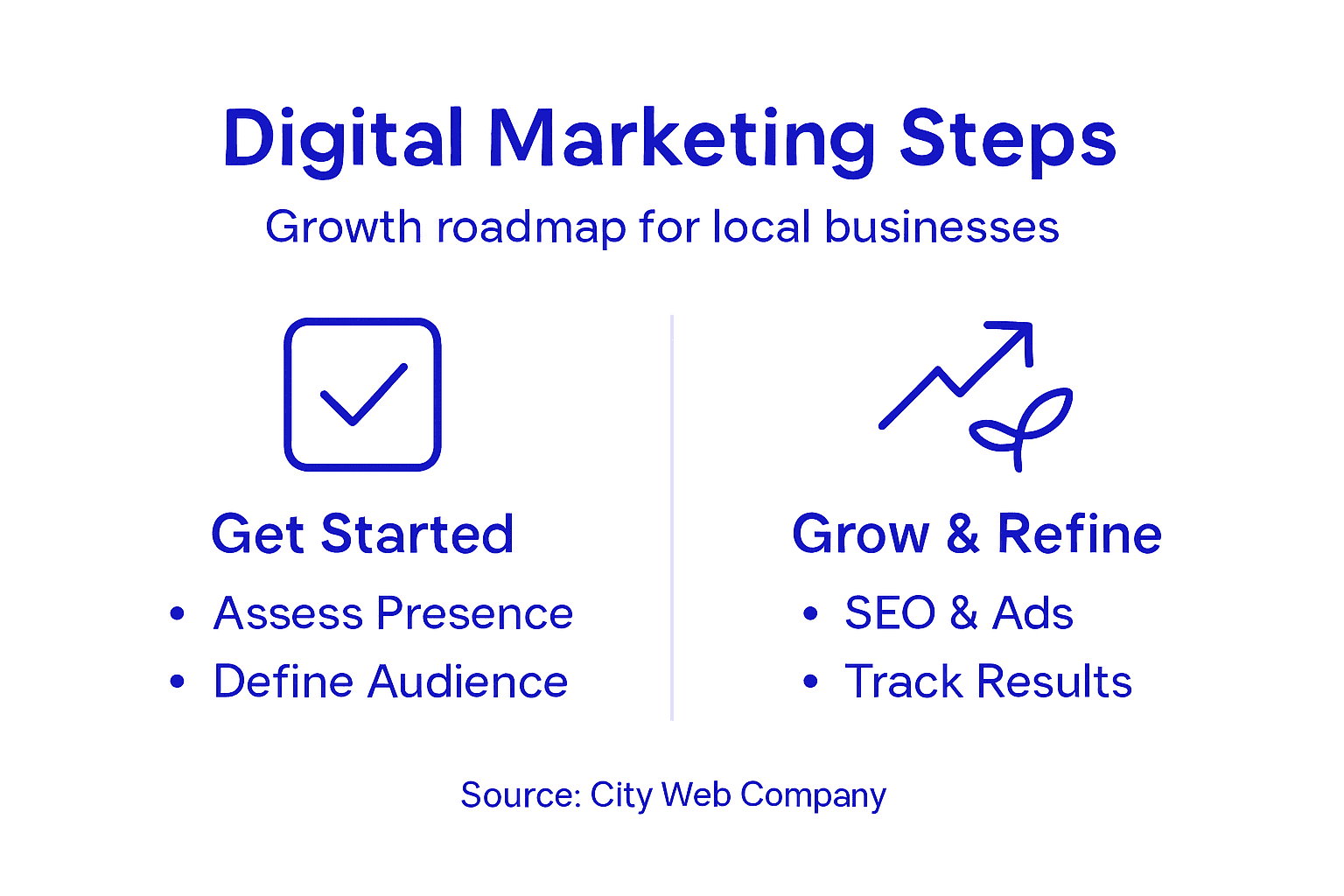

Pro tip: Allocate at least 10-15% of your marketing budget to testing and experimenting with different advertising approaches to discover what works best for your specific business.
Step 4: Enhance Website Design and Accessibility
Creating a compelling and inclusive website is crucial for attracting and retaining potential customers. This step focuses on developing a user-friendly digital platform that looks great and provides an exceptional experience for all visitors.
Web accessibility guidelines are essential for ensuring your website can be used by everyone, including people with disabilities. Focus on these critical design elements:
- Clear and readable typography
- High color contrast
- Keyboard-navigable interface
- Alternative text for images
- Simple and intuitive navigation
Implement responsive design principles to ensure your website functions smoothly across different devices. Web accessibility best practices recommend:
- Using consistent page layouts
- Providing clear interactive elements
- Adding descriptive link texts
- Creating logical content hierarchies
- Supporting multiple input methods
A well-designed website speaks directly to your audience and removes barriers to engagement.
Consider working with a professional web designer who understands both aesthetic appeal and technical accessibility requirements. Regular testing and user feedback will help you continuously improve your website’s performance and user experience.
Pro tip: Conduct quarterly accessibility audits using free online tools to identify and address potential usability issues before they impact your potential customers.
Step 5: Monitor Results and Refine Strategy
Successful digital marketing requires ongoing analysis and strategic adjustments. This step focuses on transforming raw data into actionable insights that drive continuous improvement for your local business.
Marketing analytics techniques help you understand which strategies deliver the most value. Track these critical performance metrics:
- Conversion rates
- Customer acquisition cost
- Website traffic
- Engagement levels
- Return on ad spend
Establish a consistent reporting schedule to review your digital marketing performance. Strategic marketing evaluation involves systematically measuring key performance indicators:
- Set clear benchmark targets
- Compare actual results against goals
- Identify successful tactics
- Recognize underperforming channels
- Develop improvement strategies
Data-driven decisions transform guesswork into strategic marketing excellence.
Utilize analytics platforms like Google Analytics and social media insights to gain comprehensive visibility into your marketing performance. Regular analysis allows you to reallocate resources and optimize your approach dynamically.
Here is a comparison of analytics tools you can use to monitor and refine your marketing strategy:
| Tool Name | Main Focus | Best For |
|---|---|---|
| Google Analytics | Website performance | Visitor behavior and traffic |
| Meta Insights | Social media analytics | Engagement tracking |
| SEMrush | SEO and competitor data | Search rankings |
| Hootsuite Reports | Social scheduling trends | Multi-platform management |
Pro tip: Create a monthly marketing performance dashboard that consolidates all key metrics, enabling quick visual assessment of your digital marketing effectiveness.
This table summarizes how each digital marketing step drives local business growth:
| Step | Primary Benefit | Key Business Impact |
|---|---|---|
| Assess Online Presence | Identifies current weaknesses | Enhances first impressions |
| Define Target Audiences | Refines campaign targeting | Improves conversion rates |
| Implement SEO & Paid Ads | Boosts online visibility | Attracts new local leads |
| Enhance Website Accessibility | Increases retention and reach | Expands customer base |
| Monitor & Refine Strategy | Informs ongoing improvements | Maximizes ROI |
Drive Local Business Growth with Expert Digital Marketing Support
Every local business faces the challenge of building a strong online presence while targeting the right audience and continually refining marketing efforts to maximize return on investment. This guide shows how optimizing SEO, combining paid advertising with accessible website design, and carefully monitoring analytics can transform your customer engagement and lead generation. If you want to overcome common pain points like unclear audience targeting, low search rankings, or ineffective digital ads, there is a better way to achieve measurable results.
City Web Company specializes in creating tailored digital marketing strategies for local service industries. With expertise in Digital Marketing Strategy Guides | City Web Company, we help you define your ideal customer and set actionable goals. Our team also excels at crafting impactful campaigns that boost visibility through Digital Advertising Tips & Strategies | City Web Company while providing detailed insights to keep your strategy data-driven with Analytics & Conversion Tracking Tips | City Web Company.

Take control of your local digital marketing success now. Visit https://citywebcompany.com to discover how personalized solutions can generate more leads, enhance your web presence, and increase revenue for your business. Don’t wait to build a stronger connection with customers and grow your business effectively.
Frequently Asked Questions
How can I assess my online presence for local business growth?
Assess your online presence by conducting a thorough audit of your website, social media profiles, and online directories. Identify strengths and weaknesses, check for consistent information, and evaluate customer reviews to uncover areas for improvement.
What steps should I take to define my target audience?
Define your target audience by creating detailed buyer personas that include demographics and psychographics. Identify their pain points, interests, and motivations to develop marketing strategies that resonate with them.
How do I implement SEO for my local business?
To implement SEO effectively, optimize your website’s content, use strategic keywords, and enhance technical elements like site speed and mobile responsiveness. Regularly updating your site and incorporating local business schema can improve your search rankings within 30-60 days.
What types of paid advertising should I consider for local marketing?
Consider using Google Search Ads, social media advertising, and retargeting ads to reach potential customers effectively. Allocate a portion of your budget for testing different approaches to determine which channels yield the best results.
How can I enhance my website’s design for better accessibility?
Enhance your website’s design by focusing on clear typography, high color contrast, and intuitive navigation that adheres to web accessibility guidelines. Regularly test your site to identify and address usability issues, enhancing the experience for all visitors.
What metrics should I monitor to refine my digital marketing strategy?
Monitor key metrics like conversion rates, website traffic, and return on ad spend to assess your digital marketing strategy’s effectiveness. Establish a routine reporting schedule to analyze these metrics and make informed adjustments to your campaigns.
Recommended
These articles were popular with other readers too: