
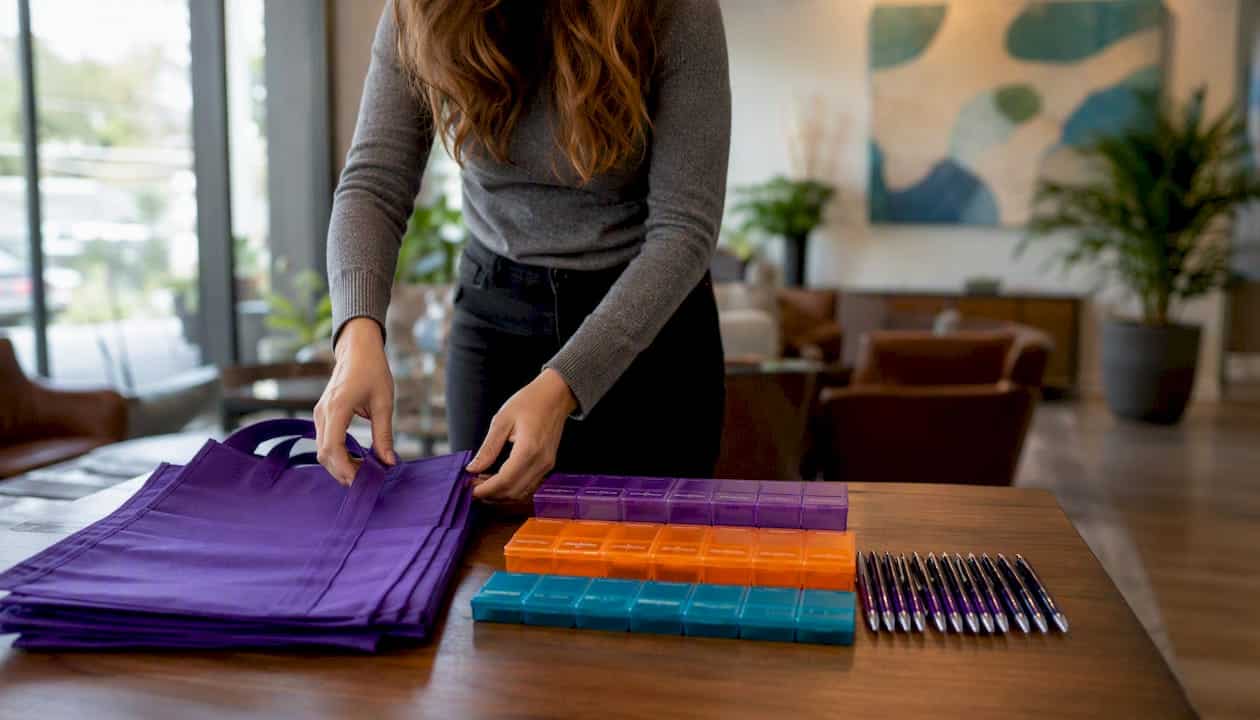
Pass Google Business verification with a video-first checklist. Film one continuous 30 second take, fix flagged issues, and know when to hire help.
Why Clinics Should Use Custom Swag to Grow Patient Loyalty
Custom swag is worth the investment for most clinics, and the first move is simpler than you think. Pick one high-traffic patient moment, order a small pilot batch of a useful item, and track one number. That is the whole starting framework. Branded promotional items connect your clinic to patients between visits, prompt referrals, and keep your name visible in a way that a digital ad cannot replicate once the screen goes dark.
Here is where to start right now:
- Choose your pilot moment. New patient onboarding, post-discharge follow-up, or a seasonal flu clinic are the three highest-return touchpoints.
- Select one practical item. A pill organizer, branded tote, or insulated tumbler will outlast a novelty item by months.
- Pick one KPI. Rebook rate, referral count, or patient satisfaction score. Measure it before and after the pilot.
Table of Contents
Key Takeaways
Custom swag is a measurable patient engagement tool when it is tied to a specific moment, a useful item, and one trackable KPI from day one.
| Point | Details |
|---|---|
| Brand recall is high | 85% of people remember the brand behind a promotional product, per ASI research cited by AnyPromo. |
| Outperforms digital for local outreach | A majority of healthcare marketers say promotional products beat digital ads for community outreach. |
| Start small and measure | Pilot one item at one touchpoint for 90 days; track rebook rate, referrals, or QR scan rate before scaling. |
| Quality and compliance matter | BPA-free materials, no medical claims, and HIPAA-safe personalization are non-negotiable in a healthcare setting. |
| City Web Company manages the full process | From design and compliance review to fulfillment and measurement, City Web Company runs clinic swag pilots end to end. |
Table of Contents
- Why Custom Swag for Clinics Pays Off
- What Are the Best Moments to Give Swag in a Clinic?
- Which Swag Items Work Best for Clinics and Why
- Healthcare-Specific Safety, Infection-Control, and Privacy Flags
- Budget Ranges, Expected ROI, and Which Metrics to Track
- Step-by-Step Checklist for Sourcing, Ordering, and Distributing Swag
- How City Web Company Runs a Clinic Swag Pilot
- A Practical 90-Day Starter Plan for Clinic Marketing Managers
- What Clinics Usually Get Wrong About Swag
- City Web Company Handles the Whole Swag Process for Clinics
- Sources
- FAQ
Why Custom Swag for Clinics Pays Off
The core argument is straightforward: patients who leave with something useful remember where they got it. ASI research cited by AnyPromo shows that 85% of people recall the brand behind a promotional product. For a clinic competing on reputation and word-of-mouth, that recall is the whole game.
The benefits of custom swag map directly to clinic KPIs:
- Patient loyalty and rebook rate. A useful item keeps your brand in the patient’s home, reinforcing the relationship between visits and making it easier to say yes to a recall reminder.
- Referrals. A branded tote bag or water bottle travels. When a patient uses it at the gym or the grocery store, it starts a conversation your digital ads never could.
- Brand recognition. Consistent logo placement across items builds familiarity, which matters when a patient is choosing between two clinics they have visited once each.
- Staff morale. 56% of new employees expect a welcome kit on their first day. Branded gear signals that the clinic invests in its team, which shows up in how staff interact with patients.
Stat worth knowing: More than three out of four healthcare marketers report that promotional products outperform digital ads for local community outreach. For a neighborhood clinic, that gap is hard to ignore.
Realistic expectations matter here. A small independent clinic running a 90-day pilot with 200 branded items should not expect a measurable referral spike in week two. What you should see is a lift in patient satisfaction comments, a few unprompted referral mentions at the front desk, and a rebook rate that holds or climbs. Large health systems can run parallel location tests; smaller clinics should focus on one moment and one item before scaling.
What Are the Best Moments to Give Swag in a Clinic?
Swag works when it fits the moment. A branded stress ball handed to a patient mid-appointment feels gimmicky. The same item in a new-patient welcome kit feels thoughtful. The table below maps the highest-impact use cases to the patient or staff moment they serve.
| Use Case | Ideal Item | What Success Looks Like |
|---|---|---|
| New patient onboarding kit | Branded folder, pen, pill organizer | Patient returns for second visit; mentions kit at check-in |
| Discharge pack | Tote bag, care instruction card, sanitizer | Reduced call-back questions; patient shares bag publicly |
| Flu or immunization clinic | Branded bandage tin, hand sanitizer, sticker (pediatric) | Community goodwill; social media photo tags |
| Health fair or community outreach | Tote bags, water bottles, printed health tip cards | New patient inquiries traced to event |
| Staff appreciation | Insulated tumbler, branded hoodie, desk kit | Staff retention signal; visible brand in community |
| Waiting-room comfort | Branded tissues, hand lotion, activity sheets (pediatric) | Reduced perceived wait time; positive survey comments |
| Telehealth follow-up | Mailed care kit with branded notepad and pen | Engagement rate on follow-up portal; patient-reported satisfaction |
Executive Advertising reports that healthcare marketers consistently rank community outreach events as the highest-performing context for promotional items. That tracks with what clinic administrators see: a health fair item gets used, photographed, and talked about in a way that a waiting-room brochure never does.
Patient segment matters too. Pediatric clinics benefit from bright, age-appropriate items like sticker sheets and small activity books. Geriatric and chronic-care patients respond better to practical tools: pill organizers, large-print appointment cards, and easy-grip pens. Telehealth patients, who never set foot in the clinic, are a segment worth targeting with a mailed kit tied to a milestone like a 90-day care check-in.
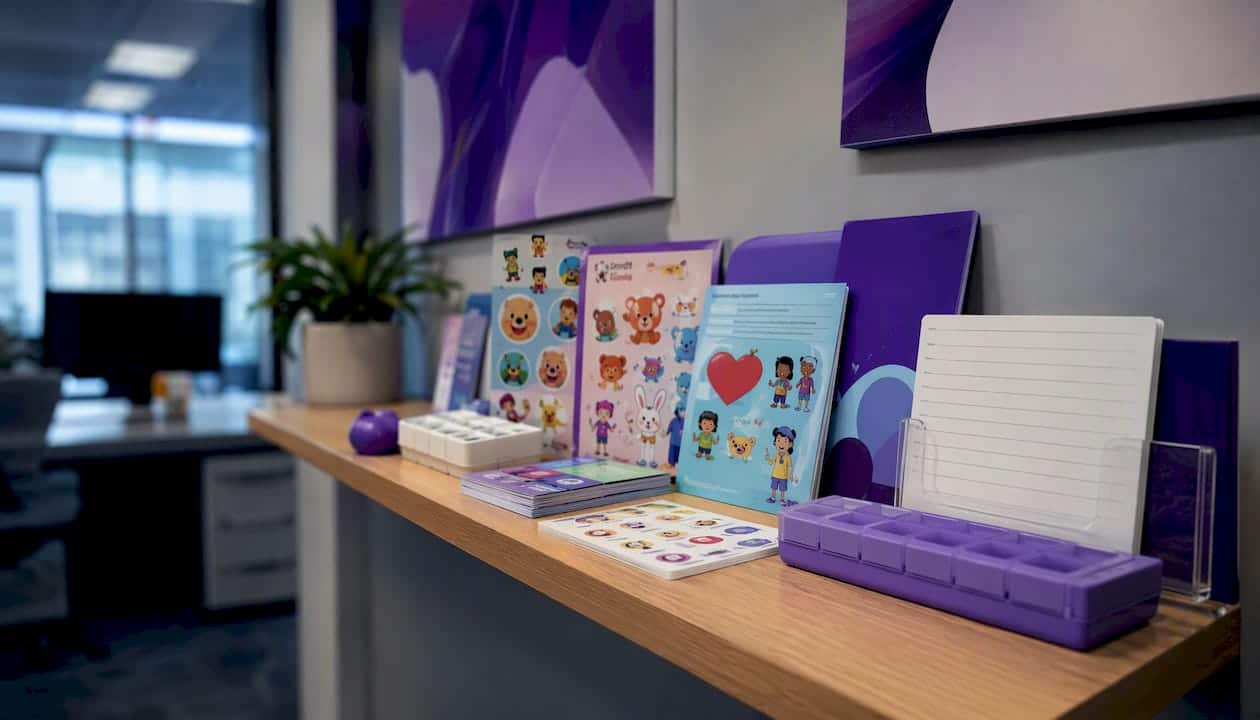
For clinics managing patient flow, pairing swag distribution with clinic queue management systems can reduce perceived wait time and make the handoff feel intentional rather than rushed.
Which Swag Items Work Best for Clinics and Why
Useful beats clever every time in a healthcare setting. Patients do not want a fidget spinner with your logo. They want something that solves a small daily problem and happens to carry your name.
High-impact items for clinics:
- Pill organizers. Directly relevant to patient health routines. Used daily, kept for months, and seen by family members who may become patients.
- Insulated tumblers or water bottles. High perceived value, long lifespan, and visible in public. A $6 tumbler with a clean logo print can generate hundreds of impressions over its lifetime.
- Tote bags. Reusable, practical, and a walking billboard. Particularly effective for discharge packs and health fair giveaways.
- Hand sanitizer. Infection-control aligned, immediately useful, and easy to co-brand. Choose BPA-free, FDA-compliant formulations.
- Kid-friendly items. Sticker sheets, crayons, and small activity books for pediatric waiting rooms. These reduce parent stress and create a positive memory of the visit.
- Printed educational items. Branded appointment reminder cards, medication tracking sheets, and care instruction cards. These double as clinical tools and marketing assets.
Design rationale: your clinic’s phone number and website should be readable at arm’s length. A logo buried in a corner of a tote bag is a missed opportunity. Prioritize imprint placement, font size, and color contrast. Items that look cheap get discarded quickly, and research from 4AllPromos confirms that poor-quality materials lead many recipients to throw items away rather than use them.
Items to avoid: novelty items with no practical function (stress balls shaped like organs, for example), anything that implies a medical claim (“this product supports immune health”), and highly personalized items that include patient-specific information.
Pro Tip: Order a sample of every item before committing to a full batch. Check imprint quality, material feel, and whether the item actually functions well. A tumbler that leaks or a pen that skips will do more damage to your brand than no item at all.
Healthcare-Specific Safety, Infection-Control, and Privacy Flags
Clinics operate under rules that a retail brand does not. Before you finalize any swag order, run through this checklist with your procurement and risk teams.
Material and infection-control requirements:
- Choose BPA-free plastics and food-safe materials for any item that contacts food or drink.
- Avoid porous materials (untreated fabric, uncoated paper) in clinical areas where infection control is active.
- For items distributed in procedure or exam rooms, confirm materials meet your facility’s surface-cleaning protocols.
- Age-appropriate safety: no small parts for pediatric items intended for children under three.
Avoiding medical claims:
- Never print language on swag that implies a health benefit (“boosts immunity,” “reduces pain”). This crosses into FDA-regulated territory and creates liability.
- Stick to clinic branding, contact information, and general wellness messaging (“Stay hydrated,” “Schedule your annual visit”).
HIPAA and patient privacy:
- Do not personalize swag with patient names, diagnoses, or appointment details unless you have explicit written consent and a compliant process for handling that data.
- Generic branded items given to all patients at a specific touchpoint carry no HIPAA risk. The risk appears when you segment and personalize based on health information.
For a broader view of compliance-first marketing tools, the best marketing tools for healthcare guide covers the full compliance landscape.
Pro Tip: Loop in your compliance officer before the first pilot order, not after. A five-minute review of your item list and proposed messaging can prevent a costly reprint or a policy violation.
Budget Ranges, Expected ROI, and Which Metrics to Track
Per-unit costs for clinic swag vary by item type and order volume. Here are realistic ranges for common items at typical clinic batch sizes.
ASI’s research on promotional products shows that cost-per-impression for physical promotional items consistently undercuts most digital ad formats, particularly for local audiences. Teamsunday’s industry analysis reinforces this, citing PPAI findings that recipients remember brands months after receiving a promotional item.
KPIs to track for a clinic swag pilot:
- Rebook rate. Compare the rebook percentage for patients who received swag at a specific touchpoint versus those who did not, over a 60-day window.
- Referral count. Ask new patients at intake how they heard about the clinic. Track mentions of a specific event or item.
- Patient satisfaction score. Pull survey data for the touchpoint where swag was introduced and compare to the prior period.
- QR code scan rate. If items include a QR code linking to your patient portal or appointment booking page, track scans as a direct engagement metric.
- Cost per impression. Divide total item cost by estimated impressions to benchmark against your paid digital spend.
Simple pilot plan: Run a 90-day pilot at one location, one touchpoint, one item. Set your baseline metrics in week one. Distribute items in weeks two through eight. Measure in weeks nine through thirteen. Use that data to decide whether to scale, swap the item, or shift the touchpoint.
For context on integrating swag results with broader campaign measurement, the online advertising strategies for healthcare guide covers channel-level attribution that applies here.
Step-by-Step Checklist for Sourcing, Ordering, and Distributing Swag
Getting the operational side right is where most clinic pilots stall. Here is the full sequence.
Vendor selection and ordering:
- Confirm the vendor can provide BPA-free, FDA-compliant materials and will supply a safety data sheet on request.
- Request a physical sample before placing any order over 100 units.
- Confirm minimum order quantities. Most reputable promotional product vendors require 50 to 250 units minimum depending on the item.
- Ask for a digital proof with your logo at actual print size before approving production.
- Confirm lead time. Standard production runs 10 to 15 business days; rush orders typically add 30 to 50% to unit cost.
Inventory and distribution:
- Front desk giveaway. Works for high-volume items like pens and sanitizers. Keep a par level (minimum stock trigger) and reorder when you hit it.
- Mail fulfillment. Best for telehealth patients and post-discharge kits. Requires a fulfillment partner or in-house packing process.
- Event kiosk. For health fairs and community outreach. Pre-pack branded bags with a mix of items so staff can hand them off quickly.
Vendor scorecard checklist:
- Material safety documentation available: yes or no
- Sample provided before bulk order: yes or no
- Digital proof approved: yes or no
- Lead time confirmed in writing: yes or no
- Minimum order quantity fits pilot size: yes or no
- Fulfillment and shipping options confirmed: yes or no
SwagZone’s guidance on outpatient swag recommends piloting three items in one location before scaling. That is the right instinct. Centralizing ordering and fulfillment also reduces operational overhead and keeps branding consistent across locations, a point worth raising with your procurement team early.
How City Web Company Runs a Clinic Swag Pilot
City Web Company approaches clinic swag as a campaign asset, not a standalone purchase. The process follows a structured sequence that connects physical items to measurable patient engagement outcomes.
Here is how a typical agency-led pilot runs:
- Discovery. Identify the clinic’s top two patient touchpoints and the KPIs that matter most to the marketing team (rebook rate, referrals, satisfaction score).
- Item selection and design. Match items to moments. Design files go through a brand-alignment review, and imprint placement is checked for readability and compliance.
- Sample review. Physical samples arrive within two weeks of design approval. The clinic team reviews material quality, imprint accuracy, and usability before production begins.
- Pilot run. A 30 to 90-day distribution window at one location. Staff receive a brief on how and when to hand items off.
- Measurement. The clinic receives a results summary covering the agreed KPIs, with a comparison to the pre-pilot baseline.
- Scale decision. Based on pilot data, the team decides whether to expand to additional locations, swap items, or shift the distribution moment.
City Web Company’s promotional products service handles creative, procurement, and fulfillment, so the clinic’s marketing team is not managing vendor relationships or chasing proofs. For clinics that have already ordered swag but hit fulfillment problems, the custom promotional products quick fix guide covers the most common issues and how to resolve them fast.
Pro Tip: Ask your agency for a one-page pilot brief before any items are ordered. It should name the touchpoint, the item, the KPI, the baseline, and the measurement window. If the brief does not exist, the pilot has no way to succeed on paper.


A Practical 90-Day Starter Plan for Clinic Marketing Managers
This timeline assumes one location, one touchpoint, and one item. Adjust the pace if your clinic has a longer internal approval cycle.
Weeks 1 to 2: Define and approve
- Select the patient moment (new patient onboarding, discharge, or seasonal clinic).
- Choose one item from the high-impact list above.
- Pull baseline data for your chosen KPI.
- Brief your compliance officer and get sign-off on messaging.
Weeks 3 to 4: Order and proof
- Submit design files to your vendor or agency.
- Review digital proof and approve or revise.
- Order physical sample.
- Confirm lead time and delivery date.
Weeks 5 to 10: Distribute
- Hand off items at the chosen touchpoint consistently. Every patient at that moment gets one.
- Track distribution volume weekly.
- Note any staff or patient feedback informally.
Weeks 11 to 13: Measure and decide
- Pull KPI data and compare to baseline.
- Review any qualitative feedback from staff.
- Decide: scale, swap, or pause.
Quick wins in 30 days: A QR code on a branded item linking to your online booking page can show scan data within the first month. That is the fastest hard number you will get from a swag pilot, and it gives you something concrete to show leadership before the full 90-day window closes.
For clinics integrating swag into a broader patient acquisition strategy, pairing this pilot with social media advertising for healthcare can amplify reach and create a feedback loop between physical and digital touchpoints.
What Clinics Usually Get Wrong About Swag
Most clinic marketing teams underestimate the distribution problem and overestimate the item problem. They spend weeks choosing between a tumbler and a tote bag, then hand the items to front desk staff with no brief and no tracking plan. The item barely matters if the moment is wrong or the handoff is inconsistent.
The second mistake is treating swag as a one-time purchase rather than a recurring campaign asset. A single batch of 200 items distributed over three months tells you almost nothing. The signal comes from comparing two or three pilots across different touchpoints, which requires a measurement habit, not just a budget line.
One practical tip that most guides skip: put your clinic’s phone number on every item in a font size that a 60-year-old can read without glasses. It sounds obvious. Most imprints fail this test because designers optimize for aesthetics over function. Your swag is a referral tool. Make it easy to use as one.
Swag also works best when it connects to a broader channel. A branded item with a QR code that links to a patient portal, a Google review page, or an appointment booking form turns a physical giveaway into a measurable digital touchpoint. That integration is where the ROI math starts to look genuinely compelling.
City Web Company Handles the Whole Swag Process for Clinics
Running a swag pilot while managing a full marketing calendar is a real operational load. City Web Company’s promotional merchandise services cover the entire process: item selection, design, compliance review, vendor management, fulfillment, and campaign measurement. You get a pilot that is tied to your patient engagement goals from day one, not a box of items that sits in a storage closet.

The agency integrates physical swag with your existing digital channels, so a branded item with a QR code connects directly to your booking page, your Google Business Profile, or a targeted paid campaign. That connection is what turns a giveaway into a local lead generation asset. Clinics that want to see how swag fits into a full patient acquisition strategy can start with a scoping call. Reach out to City Web Company at Citywebcompany to map out a pilot that fits your budget and timeline.
Sources
- Elevate Patient Loyalty with Impactful Custom Healthcare Swag Today – AnyPromo Blog
- What is corporate swag (and why it matters)
- Branded Care That Heals | Executive Advertising
- Outpatient Care Swag Ideas for Patients & Staff | SwagZone
- Benefits of Company Swag and Ideas for Your Employees
- What Is Company Swag & Why It Matters – ASI
FAQ
Why is swag important for a clinic’s marketing?
Swag keeps your clinic’s brand visible between patient visits, prompts referrals, and builds the kind of familiarity that influences where a patient books their next appointment. Physical items generate impressions long after a digital ad has been scrolled past.
What is a good gift for a healthcare worker?
Insulated tumblers, branded desk kits, and quality apparel consistently rank as the most appreciated staff items. 4AllPromos notes that 56% of new employees expect a welcome kit, so onboarding is the highest-leverage moment for staff swag.
Is company swag worth it for a small clinic?
Yes, when the pilot is small and tied to a measurable moment.
What is promotional swag?
Promotional swag refers to branded physical items given to patients, staff, or community members to build brand awareness and goodwill. In a clinic context, the most effective items are practical tools patients use daily, like pill organizers, tote bags, and water bottles, rather than novelty items.
How do clinics avoid HIPAA issues with personalized swag?
Stick to generic branded items distributed at a touchpoint level rather than personalizing items with patient names, diagnoses, or appointment details. Generic swag given to all patients at a specific moment carries no HIPAA risk; segmentation based on health information does.
Recommended
These articles were popular with other readers too: