

See how plumbers can turn Facebook scrollers into booked jobs with clear offers, local targeting, a 30 day test budget, fast follow up, and a path to scale.
Online advertising in healthcare: strategies for growth 2026
Many healthcare marketers mistakenly believe that aggressive promotions drive patient acquisition, but evidence shows educational, patient-centered advertising performs significantly better. Effective healthcare online advertising requires balancing compliance with HIPAA and FDA regulations, building patient trust through transparent messaging, and selecting channels that deliver measurable results. This guide covers tailored strategies addressing healthcare regulations, channel effectiveness, and actionable tactics to help small to medium clinics attract more patients and optimize advertising spend in 2026.
Table of Contents
Table of Contents
- Understanding Online Advertising In Healthcare
- Regulatory And Privacy Challenges In Healthcare Advertising
- Top Online Advertising Channels For Healthcare Providers
- Building Patient Trust Through Ethical And Transparent Advertising
- Targeting Strategies And Roi Measurement For Small To Medium Clinics
- Common Misconceptions And How To Avoid Them
- Actionable Steps To Launch And Optimize Healthcare Ads
- Get Expert Help With Your Healthcare Digital Marketing
- Frequently Asked Questions
Key takeaways
| Point | Details |
|---|---|
| Compliance balance | Healthcare online ads must navigate HIPAA, FDA regulations, and privacy concerns while maintaining patient engagement and trust. |
| Channel performance | Google Ads dominates patient acquisition through high-intent search traffic, while streaming TV ads boost local brand recall by 50%. |
| Trust-building messaging | Patient-centered, educational content outperforms aggressive promotions, increasing conversions by up to 60% for healthcare providers. |
| Local targeting efficiency | Geo-targeted campaigns and local SEO can increase patient inquiries by 35% for small healthcare practices with optimized budget allocation. |
| Integrated analytics | Connecting booking systems and telehealth data with ad platforms enables precise ROI measurement and continuous campaign optimization. |
Understanding online advertising in healthcare
Online advertising for healthcare services involves using digital platforms to connect with potential patients actively seeking medical care or health information. The primary goal is attracting patients efficiently while maintaining ethical standards and regulatory compliance that protect patient privacy and safety.
Healthcare advertising faces unique challenges that distinguish it from other industries. HIPAA and FDA regulations heavily influence ad content and targeting, requiring marketers to carefully review messaging before campaigns launch. Patient sensitivity around health conditions demands respectful, non-intrusive approaches that prioritize education over sales pressure.
Key considerations for healthcare online advertising include:
- Strict adherence to privacy regulations limiting patient data usage in targeting
- Ethical frameworks requiring transparent, truthful health claims without exaggeration
- Platform policies restricting certain healthcare services and prescription drug advertising
- Patient psychology favoring trust signals like credentials, testimonials, and educational value
- Local competition requiring geo-targeted strategies to reach nearby patients effectively
Successful healthcare advertising requires understanding these constraints as opportunities to differentiate through quality, authenticity, and patient-centered approaches that competitors often neglect.
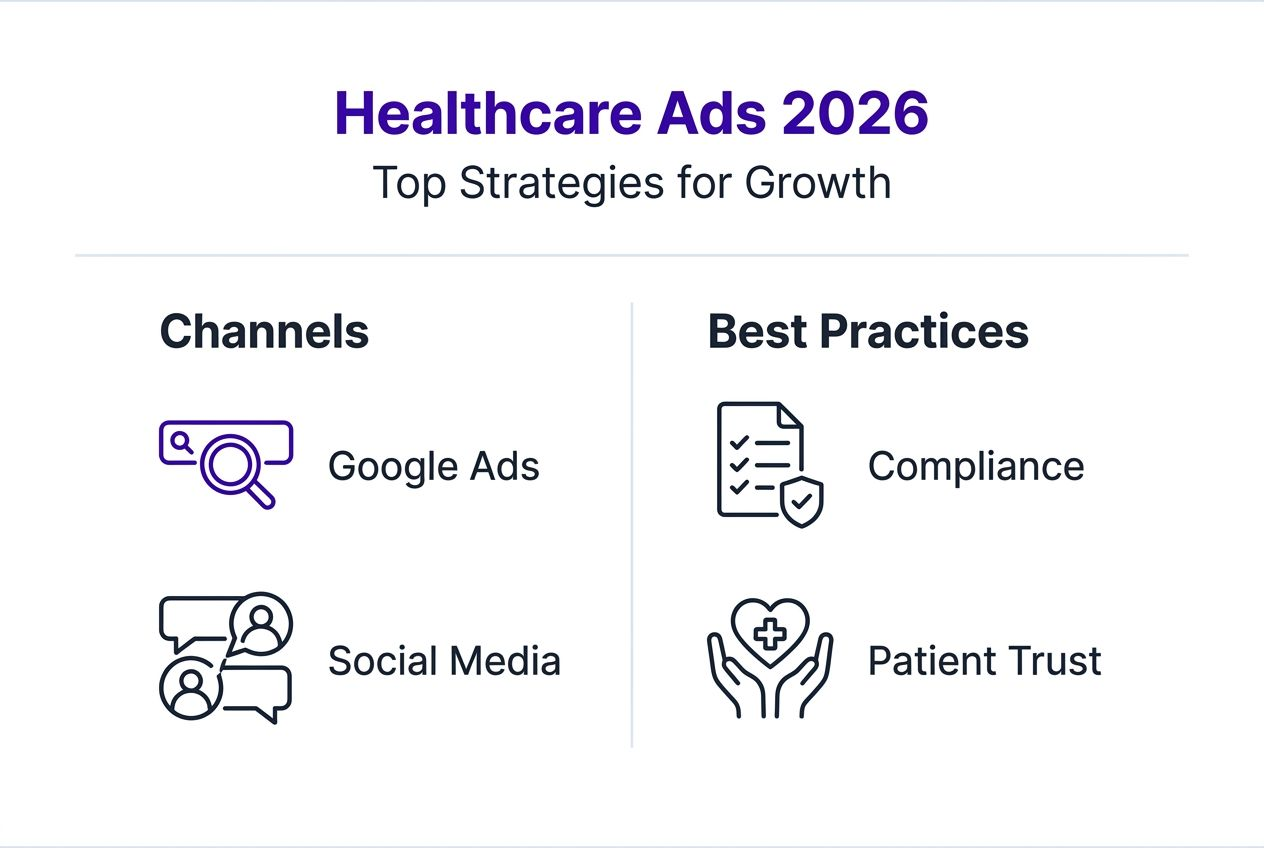
Regulatory and privacy challenges in healthcare advertising
Healthcare marketers operate under regulatory frameworks more stringent than most industries. HIPAA protects patient health information, meaning advertisers cannot use patient data for targeting without explicit consent or proper de-identification. The FDA regulates health claims, particularly for medical devices, procedures, and any therapeutic assertions, requiring substantiation and approved language.
Privacy concerns extend beyond legal requirements to patient expectations. Patients worry about their health searches being tracked, their conditions exposed, or their personal information mishandled. This sensitivity affects platform choice, as some patients avoid clicking healthcare ads fearing privacy violations or data collection.
Compliance impacts every advertising decision. Ad formats must avoid implying diagnosis or guaranteed outcomes. Messaging cannot make unsubstantiated health claims or compare treatments without evidence. Targeting options are limited since you cannot use protected health information, though demographic and interest-based targeting within platform guidelines remains permissible.
Regular compliance reviews significantly reduce risk:
- Establish legal audit processes before launching campaigns
- Document compliance checks for ad copy, landing pages, and targeting parameters
- Train marketing teams on HIPAA, FDA rules, and platform-specific healthcare policies
- Monitor competitor ads to identify industry compliance norms and differentiation opportunities
- Update campaigns promptly when regulations change or platform policies evolve
Pro Tip: Schedule quarterly compliance audits with healthcare legal counsel to review all active campaigns, catching potential violations before they result in penalties or platform account suspensions.
Top online advertising channels for healthcare providers
Google Ads dominates healthcare patient acquisition because patients actively search for symptoms, treatments, and local providers when ready to book appointments. Google controls over 90% of search traffic, and healthcare-related searches represent a massive opportunity for practices to appear exactly when patients need services. Search intent targeting ensures ads reach people actively seeking care, not passive browsers.


Social media platforms like Facebook and Instagram excel at community engagement and brand building but require careful privacy handling. These channels work well for health education content, wellness tips, and building trust over time rather than immediate appointment bookings. Patient sensitivity on social platforms means avoiding intrusive targeting and focusing on educational, supportive messaging.
Streaming TV advertising offers rising opportunities for local healthcare brand awareness. Streaming TV ads increase brand recall by 50% and patient inquiries by 20% over six months, according to 2026 research. Small clinics benefit from geo-targeted streaming campaigns that build recognition in specific service areas without traditional TV’s high costs.
| Channel | Reach | Cost Efficiency | Engagement | Compliance Ease |
|---|---|---|---|---|
| Google Ads | Highest | High for local | Very High | Moderate |
| Facebook/Instagram | High | Moderate | High | Challenging |
| Streaming TV | Growing | Moderate | Moderate | High |
| YouTube | Very High | Moderate | High | Moderate |
| Niche | Low | Moderate | High |
Each channel serves different stages of the patient journey. Google Ads captures high-intent searchers ready to book, while social media nurtures trust and awareness. Streaming TV builds local brand recognition that makes patients more likely to choose your practice when needs arise.
Pro Tip: Combine search campaigns for immediate patient acquisition with streaming TV or social media for long-term brand building, creating balanced marketing that sustains growth through multiple patient touchpoints.
Building patient trust through ethical and transparent advertising
Trust drives healthcare conversions more powerfully than in any other industry. Patients entrust providers with their health, privacy, and often significant expenses, making credibility non-negotiable. Advertising that prioritizes transparency, education, and authentic patient stories converts far better than aggressive promotional tactics.
Transparent privacy messaging reassures patients about data safety. Clearly stating how patient information is protected, what data you collect, and how it’s used addresses the primary concern patients have about engaging with healthcare ads. This transparency should appear in ad copy, landing pages, and throughout the patient journey.
Educational content outperforms sales-focused messaging because patients research health decisions extensively before committing. Providing valuable health information, explaining procedures honestly, and addressing common concerns positions your practice as a helpful resource rather than just a service provider. This approach builds authority and trust simultaneously.
Authentic patient testimonials and provider credentials strengthen ad effectiveness:
- Feature real patient stories with proper consent and HIPAA compliance
- Highlight provider qualifications, specializations, and experience transparently
- Showcase modern treatment safety protocols and facility accreditations
- Address common patient fears or misconceptions directly in ad messaging
- Use clear, jargon-free language that respects patient intelligence without condescension
Clear communication about compliance builds confidence. Mentioning HIPAA compliance, secure patient portals, and privacy protections signals that your practice takes patient safety seriously. These trust signals reduce friction in the conversion process, making patients more comfortable taking the next step.
Targeting strategies and ROI measurement for small to medium clinics
Local SEO combined with geo-targeted pay-per-click advertising delivers cost-effective patient reach for small practices. Geo-targeted campaigns can increase patient inquiries by up to 35% because they focus spending on patients within your actual service area. This precision prevents wasted ad spend on users too far away to become patients.
Integrating booking system data with advertising analytics enables accurate ROI tracking beyond clicks and impressions. Connect your appointment scheduling software, telehealth platforms, and patient management systems to advertising platforms using conversion tracking pixels and API integrations. This connection reveals which campaigns, keywords, and ads generate actual appointments, not just website visits.
Budget allocation for small to medium clinics should prioritize proven channels first:
- Allocate 50-60% to Google Search Ads targeting high-intent keywords
- Dedicate 20-30% to local PPC strategies and geo-targeted display campaigns
- Reserve 10-20% for experimental channels like streaming TV or social media
- Maintain 5-10% for remarketing to website visitors who didn’t book initially
Launching and optimizing campaigns requires systematic execution:
- Set up conversion tracking for appointment bookings, phone calls, and form submissions
- Start with geo-targeted search campaigns using location-specific keywords
- Monitor cost per acquisition weekly, adjusting bids and targeting based on performance
- Expand to additional channels only after achieving positive ROI on initial campaigns
- Implement ROI tracking systems linking ad spend directly to patient revenue
| Channel | Avg Cost Per Click | Conversion Rate | Cost Per Patient | Typical ROI |
|---|---|---|---|---|
| Google Search | $3-8 | 8-12% | $45-85 | 300-500% |
| Facebook Ads | $1-3 | 3-6% | $35-65 | 200-350% |
| Streaming TV | CPM $25-40 | 2-4% | $120-200 | 150-250% |
| Display Ads | $0.50-2 | 1-3% | $55-95 | 180-300% |
Pro Tip: Review campaign performance bi-weekly during the first three months, making data-driven adjustments to keywords, ad copy, and targeting based on actual patient acquisition metrics rather than vanity metrics like impressions or clicks alone.
Common misconceptions and how to avoid them
Many healthcare marketers believe aggressive promotional tactics drive more patient bookings than educational approaches. Research proves the opposite: educational content that addresses patient questions and concerns increases conversions by up to 60% compared to sales-focused messaging. Patients want to understand their options and trust their providers before committing to care.
Another widespread misconception suggests privacy concerns make digital advertising ineffective for healthcare. The reality is that compliance-focused campaigns using proper consent, transparent data handling, and platform-approved targeting methods successfully engage patients while respecting privacy. The key is designing campaigns around privacy as a feature, not working around it as an obstacle.
Small clinics often assume channels like streaming TV or social media advertising require budgets only large hospital systems can afford. Google Ads proves cost-effective for small practices when properly geo-targeted and optimized. Streaming TV platforms now offer local targeting at accessible price points, and social media allows precise budget control starting from modest daily spends.
Common myths that undermine healthcare advertising success:
- Myth: More keywords always improve campaign performance
- Reality: Focused keyword lists targeting specific services and local intent outperform broad approaches
- Myth: Lowest cost per click indicates the best campaign efficiency
- Reality: Cost per actual patient acquisition matters more than click costs
- Myth: Advertising alone drives patient growth sustainably
- Reality: Integrated strategies combining ads, SEO, reputation management, and patient experience deliver lasting results
Understanding these realities helps healthcare marketers avoid wasting budget on ineffective tactics and instead focus resources on approaches proven to attract and convert patients ethically and efficiently.
Actionable steps to launch and optimize healthcare ads
Starting effective healthcare advertising campaigns requires systematic execution that addresses compliance, targeting, and measurement simultaneously. Following a structured approach reduces costly mistakes and accelerates results.
Implement these steps sequentially for campaign success:
- Conduct comprehensive compliance review of all advertising materials with healthcare legal counsel
- Define target patient demographics, geographic service areas, and priority services to promote
- Develop educational ad content addressing patient questions, concerns, and search intent
- Select advertising channels matching practice goals and budget, starting with Google Search for high-intent traffic
- Implement conversion tracking connecting ads to appointment bookings and patient acquisition
- Launch campaigns with conservative budgets, monitoring performance daily for the first two weeks
- Optimize based on cost per acquisition data, scaling successful campaigns and pausing underperformers
- Expand to additional channels only after establishing positive ROI on initial campaigns
Operational workflow recommendations:
- Schedule weekly performance reviews analyzing patient acquisition metrics
- Test different ad copy variations monthly to identify messaging that resonates best
- Update landing pages quarterly based on patient feedback and conversion data
- Coordinate advertising with social media workflows for consistent patient experience
- Document all compliance checks and campaign decisions for regulatory audit readiness
Following comprehensive digital marketing checklists ensures no critical steps get overlooked. Regular optimization based on actual patient data rather than assumptions separates successful healthcare advertising from wasted spending. The online advertising landscape in 2026 offers small healthcare practices unprecedented opportunities to compete effectively when campaigns are executed strategically.
Get expert help with your healthcare digital marketing
Navigating healthcare advertising’s complex regulatory requirements while optimizing for patient acquisition demands specialized expertise. 
City Web Company specializes in digital marketing for small healthcare practices, delivering compliant campaigns that attract patients and maximize ROI. Our team understands healthcare regulations, patient psychology, and the unique challenges small to medium clinics face competing for local patients.
Our services include Google advertising campaign management with healthcare-specific compliance review, local SEO optimization that improves organic visibility in your service area, and integrated analytics connecting advertising spend to actual patient revenue. We handle the technical complexity so you can focus on patient care while your practice grows.
Pro Tip: Partnering with healthcare marketing specialists reduces compliance risks, accelerates campaign optimization, and typically improves patient acquisition costs by 30-40% compared to managing campaigns internally without specialized expertise.
Frequently asked questions
What are the biggest online advertising challenges for healthcare clinics?
Compliance with HIPAA and FDA regulations while creating engaging ads represents the primary challenge. Balancing patient privacy concerns with effective targeting requires expertise in both healthcare law and digital marketing platforms. Additionally, measuring true ROI beyond clicks to actual patient acquisition and revenue demands integrated analytics systems many small practices lack initially.
How can small healthcare practices comply with advertising regulations without limiting ad effectiveness?
Focus on transparency and educational content that provides genuine value while avoiding unsubstantiated health claims or guaranteed outcomes. Work with healthcare legal experts to review campaigns before launch, ensuring messaging meets regulatory standards. Use compliant targeting options like demographics, interests, and geographic location rather than attempting to target based on specific health conditions or protected information.
What metrics should healthcare marketers track to evaluate online ad success?
Track patient acquisition rate, cost per acquisition, and return on ad spend linked directly to appointment bookings and patient revenue. Monitor engagement metrics like click-through rates and landing page conversion rates to identify optimization opportunities. Measure compliance audit results and ad approval rates to ensure campaigns maintain regulatory standards while delivering results.
Are social media ads effective for small healthcare clinics?
Yes, social media advertising builds patient engagement and trust when executed with educational, authentic content that respects privacy sensitivities. However, social platforms work best for long-term brand building and community engagement rather than immediate appointment bookings. Careful compliance with platform healthcare advertising policies and transparent privacy messaging are essential for effectiveness and patient trust.
How should small clinics budget for online advertising effectively?
Start with focused geo-targeted Google search campaigns and local SEO, allocating modest budgets to test effectiveness before scaling. Measure results rigorously, calculating actual cost per patient acquisition including lifetime patient value. Prioritize channels delivering proven ROI, gradually expanding to additional platforms only after establishing positive returns on initial campaigns and implementing robust tracking systems.
Recommended
These articles were popular with other readers too: