

See how plumbers can turn Facebook scrollers into booked jobs with clear offers, local targeting, a 30 day test budget, fast follow up, and a path to scale.
Online Visibility for Lawyers: Why It Matters in 2026
Online visibility for lawyers is defined as the measurable presence a law firm holds across search engines, review platforms, social media, and AI-generated answers. The importance of online visibility for lawyers has never been sharper: 61% of consumers who receive a personal referral still research that attorney online before making contact, and 54.6% visit the firm’s website before picking up the phone. A strong referral network no longer guarantees a full caseload. Your digital footprint either confirms or kills the trust a referral creates. This article covers the mechanics of legal online presence, the strategies that build it, and the mistakes that quietly undermine it.
Table of Contents
Why online visibility matters for lawyers right now
The legal market has a client acquisition problem that most attorneys do not see clearly. Prospective clients do not call the first lawyer they hear about. They search, compare, read reviews, and then decide. Digital marketing reaches virtually every online legal researcher, while traditional channels like billboards and radio reach under 15% of that same audience. That gap is not closing. It is widening.
The Clio Legal Trends Report consistently shows that clients expect lawyers to be findable, credible, and responsive online before any conversation begins. The ABA Legal Technology Survey Report confirms that firms investing in digital presence report higher client acquisition rates than those relying solely on referrals. These are not marginal differences. They represent the gap between a practice that grows and one that stagnates.
The benefits of online marketing for lawyers extend beyond raw lead volume. A well-managed digital presence builds authority in a specific practice area, filters out poor-fit clients before they call, and positions your firm as the credible choice in your market. Think of your online presence as a 24-hour associate who qualifies leads while you sleep.
How does AI-driven search change visibility for lawyers?
Search behavior shifted fundamentally in 2025 and 2026. Google AI Overviews and tools like ChatGPT now answer legal questions directly in the search results, before a user clicks any link. AI-driven experiences capture over 50% of legal queries, and top organic positions see click-through rates drop by roughly 34–35% as a result. That means ranking on page one no longer guarantees traffic.

The goal has shifted from ranking high to becoming the relevant answer. AI systems pull from sources they judge as authoritative, specific, and trustworthy. Generic content does not get cited. Thin bios do not get surfaced. AI systems prioritize structured, specific bios that demonstrate expertise, authority, and trustworthiness, which is the E-E-A-T standard Google uses to evaluate legal content under its Your Money or Your Life (YMYL) guidelines.
What E-E-A-T means for your legal profile
E-E-A-T stands for Experience, Expertise, Authoritativeness, and Trustworthiness. For lawyers, this translates into concrete actions:
- Write attorney bios that name specific case types, outcomes, and years of practice in a given area.
- Publish articles that answer real client questions with jurisdiction-specific detail.
- Maintain consistent name, address, and phone number (NAP) data across Google Business Profile, Avvo, Martindale-Hubbell, and your own website.
- Collect and respond to client reviews on Google and other platforms.
- Add legal disclaimers and credentials to every content page.
Consistency across platforms matters as much as quality on any single one. A clear, connected digital profile amplifies both AI findability and client trust. An attorney with a polished website but an outdated LinkedIn profile and a blank Google Business Profile sends mixed signals to both AI systems and prospective clients.
Pro Tip: Write your attorney bio as if an AI will read it to a prospective client. Name your practice areas, list specific case types you have handled, and include your bar admission year. Vague claims like “experienced attorney” carry zero weight with AI algorithms.
What digital marketing strategies actually build visibility for lawyers?
Digital visibility for law firms is not a single tactic. It is a system of connected channels that reinforce each other. The following sequence reflects how most successful law firm marketing programs are built.
-
Build a technically sound website. Your site must load fast, display correctly on mobile devices, and include clear calls to action on every page. The law firm website optimization fundamentals include mobile responsiveness, page speed under three seconds, and structured contact forms. Only 12% of firms offer live chat and 15% offer online consultation scheduling. That low adoption rate means adding these features puts you ahead of most competitors immediately.
-
Invest in local SEO. Local SEO targets clients searching for attorneys in your city or county. Claim and fully complete your Google Business Profile. Add practice area pages with city-specific content. Build citations on legal directories. Local SEO is the single highest-return investment for solo practitioners and small firms.
-
Publish content that answers real questions. Content marketing costs 62% less than traditional methods and generates three times more leads for law firms. A blog post answering “What happens at a DUI arraignment in Colorado?” costs a few hours to write and can generate qualified leads for years. Each piece of content also strengthens your E-E-A-T signals.
-
Run paid search ads to fill gaps. Paid Google Ads deliver immediate visibility while organic SEO builds. The two channels work together, not against each other. Paid ads are especially useful for high-value practice areas like personal injury or business litigation, where a single client justifies significant ad spend.
-
Use social media for credibility, not just reach. LinkedIn is the most effective platform for most attorneys. Posting case insights, legal updates, and community involvement builds the kind of authority that both clients and AI systems recognize.
-
Manage your reviews actively. Reviews influence local search rankings and client decisions. A firm with 50 recent Google reviews outranks and outconverts a firm with five old ones, even if the older firm has more experience.
| Marketing channel | Primary benefit | Time to results |
|---|---|---|
| Local SEO | Sustained organic leads | 3–4 months |
| Content marketing | Authority and long-term traffic | 3–6 months |
| Google Ads (PPC) | Immediate lead flow | Days |
| Google Business Profile | Local map pack visibility | 2–4 weeks |
| Online reviews | Trust and local ranking | Ongoing |
Pro Tip: Run Google Ads and SEO simultaneously during the first 90 days. Ads generate leads while SEO builds. Once organic traffic matures, you can reduce ad spend without losing lead volume. This is the most cost-effective path to law firm lead generation for most practices.

How does online reputation management affect client decisions?
Online reputation management for attorneys is not optional. It is the mechanism by which your offline credibility gets confirmed or denied. 48% of clients prioritize experience with similar cases, and 44% consider reputation when choosing a lawyer online. Both factors are evaluated digitally, even when the initial referral came from a trusted friend.
Online and offline reputation now blend inseparably. A glowing referral from a colleague sends a prospect to your Google profile. What they find there either closes the deal or sends them to the next name on their list. Law firms with managed online reviews convert significantly more inquiries than those with sparse or unmanaged feedback.
Best practices for managing your legal reputation online
- Monitor consistently. Set up Google Alerts for your name and firm name. Check Google, Avvo, and Yelp weekly.
- Respond to every review. Thank positive reviewers by name. Address negative reviews professionally and without disclosing client details. A calm, professional response to a one-star review often impresses prospective clients more than the review itself damages you.
- Request reviews from satisfied clients. Ask at the close of a matter, when satisfaction is highest. A simple email with a direct link to your Google review page removes friction.
- Diversify your review sources. Google reviews carry the most weight for local ranking, but Avvo ratings and Martindale-Hubbell peer reviews add credibility for clients who research deeply.
- Keep your profiles complete and current. An outdated photo, wrong phone number, or missing practice area on any major directory erodes trust.
Pro Tip: The step-by-step reputation management process for small businesses applies directly to law firms. Treat your reputation as a client service function, not a marketing afterthought. Attorneys who respond to reviews within 24 hours signal responsiveness, which is itself a buying signal for prospective clients.
What challenges do lawyers face in building online visibility?
The most common obstacle is a false belief: that referrals make digital marketing unnecessary. The data says otherwise. When a referred prospect cannot find your website, cannot read your reviews, and cannot verify your credentials online, the referral fails. Firms that integrate digital marketing channels build client acquisition systems that outperform disconnected tactics by a measurable margin.
The second obstacle is impatience. SEO has a 90–120 day incubation period before it generates consistent leads. Mature SEO can cost $50–$100 per lead versus $150–$600 for paid ads. That long-term cost advantage is real, but only for firms that commit to the timeline. Most attorneys who abandon SEO do so at month two, just before results begin.
Common mistakes that stall legal digital visibility
- Inconsistent profiles. Different phone numbers or addresses across directories confuse both Google and prospective clients.
- No intake system. Generating leads without a fast follow-up process wastes marketing spend. Law firms can improve conversion rates by 30–60% through AI-powered intake and follow-up systems.
- Ignoring mobile. More than half of legal searches happen on mobile devices. A site that does not display correctly on a phone loses those visitors immediately.
- Publishing generic content. Articles that answer vague questions attract vague traffic. Content written for a specific practice area in a specific city attracts clients who are ready to hire.
- No measurement. Without tracking which channels generate calls and consultations, you cannot allocate budget effectively.
Pro Tip: Set a 6-month benchmark for SEO performance, not a 6-week one. Track three metrics from day one: organic traffic, Google Business Profile calls, and contact form submissions. Those three numbers tell you whether your digital marketing for law firms is working before revenue data catches up.
Key Takeaways
A law firm’s online visibility directly determines how many qualified clients find, trust, and contact that firm, making digital presence the single most important growth lever for legal practices in 2026.
| Point | Details |
|---|---|
| AI search changes the rules | AI Overviews reduce organic click-through rates by 34–35%; being the cited answer matters more than ranking first. |
| Referrals require digital backup | 61% of referred clients still research attorneys online before making contact. |
| Reputation drives conversion | 44% of clients weigh reputation when choosing a lawyer; managed reviews convert more inquiries. |
| SEO beats paid ads long-term | Mature SEO generates leads at $50–$100 each versus $150–$600 for paid search. |
| Intake systems multiply ROI | AI-powered intake and follow-up can improve conversion rates by 30–60%. |
Why I think most law firms are solving the wrong visibility problem
Most attorneys I work with focus on getting more traffic. They want more clicks, more impressions, more website visits. That instinct is understandable, but it is the wrong starting point. The firms that grow fastest are not the ones with the most traffic. They are the ones with the most credible, consistent, and connected digital identity.
I have watched firms spend thousands on paid ads while their Google Business Profile sat unclaimed and their attorney bios read like a résumé from 2009. The ads generated clicks. The clicks hit a weak website. The leads evaporated. The problem was never traffic volume. It was credibility at the moment of decision.
The shift to AI-driven search makes this even more urgent. AI systems do not reward the loudest advertiser. They reward the most authoritative source. That means your bio, your content, your reviews, and your directory listings all have to work as a single, coherent signal. One weak link in that chain and an AI system picks a different attorney to recommend.
My advice is to audit your digital identity before you spend another dollar on ads. Check every directory listing. Read your own attorney bio as if you were a prospective client who knows nothing about you. Ask yourself whether your website would make you want to call. If the answer to any of those questions is uncomfortable, fix the foundation before you build on top of it. Sustained, integrated digital visibility beats any short-term campaign, every time.
— Matt
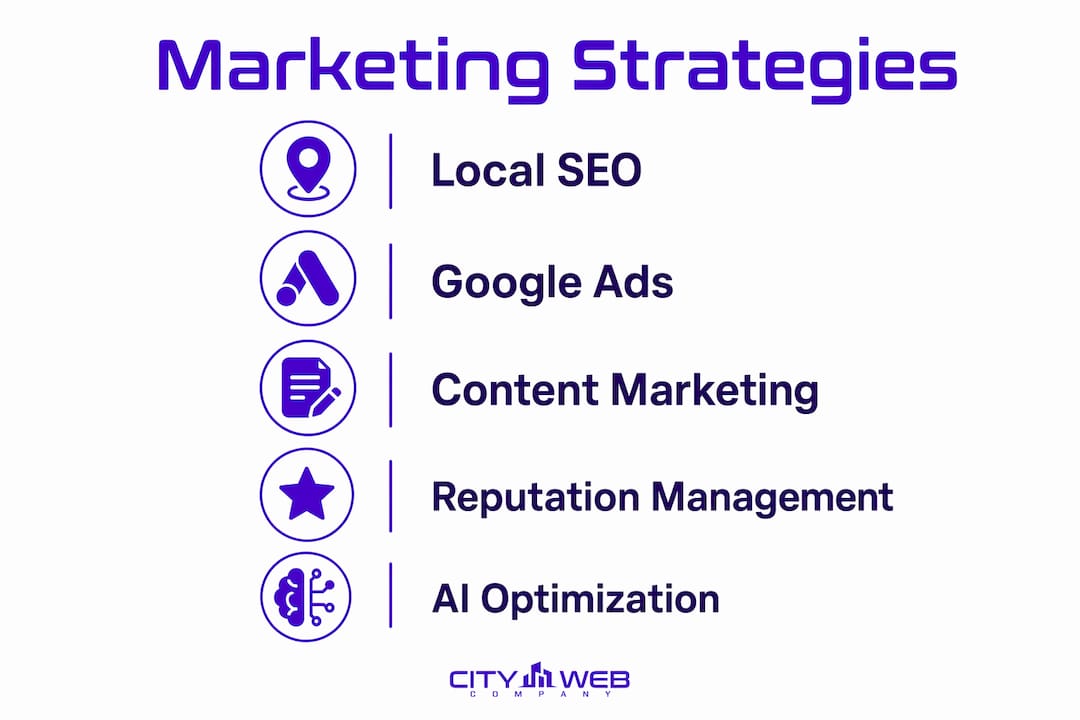
How City Web Company helps law firms build lasting online visibility
Law firms that want to grow their client base need more than a website. They need a connected system of SEO, content, paid advertising, and reputation management working together.

City Web Company builds that system for legal professionals. From local SEO trends that put your firm in front of clients searching in your market, to Google Ads management that generates leads while your organic presence grows, City Web Company handles the full digital marketing stack. The team also builds and optimizes law firm websites designed to convert visitors into consultations. If you are ready to turn your online presence into a client acquisition system, contact City Web Company for a tailored plan.
FAQ
Why do lawyers need a website in 2026?
A website is the foundation of every other digital marketing effort. Without one, your firm cannot rank in search, collect reviews effectively, or convert referred prospects who research you online before calling.
How long does SEO take to generate leads for law firms?
SEO has a 90–120 day incubation period before generating consistent organic leads. After that initial period, cost per lead drops to $50–$100, compared to $150–$600 for paid search ads.
What is online reputation management for attorneys?
Online reputation management for attorneys is the practice of monitoring, responding to, and building client reviews across platforms like Google, Avvo, and Martindale-Hubbell to increase trust and improve local search rankings.
How does AI search affect a law firm’s online visibility?
AI tools like Google AI Overviews now answer legal questions directly in search results, reducing click-through rates on organic listings by roughly 34–35%. Firms with authoritative, structured content are more likely to be cited as the answer.
What is the most cost-effective digital marketing channel for lawyers?
Local SEO delivers the lowest long-term cost per lead for most law firms. Combining local SEO with a fully optimized Google Business Profile and consistent client reviews produces the strongest return over a 6-to-12-month horizon.
Recommended
These articles were popular with other readers too: