

Pass Google Business verification with a video-first checklist. Film one continuous 30 second take, fix flagged issues, and know when to hire help.
Social Media Marketing Types for Local Service Businesses
TL;DR:
- Local service businesses should define clear, measurable goals before choosing a social media approach.
- Organic content builds trust over time, while paid ads offer faster, targeted lead generation.
- A hybrid strategy combines organic trust-building with paid amplification for optimal results.
Choosing the right social media strategy feels impossible when you’re running a plumbing crew, managing an HVAC team, or juggling appointments at a med spa. There are dozens of platforms, ad formats, content styles, and targeting options pulling you in different directions. Meanwhile, your competitors are posting something every day, and you’re not sure if any of it actually turns into booked jobs. Social media marketing types can be grouped into organic, paid, and hybrid strategies, and each one serves a different business goal. This guide breaks down all three, shows you how to evaluate which approach fits your local service business, and gives you a clear path toward generating real leads instead of just collecting likes.
Table of Contents
Table of Contents
- How to evaluate social media marketing types for local businesses
- Organic social media marketing: Building trust and visibility
- Paid social media marketing: Amplifying reach and lead generation
- Hybrid strategies: Combining organic and paid for maximum impact
- Why the ‘one-size-fits-all’ approach to social media rarely works for local service businesses
- Get targeted results with expert help
- Frequently asked questions
Key Takeaways
| Point | Details |
|---|---|
| Choose metrics wisely | Focus on leads and conversions, not just likes or followers. |
| Leverage hybrid strategies | Combine organic trust-building with paid ads for scalable results. |
| Tailor to your audience | Pick platforms and content types where your local customers actually spend time. |
| Test and measure | Experiment, analyze results, and refine your approach for better ROI. |
How to evaluate social media marketing types for local businesses
Before you pick a platform or post a single photo, you need a clear decision framework. Too many local business owners jump straight into posting or boosting ads without knowing what they actually want to achieve. That’s the fastest way to burn time and money.
Start by defining measurable business goals. “More visibility” is not a goal. A goal sounds like: “Get 15 new roofing estimate requests per month from Facebook” or “Book 10 more HVAC tune-ups via Instagram ads by Q3.” Specific goals shape every decision that follows, from the platform you choose to the content you create.
Next, go where your customers already are. A strategy should be explicit about platform choices, not just content types. Homeowners in your service area are most likely browsing Facebook, checking Google, or scrolling Instagram. Younger audiences might be on TikTok. You don’t need to be everywhere. Pick one or two platforms where your ideal clients spend real time.
Decide what “success” actually looks like before you start. For local service businesses, that usually means website visits, phone calls, contact form submissions, or booked appointments. Knowing your success metrics upfront lets you track what matters and ignore what doesn’t.
Set a realistic budget for both time and money. Organic posting takes consistent effort: writing captions, taking photos, responding to comments. Paid ads cost real dollars. Neither works well if you only commit halfway. Even a small, consistent budget beats random bursts of activity.
Finally, track actual leads generated from your social channels. Use web analytics in social media to see which platforms send converting traffic to your website. Most business owners focus on follower counts and post likes. Those numbers feel good but rarely connect to revenue.
Here are the core criteria to evaluate any social media strategy:
- Business goal alignment: Does this strategy bring leads or just awareness?
- Platform fit: Are your local clients active there?
- Budget reality: Can you sustain this for at least 90 days?
- Time investment: Do you or a team member have capacity to execute?
- Lead tracking: Can you measure ROI from this channel?
Pro Tip: Before launching any campaign, write down your top three metrics and review them weekly. Vanity stats like impressions and follower growth feel rewarding but rarely tell you if a new client called. Solid marketing tips for local businesses always start with the numbers that tie directly to your pipeline.
Organic social media marketing: Building trust and visibility
With your evaluation criteria in hand, let’s look first at the potential and limits of organic strategies.
Organic marketing is providing unpaid content and engagement to build your audience over time. No ad spend. Just consistent, authentic posting that earns attention rather than buying it. For local service businesses, this is often where the journey starts.
The main platforms for local service businesses include Facebook, Instagram, and Google Business Profile. Facebook is still king for local community groups and neighborhood recommendations. Instagram works well for visual trades like landscaping, remodeling, and pest control. Google Business Profile, often overlooked, is one of the most powerful free tools you have because it shows up directly in local search results when someone types “HVAC repair near me.”
The strengths of organic social media are real. It’s cost-effective, it builds local trust over time, and it lets your business show personality. When a homeowner sees behind-the-scenes footage of your crew on a job, reads a genuine customer testimonial, or watches a quick educational video about how to spot a water leak, they feel like they know you. That familiarity creates the trust that leads to a phone call.
“The businesses that win locally aren’t the loudest. They’re the ones that show up consistently with content that actually helps their neighbors.”
But organic strategies have real challenges too. Growth is slow. Algorithm changes on Facebook and Instagram can cut your reach overnight. And standing out in a feed full of competing content takes creativity and consistency that many busy owners struggle to maintain.
Organic is best for building relationships, establishing your reputation, and becoming a recognized name in your community. It’s not the fastest path to a flood of leads, but it builds the foundation that makes everything else work better.
Here are the most effective organic content types for local service businesses:
- Educational posts: “5 signs your sewer line needs attention”
- Behind-the-scenes content: Your crew arriving at a job, prep work, finished results
- Customer testimonials: Short video reviews or screenshot quotes with permission
- Local stories: Sponsoring a school event, helping a neighbor, community involvement
- Seasonal tips: “Prepare your HVAC before the first freeze” type content
Pro Tip: Study your top local marketing tips and schedule posts during peak local hours, typically Tuesday through Thursday between 7 and 9 a.m. or 5 and 7 p.m. That’s when working homeowners are most likely to scroll through their feeds.
Paid social media marketing: Amplifying reach and lead generation
Maybe you want immediate results or wider reach. That’s where paid strategies shine.
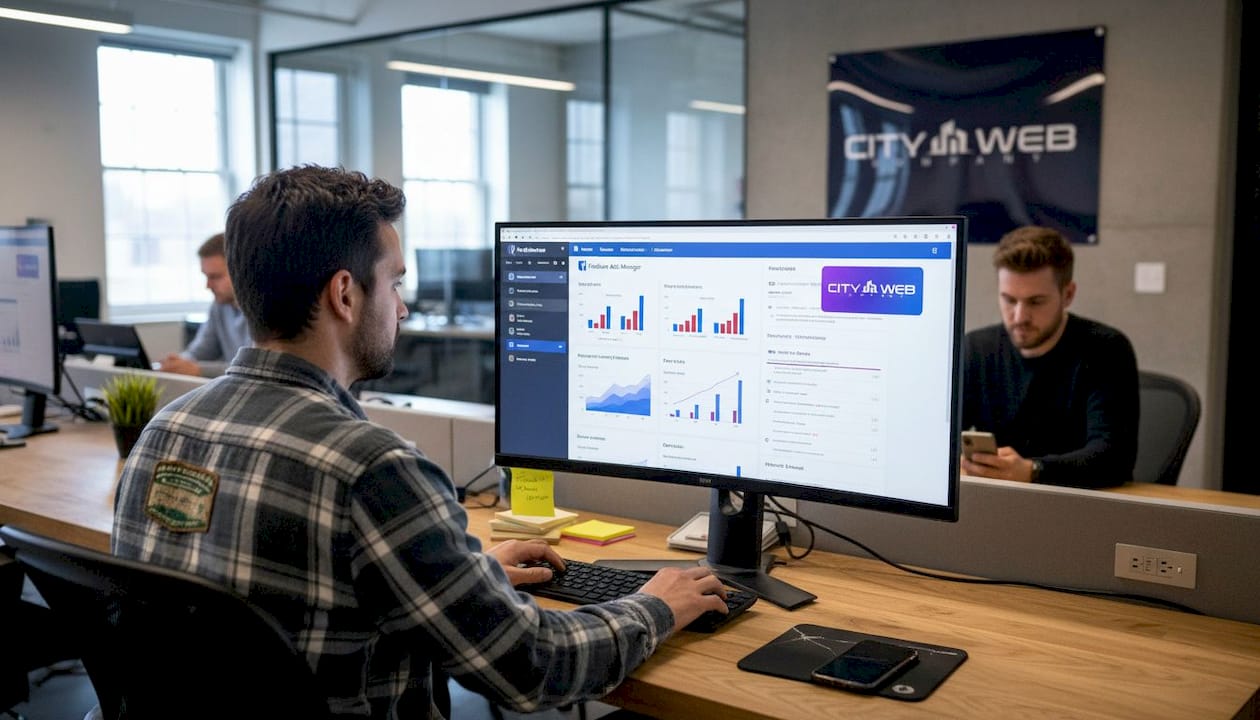
Paid social media marketing covers boosted posts, targeted ad campaigns, and retargeting ads that follow people who visited your website. Unlike organic content that waits to be discovered, paid ads put your service directly in front of people who match your ideal customer profile, whether that’s homeowners within 15 miles, people who searched for a competitor, or anyone who clicked your website last week but didn’t call.
Paid social amplifies reach and enables targeted retargeting, which makes it one of the most efficient lead-generation tools available to local service businesses. The speed advantage is massive. Paid campaigns can reach target users significantly faster than organic efforts, making them ideal when you need leads now, not in three months.
Let’s talk cost and targeting. A small HVAC company running $500 per month in Facebook ads targeting homeowners within 20 miles of their service area can realistically expect 20 to 50 qualified leads per month, depending on the season and creative quality. That cost per lead often beats traditional advertising like mailers or newspaper ads. You can learn more about the basics of social media advertising and how targeting works before you commit your budget.
Here’s a quick comparison of the core benefits:
Paid benefits:
- Fast reach to new local audiences
- Precise targeting by location, age, homeowner status, and interest
- Retargeting past website visitors to recover lost leads
- Easy to scale spend when campaigns perform well
Organic benefits:
- No direct ad spend required
- Builds long-term brand equity
- Earns trust through consistent content
- Supports SEO and Google Business Profile signals
| Factor | Paid | Organic |
|---|---|---|
| Cost | Monthly ad budget required | Time investment only |
| Speed to results | Days to weeks | Months |
| Targeting precision | Very high | Low |
| Long-term value | Stops when budget stops | Compounds over time |
| Lead volume control | Scalable | Limited |
The biggest risk with paid is budget waste. Poor targeting, weak creative, or misaligned offers can drain your ad spend fast. Check out this ads tutorial for local leads to understand how to structure campaigns that actually convert, and review why use social media ads for a detailed breakdown of when it makes sense for your specific business type.
Hybrid strategies: Combining organic and paid for maximum impact
Why not get the best of both worlds? Hybrid strategies can amplify results significantly.
A hybrid approach sequences organic and paid tactics together so each one makes the other stronger. Organic content builds credibility and warms up your audience. Paid ads then accelerate growth by putting your best-performing content or offers in front of a much larger, targeted group. Hybrid approaches sequence organic as a trust layer before scaling with paid, which maximizes the lead generation pipeline without burning ad budget on cold audiences who’ve never heard of you.
Here’s how a local service business typically ramps up a hybrid strategy:
- Build your organic foundation (weeks 1 to 4): Post consistently, share testimonials, answer common questions, and establish credibility with your local audience.
- Identify your best-performing content (weeks 4 to 6): Look at what got the most shares, saves, or profile visits. That content tells you what resonates.
- Boost and retarget with paid ads (weeks 6 to 12): Take your top organic posts and put budget behind them. Add retargeting ads for website visitors.
- Scale what converts (month 3 onward): Double down on ad sets generating leads and pause what isn’t. Keep feeding the organic side for long-term trust.
This approach works especially well in competitive industries like plumbing, pest control, and disaster restoration, where trust is everything and multiple competitors are running paid ads. It also works well when launching a new local service because organic content introduces you to the community before you spend heavily on ads.
| Phase | Timeframe | Primary Focus | Budget Split |
|---|---|---|---|
| Organic foundation | Weeks 1 to 4 | Content, community, trust | 0% paid / 100% organic effort |
| Hybrid ramp-up | Weeks 5 to 8 | Boost top content, small retargeting | 30% paid / 70% organic |
| Paid campaign launch | Weeks 9 to 12 | Targeted lead generation ads | 60% paid / 40% organic |
| Full optimization | Month 4+ | Scale winners, test new creative | Adjust based on ROI |
Imagine a local plumber who spends the first month sharing “why your pipes freeze” tips and customer review posts. By week six, they boost their most-shared video with a $300 Facebook ad targeting homeowners within 10 miles. That combination drives 18 estimate calls in two weeks. See the full advertising workflow for leads to structure this kind of campaign, and use these digital growth tips to plan your ramp-up from scratch.
Why the ‘one-size-fits-all’ approach to social media rarely works for local service businesses
Here’s the uncomfortable truth: most local businesses copy what big brands do on social media and wonder why it doesn’t work. Big brands are running brand awareness campaigns. You need booked jobs next Tuesday.
Local trust and personal connection are not just nice to have. They’re your biggest competitive advantage over national chains. A video of your actual technician explaining a repair, shot on a phone, will outperform a polished stock-photo ad almost every time. Your neighbors want to see real people, not a brand identity.
Every service business also has a unique mix of clients, seasonality, and service area. A pest control company in Florida operates completely differently than one in Minnesota. A strategy built for one will fail the other. The smartest owners we’ve worked with don’t just pick a strategy and hope. They test two or three content formats, track which ones generate calls, and double down on what works. Then they let the data build the strategy.
Pro Tip: Don’t chase every new platform or trend. Pick two channels you can actually manage well, tie your metrics directly to call volume and bookings, and stay consistent for at least 90 days before drawing conclusions.
If you want help choosing the right mix without the guesswork, learning more about working with agencies that specialize in local service businesses can save you months of trial and error.
Get targeted results with expert help
Knowing the difference between organic, paid, and hybrid strategies is a great start. Actually executing them while running a full service operation is a different challenge entirely. That’s where having the right partner makes a real difference.
City Web Company works specifically with local service businesses to design and run social media strategies that generate actual leads, not just engagement. From building your organic content calendar to launching precision-targeted paid campaigns, we match the strategy to your goals, your market, and your budget. Explore digital marketing for local leads to understand the full picture, browse our comprehensive marketing services to see what fits your business, or connect with our team about local SEO optimization to make sure you show up where your customers are searching.
Frequently asked questions
What is the main difference between organic and paid social media marketing?
Organic marketing uses unpaid posts to build trust and awareness over time, while paid marketing places targeted ads in front of your ideal local clients for faster reach. The best results often come from using both together.
Why should local businesses track lead metrics instead of vanity metrics?
Tracking leads reveals real sales opportunities and actual business growth, while likes and follower counts rarely connect to new clients calling your business. Tracking conversions, not just vanity metrics, is what separates growing businesses from stagnant ones.
How can a hybrid social media strategy help local businesses?
Hybrid strategies build local trust first with organic content, then use targeted paid ads to scale lead volume faster. Sequencing organic before paid ensures your audience already recognizes you before you spend ad budget on them.
Which social media platform works best for local service businesses?
Facebook, Instagram, and Google Business Profile are consistently the strongest performers for local service businesses because they reach homeowners and offer location-based targeting that drives calls and bookings.
What is the best way to get started if I have a limited budget?
Begin with organic posting on one or two platforms to build credibility, then allocate a small monthly budget to boost your top-performing posts or run a simple retargeting campaign once you see what content resonates.
Recommended
- Top social media marketing tips for local service businesses
- Role of Social Media Ads for Local Service Brands
- Hiring a Social Media Marketing Agency: A Guide for Local Businesses – City Web Company | Digital Marketing Agency
- Social media ads tutorial: boost local leads in 2026
- Status 200 Uploads — Schedule Posts to TikTok, Instagram, FB, YouTube, X & LinkedIn
These articles were popular with other readers too: