
Pass Google Business verification with a video-first checklist. Film one continuous 30 second take, fix flagged issues, and know when to hire help.
Why Invest in Professional Web Design for Your Business
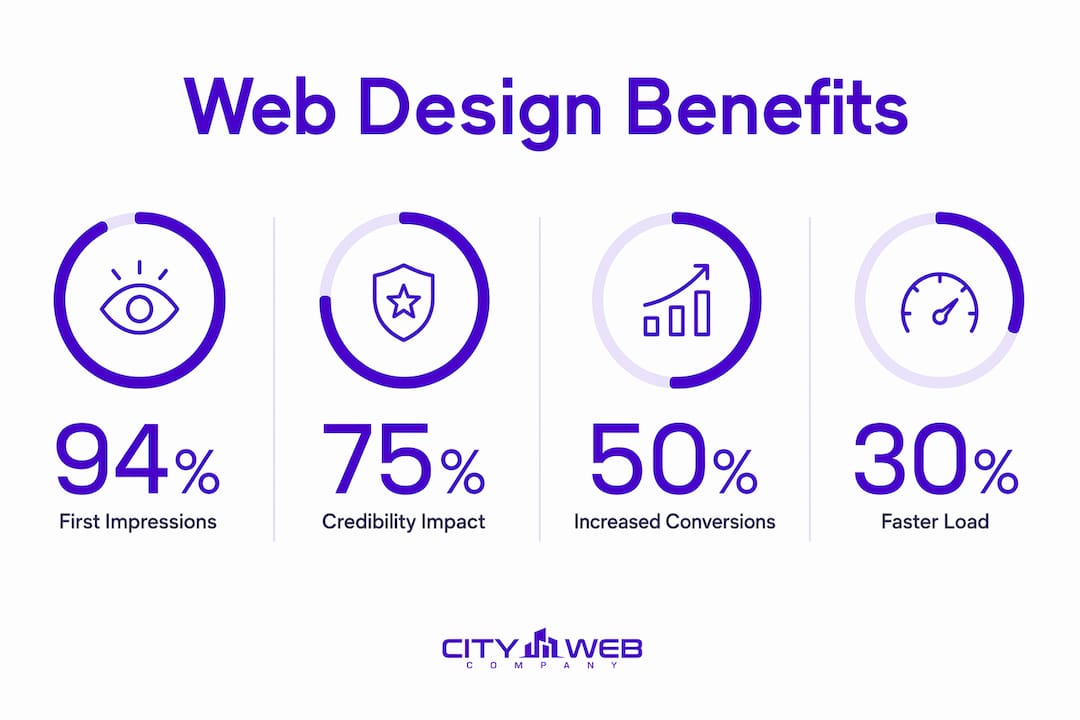
Professional web design is the single most powerful factor in whether a potential customer trusts your business or clicks away to a competitor. Website design influences 94% of users’ first impressions, and 75% of consumers judge a company’s credibility based on its website design alone. For local service businesses, whether you run an HVAC company, a landscaping crew, or a med spa, that first digital impression often determines whether the phone rings. Understanding why invest in professional web design means recognizing that your website is not a brochure. It is your most active salesperson, working every hour of every day.
Table of Contents
Why invest in professional web design to build credibility and trust?
Credibility is not something visitors consciously evaluate. It happens in milliseconds, driven almost entirely by visual design. A cluttered layout, mismatched fonts, or a site that looks like it was built in 2012 signals to a potential customer that your business may not be reliable. That judgment happens before they read a single word about your services.
The psychological mechanism behind this is called the Aesthetic-Usability Effect. Users perceive visually appealing websites as easier to use, even when the underlying functionality is identical to a less attractive site. This means a professionally designed site does not just look better. It actually makes visitors more patient, more forgiving of minor issues, and more willing to complete a contact form or make a call.
“Clarity and order in website design drive perceived credibility more than creative visual complexity, especially at the moment of first contact.” — Corporate Reputation Review
For local service businesses with limited name recognition, this effect is amplified. Website aesthetics are especially critical for lesser-known businesses because design fills the trust gap that a well-known brand name would otherwise cover. A symmetrical, well-organized layout signals reliability and quality regardless of how long you have been in business. That is a significant competitive advantage for a plumber or pest control company competing against larger regional players.
Trust signals embedded in professional design include clean white space, consistent brand colors, readable typography, and high-quality photography. Each of these elements reduces visitor skepticism. When a homeowner lands on your site after searching “HVAC repair near me,” they are making a fast judgment call. A professionally designed site tells them you are serious, organized, and worth calling.

Pro Tip: Request that your web designer use your actual team photos and real job-site images rather than stock photography. Authentic visuals increase trust faster than any design element alone.
What benefits does professional design provide that DIY solutions miss?
The gap between a professionally built website and a DIY template site is not just visual. It is structural, technical, and strategic. Understanding the concrete advantages helps you see why the investment pays off over time rather than just at launch.
SEO and site performance
Responsive design, clean site structure, and optimized performance directly improve search engine rankings and visitor retention. Google’s ranking algorithm rewards sites that load fast, display correctly on mobile devices, and use well-structured HTML. A professional developer builds with these requirements in mind from the start. A DIY site builder often generates bloated code that slows load times and confuses search engine crawlers.
Google PageSpeed Insights scores are a direct reflection of how well a site is built. A professionally coded site regularly scores above 85 on mobile, while many template-built sites score below 50. That gap translates into lower search rankings and higher bounce rates.
Long-term cost efficiency
Professional design reduces the need for frequent fixes and future full redesigns. A scalable architecture means you can add service pages, update content, and integrate tools like Google Analytics or a CRM without rebuilding from scratch. DIY sites often hit a ceiling within 18 months, forcing a costly rebuild that wipes out the initial savings.
Here is a direct comparison of what you get with each approach:
| Feature | Professional design | DIY template |
|---|---|---|
| Mobile responsiveness | Custom, tested across devices | Generic, often inconsistent |
| Page load speed | Optimized code, fast hosting | Bloated templates, slower loads |
| SEO structure | Clean markup, schema, metadata | Limited control, poor defaults |
| Brand consistency | Tailored to your identity | Constrained by template limits |
| Scalability | Built to grow with your business | Hits limits quickly |
| Long-term cost | Lower over 3 to 5 years | Higher due to repeated fixes |
Beyond the technical side, professional design delivers advantages that DIY tools simply cannot replicate:
- Custom typography and color systems that match your brand identity, not a template someone else is already using
- Accessibility compliance under WCAG 2.1 standards, which protects you legally and expands your audience
- Conversion-focused layouts built around how your specific customers behave, not generic user patterns
- Integration with local SEO tools, Google Business Profile, and review platforms from day one
Pro Tip: Before hiring a web designer, ask to see three examples of local service business sites they have built and check each one’s Google PageSpeed Insights score on mobile. Numbers do not lie.
How does professional web design drive conversions and business growth?
A website that looks credible but fails to guide visitors toward action is still a missed opportunity. Professional web design addresses both the aesthetic and the functional side of the customer journey. The goal is not just to impress visitors. It is to convert them into leads and paying customers.
Here is how a professionally designed site moves visitors through the decision process:
- Visual hierarchy directs attention. Professionally designed pages use size, contrast, and spacing to guide the eye toward the most important elements first. Your phone number, your primary service, and your call to action are never buried.
- Clear calls to action reduce friction. Buttons labeled “Get a Free Quote” or “Call Now” placed above the fold eliminate the guesswork. Visitors should never have to search for how to contact you.
- Fast load times keep visitors on the page. Confusing navigation, slow loading, and inconsistent design cause user frustration and abandonment. Every additional second of load time increases the probability that a visitor leaves before seeing your services.
- Intuitive navigation builds confidence. A visitor who can find your service pages, your service area, and your contact information within two clicks is far more likely to convert than one who gets lost in a poorly organized menu.
- Social proof placement amplifies trust. Professional designers know where to place Google reviews, certifications, and before-and-after photos to reinforce the decision to call at the exact moment a visitor is weighing their options.
Clear navigation, consistent visual hierarchy, and fast load times improve user engagement and conversion rates, a finding backed by A/B testing data across thousands of websites. For a local service business, even a modest improvement in conversion rate, say from 2% to 4%, can double the number of leads generated from the same traffic volume. That is the compounding return on a one-time design investment.
The importance of web design extends to accessibility as well. Sites built with screen reader compatibility, sufficient color contrast, and keyboard navigation reach a broader audience and signal professionalism to every visitor, not just those with disabilities.
How can professional design differentiate your local service business?
Local service markets are crowded. In most mid-sized cities, a homeowner searching for a plumber, a landscaper, or a disaster restoration company will see five to ten options on the first page of Google. The businesses that win are not always the cheapest or the most experienced. They are the ones that look the most trustworthy at first glance.
Consistent branding reduces cognitive load and increases recall. When your website uses the same colors, fonts, and visual style as your truck wraps, yard signs, and social media profiles, customers recognize you faster and remember you longer. That recognition drives both repeat business and referrals, two of the highest-value customer acquisition channels for local service companies.
Visual storytelling is another differentiator that professional designers deploy deliberately. A before-and-after gallery for a landscaping company, a photo series of a completed HVAC installation, or a short video of your team on a job site all communicate competence in a way that text alone cannot. These elements require intentional placement and design to work effectively. Dropping photos randomly into a template does not produce the same result.
Here is how design elements map to business outcomes for local service companies:
| Design element | Business outcome |
|---|---|
| Consistent brand colors and fonts | Faster recognition, stronger recall |
| Professional photography | Higher perceived quality and trust |
| Mobile-first layout | More leads from smartphone searches |
| Local SEO-optimized structure | Better rankings in Google Maps and local search |
| Clear service area pages | Attracts the right geographic customers |
Emotional engagement through design is not a soft concept. Professional website aesthetics significantly influence purchase intentions and organizational attractiveness, particularly for businesses with lower initial name recognition. A moving company that looks polished online gets the benefit of the doubt over a competitor with a dated site, even if both have identical reviews and pricing.
Pro Tip: Add a dedicated “About Our Team” page with real photos and short bios. Visitors to local service sites consistently spend more time on team pages than on any other page except the homepage. Familiarity converts.
Key takeaways
Professional web design is the highest-leverage investment a local service business can make to build credibility, attract more customers, and outperform competitors in local search.
| Point | Details |
|---|---|
| First impressions are design-driven | 94% of first impressions are shaped by design, making visual quality non-negotiable. |
| Aesthetics build trust automatically | The Aesthetic-Usability Effect causes visitors to trust and engage more with visually appealing sites. |
| Professional design outperforms DIY long-term | Better SEO, faster load times, and scalable architecture reduce costs over a 3 to 5 year horizon. |
| Design directly impacts conversion rates | Clear hierarchy, fast load times, and strategic CTAs turn more visitors into paying leads. |
| Brand consistency drives local recognition | Uniform visual identity across web and offline channels increases recall and referrals. |
What I have learned from watching local businesses win and lose online
I have spent years watching local service businesses make the same expensive mistake: they treat their website as a one-time expense rather than an ongoing business asset. They spend $500 on a template site, wonder why the phone is not ringing, and then blame Google or their market. The website is almost always the real problem.
Here is the uncomfortable truth about the value of expert web design. Most business owners evaluate their website the way they evaluate a business card. They ask, “Does it look okay?” The right question is, “Does it convert?” Those are completely different standards. A site can look acceptable and still fail to generate a single lead because the call to action is buried, the mobile experience is broken, or the page loads in six seconds on a 4G connection.
The businesses I have seen grow fastest online share one characteristic. They invested in professional web design before they invested in paid advertising. Running Google Ads to a weak website is like pouring water into a leaking bucket. You spend money driving traffic, and the site fails to capture it. Fix the site first, then scale the traffic.
I also want to push back on the idea that professional design is only for big companies. The research is clear: website aesthetics matter most for businesses with lower name recognition. That is every small and mid-sized local service company. You do not have the brand equity of a national chain to fall back on. Your website has to do the credibility work that a recognizable name does for larger competitors.
The businesses that treat web design as a strategic investment, not a grudge purchase, are the ones still growing three years from now.
— Matt
Ready to turn your website into your best lead source?
City Web Company builds professional websites specifically for local service businesses, from HVAC companies and plumbers to landscapers and disaster restoration teams. Every site is designed to load fast, rank in local search, and convert visitors into calls and form submissions.
If your current website is not generating consistent leads, the design is likely the reason. City Web Company’s web design and development services are built around one goal: more customers for your business. You can also explore the full range of digital marketing services to see how design fits into a complete local growth strategy. Get in touch today and find out what a professionally built site can do for your revenue.
FAQ
Why does web design matter for small local businesses?
Website design shapes 94% of first impressions and 75% of credibility judgments, making it the primary factor in whether a local customer trusts your business enough to call. For small businesses without strong brand recognition, professional design is the fastest way to establish authority.
How does web design affect SEO rankings?
Responsive design and optimized site performance directly influence Google rankings because search engines reward fast, mobile-friendly, well-structured sites with higher visibility. A professionally built site gives you a structural SEO advantage that a DIY template cannot match.
Is professional web design worth the cost for a service business?
Yes. Professional design reduces long-term costs by eliminating repeated fixes and premature redesigns, while also improving lead generation. The return on investment compounds over time as better rankings and higher conversion rates deliver more customers from the same traffic.
What is the Aesthetic-Usability Effect and why does it matter?
The Aesthetic-Usability Effect is a psychological phenomenon where users perceive visually appealing websites as easier to use and more trustworthy, even when functionality is identical to a less attractive site. For local service businesses, this means a professional design makes visitors more patient and more likely to convert.
How quickly can a redesigned website impact my business?
Most local service businesses see measurable improvements in lead volume within 60 to 90 days of launching a professionally designed site, particularly when the new design is paired with local SEO optimization. Conversion rate improvements are often visible within the first month as bounce rates drop and contact form submissions increase.
Recommended
These articles were popular with other readers too: