

Pass Google Business verification with a video-first checklist. Film one continuous 30 second take, fix flagged issues, and know when to hire help.
What is Google Ads for law firms? A 2026 guide
Many law firm marketers assume Google Ads work like any other industry: bid on keywords, write compelling copy, and watch clients pour in. The reality is far more complex. Law firms face strict ethical rules, state bar regulations, and Google’s own compliance policies that can lead to campaign suspensions or even professional discipline. This guide explains what Google Ads are, how law firms can use them legally and effectively in 2026, and the best practices for attracting clients without risking your firm’s reputation.
Table of Contents
Table of Contents
- Understanding Google Ads For Law Firms: Basics And Benefits
- Key Legal And Ethical Rules For Law Firm Google Ads In 2026
- Setting Up Compliant, Effective Google Ads Campaigns For Your Law Firm
- Comparing Google Ads With Other Digital Marketing Options For Law Firms
- Maximize Your Law Firm’s Growth With Expert Digital Marketing Services
Key takeaways
| Point | Details |
|---|---|
| Compliance is mandatory | Google Ads for law firms require strict adherence to state bar advertising rules and Google platform policies to avoid penalties. |
| Prohibited claims matter | Misleading statements, guarantees of outcomes, and improper use of testimonials can trigger disciplinary action from your state bar. |
| ROI tracking is essential | Integrating call tracking and CRM systems allows you to measure which campaigns generate consultations and signed clients, not just clicks. |
| Ethics build trust | Following digital marketing ethics improves campaign effectiveness and protects your professional standing. |
| Review rules first | Always consult your state bar guidelines and Google Ads policies before launching any campaign to ensure full compliance. |
Understanding Google Ads for law firms: basics and benefits
Google Ads operates as a pay-per-click advertising platform where businesses bid on keywords to display ads in search results. When someone searches for terms like “personal injury attorney near me” or “divorce lawyer Tampa,” your firm’s ad can appear at the top of the results page. You only pay when someone clicks your ad, making it a measurable, intent-driven marketing channel.
For law firms, Google Ads offers several compelling advantages. You can target potential clients actively searching for legal services right when they need help. Geographic targeting ensures your ads reach people in your service area, whether that’s a single city or multiple states. The platform provides detailed performance data showing exactly how many people clicked your ad, called your office, or filled out a contact form.
Google Ads help law firms reach potential clients actively searching for legal services, creating opportunities that organic search alone might miss. Common campaign types include search ads appearing in Google results, display ads showing on websites across the internet, and remarketing ads that follow previous site visitors. Each type serves different goals within your broader marketing strategy.
These campaigns complement other efforts like SEO and content marketing. While organic search builds long-term authority, Google Ads delivers immediate visibility for competitive practice areas where ranking organically takes months or years. The key is aligning your ad messaging with specific practice areas and ensuring every click leads to a relevant, conversion-optimized landing page.
Pro Tip: Start with search campaigns focused on your highest-value practice areas before expanding to display or remarketing, as search intent is strongest and easiest to track for ROI.
Key legal and ethical rules for law firm Google Ads in 2026
Running compliant Google Ads campaigns requires understanding multiple layers of regulation. State bar associations publish detailed advertising rules that vary significantly by jurisdiction. At minimum, most states require ads to clearly identify your firm name and office location. Many prohibit language suggesting guaranteed outcomes, such as “We win every case” or “Guaranteed settlement.”
Deceptive or misleading statements create serious ethical violations. The Florida Bar’s Handbook specifies required content and prohibits misleading advertising, setting clear boundaries that many other states mirror. Claims about past results face heavy scrutiny because they can create unjustified expectations. Even factual statements like “Recovered $10 million for clients” may require disclaimers explaining that past results don’t guarantee future outcomes.
Testimonials present another compliance minefield. Some states prohibit client testimonials entirely, while others allow them with specific disclaimers. Using actor portrayals without disclosure, or presenting fabricated reviews, violates both bar rules and FTC guidelines. Misleading claims, guarantees, and improper testimonials can lead to disciplinary action including public reprimands, fines, or license suspension.
Google’s platform policies add another compliance layer. Legal service ads must meet Google’s certification requirements in many jurisdictions. Ads cannot make unrealistic promises or use manipulative tactics to generate leads. Violations can result in account suspension, wasting your ad budget and damaging your firm’s online presence.
Beyond advertising-specific rules, law firms must comply with FTC truth-in-advertising standards and data privacy laws like CCPA or state-specific regulations. Tracking pixels and remarketing require proper privacy policy disclosures. The consequences of non-compliance extend beyond wasted marketing dollars to professional reputation damage and potential disbarment proceedings.
“Every advertisement must withstand scrutiny from your state bar, competitors, and the public. When in doubt, seek ethics counsel before launching campaigns that push boundaries.”
Key compliance requirements include:
- Clearly identifying your firm name and geographic location
- Avoiding guarantees or promises of specific outcomes
- Including required disclaimers on past results or case outcomes
- Following state-specific rules on testimonials and endorsements
- Maintaining records of all advertisements for bar review
- Ensuring landing pages match ad claims and comply with ethics rules
Regular compliance audits of your legal advertising campaigns protect against inadvertent violations as rules evolve.
Setting up compliant, effective Google Ads campaigns for your law firm
Successful law firm Google Ads campaigns begin with strategic keyword research. Focus on terms potential clients actually use when searching for legal help, not legal jargon. “Car accident lawyer” performs better than “vehicular tort litigation attorney.” Use Google’s Keyword Planner to identify search volume and competition levels for practice-area-specific terms in your geographic market.
Your ad copy must balance persuasive marketing with ethical compliance. Write headlines that clearly state what you offer without making prohibited claims. “Experienced DUI Defense Attorney” works better than “Beat Any DUI Charge.” Description lines should emphasize qualifications, approach, and availability while avoiding outcome guarantees. Every ad needs a clear call to action like “Free Consultation” or “Call Now for Help.”
- Conduct keyword research focused on client search intent and local terms
- Write compliant ad copy meeting both Google policies and bar ethics rules
- Set up geo-targeting to reach potential clients only in your service areas
- Create dedicated landing pages for each practice area or campaign
- Implement call tracking numbers to attribute phone leads to specific ads
- Integrate your CRM to track which campaigns generate consultations and signed clients
- Monitor campaign performance weekly and adjust bids, keywords, and copy based on data
- Schedule regular compliance reviews to ensure ongoing adherence to evolving rules
Geo-targeting ensures your budget focuses on potential clients you can actually serve. Set campaigns to display only in counties or cities where your firm practices. For multi-location firms, create separate campaigns for each office to track performance and optimize locally relevant messaging.
Implementing call tracking and CRM integration is crucial to measure true ROI from consultation to signed client. Assign unique phone numbers to each campaign so you know which keywords and ads drive phone calls. Connect these systems to your case management software to track the complete client journey from first click to retained client to final case value.

Monitoring goes beyond clicks and impressions. Track consultation requests, phone call quality, conversion rates from consultation to retained client, and average case value by campaign. This data reveals which practice areas and keywords deliver profitable clients versus tire kickers. Pause underperforming campaigns and reinvest budget in proven winners.
Pro Tip: Create a compliance checklist covering your state bar rules and review every new ad against it before launch. Common pitfalls include vague superlatives like “best” without substantiation, outcome-focused language implying guarantees, and testimonials without proper disclaimers.
Your law firm website serves as the conversion point for all ad traffic, so ensure landing pages load quickly, clearly explain your services, and make contacting you effortless. Consistency between ad messaging and landing page content improves quality scores and conversion rates while maintaining compliance. Integrate these paid efforts with your broader online marketing strategy for maximum impact.
Comparing Google Ads with other digital marketing options for law firms
Law firm marketing managers must allocate limited budgets across multiple channels, each offering distinct advantages. Understanding how Google Ads compares to alternatives helps you build an integrated strategy that maximizes client acquisition.
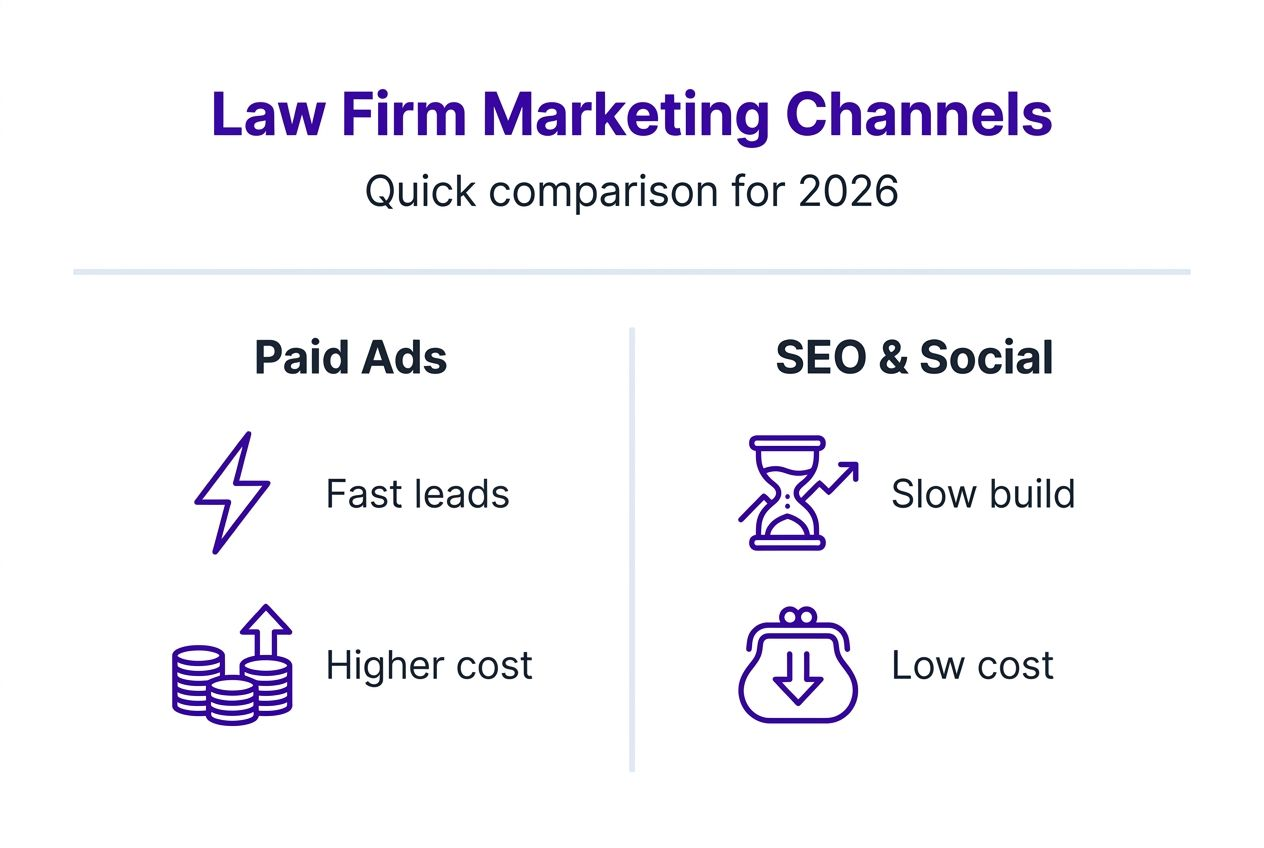
SEO delivers organic search visibility without per-click costs, but requires months of content creation, technical optimization, and link building before ranking competitively. Google Ads provides immediate visibility but stops generating leads the moment you pause spending. Social media advertising on platforms like Facebook and LinkedIn costs less per click but attracts users who aren’t actively seeking legal help, requiring more nurturing to convert.
| Channel | Primary Benefit | Typical Cost | Time to Results | Compliance Complexity |
|---|---|---|---|---|
| Google Ads | Immediate visibility for high-intent searches | $50-$500+ per click | Days to weeks | High (state bar + Google policies) |
| SEO | Long-term organic traffic without per-click costs | $2,000-$10,000+ monthly | 3-12 months | Moderate (content ethics) |
| Social Media Ads | Lower cost targeting by demographics and interests | $5-$50 per click | Weeks to months | Moderate (platform policies) |
| Content Marketing | Authority building and organic reach | $1,000-$5,000+ monthly | 6-24 months | Low to moderate |
Digital marketing for law firms includes SEO, social media, and paid ads, each with unique benefits and challenges. Google Ads excels when you need immediate leads for competitive practice areas like personal injury or criminal defense where organic ranking is difficult. SEO works best for long-term growth in less competitive niches or for building topical authority.

Expected ROI varies dramatically by practice area and market. Personal injury firms might accept $300 per click if cases settle for six figures, while family law practices need lower acquisition costs given typical case values. Track cost per consultation and cost per retained client rather than just cost per click to evaluate true profitability.
The most effective approach combines channels strategically. Use Google Ads for immediate lead generation while building SEO assets for long-term cost reduction. Retarget website visitors with display ads. Create content that supports both organic rankings and provides landing pages for paid campaigns. This integrated approach, detailed in our guide on types of law firm marketing lead generation, maximizes total client acquisition while managing risk across multiple channels.
Maximize your law firm’s growth with expert digital marketing services
Navigating the complex intersection of Google Ads effectiveness and legal compliance requires specialized expertise. City Web Company partners with law firms to create campaigns that attract qualified clients while meeting every ethical obligation.

Our team understands the nuanced advertising rules across multiple state bar jurisdictions and stays current with evolving Google policies. We handle everything from compliant keyword research and ad copywriting to conversion tracking and campaign optimization. Beyond Google Ads, we offer comprehensive digital marketing services including SEO, website development, and integrated advertising strategies designed specifically for legal service providers. Whether you need expert Google advertising management or a complete digital marketing strategy for your law firm, we deliver measurable results that grow your practice ethically and effectively.
What is Google Ads for law firms? FAQ
What are Google Ads and how do they work for law firms?
Google Ads is a pay-per-click platform where law firms bid on keywords to display ads when potential clients search for legal services. You only pay when someone clicks your ad, making it a cost-controlled way to attract clients actively seeking help. Campaigns can target specific geographic areas, practice areas, and search terms relevant to your firm’s expertise.
What legal restrictions apply to law firm ads on Google?
Law firms must comply with state bar advertising rules prohibiting misleading claims, guarantees of outcomes, and improper use of testimonials. Most states require clear identification of firm name and location in all ads. Violations can result in disciplinary action including fines, public reprimands, or license suspension, making compliance review essential before launching campaigns.
How can I measure the ROI of Google Ads campaigns?
Track ROI by implementing call tracking to attribute phone leads to specific campaigns and integrating your CRM to follow clients from first click through consultation to signed retainer. Measure cost per consultation and cost per retained client rather than just clicks. Calculate total case value from Google Ads leads to determine true profitability and optimize budget allocation accordingly.
Are testimonials allowed in law firm ads?
Testimonial regulations vary significantly by state, with some prohibiting them entirely and others allowing them with required disclaimers. Check your specific state bar rules before using any client reviews or endorsements in Google Ads. Even where permitted, testimonials must be genuine, not misleading, and often require conspicuous disclaimers that past results don’t guarantee future outcomes.
What happens if my ads violate bar rules?
Bar rule violations can result in formal disciplinary proceedings including public reprimands, fines, mandatory ethics training, or in severe cases, license suspension or disbarment. Google may also suspend your advertising account for policy violations, immediately halting all campaigns. Both outcomes damage your professional reputation and waste marketing investment, making proactive compliance review critical.
How much should law firms budget for Google Ads?
Budgets vary widely based on practice area competitiveness and geographic market, ranging from $2,000 monthly for niche practices to $50,000+ for competitive personal injury markets. Start with a test budget allowing at least 50-100 clicks monthly to gather meaningful performance data. Adjust spending based on cost per consultation and case value metrics rather than arbitrary monthly amounts.
Recommended
These articles were popular with other readers too: