
Discover how to create effective step by step social media ads for your local service business. Maximize leads and returns on your ad spend.
What is paid advertising? A clear guide for local service businesses
TL;DR:
- Paid advertising for local service businesses encompasses multiple models, including pay-per-lead, which only charges when a verified customer contacts you. Success depends not only on choosing the right model and platform but also on building trust signals like strong reviews and quick responsiveness. Effective campaigns require an integrated approach with a solid online reputation, optimized website, and active management.
Most local service businesses assume paid advertising means one thing: pay money, get clicks. That assumption leads to wasted budgets and missed opportunities. The reality is that paid advertising includes multiple pricing models beyond pay-per-click, including options where you only pay when a real customer actually contacts you. For HVAC companies, plumbers, and pest control operators, this distinction matters enormously. This guide breaks down every major model, explains which platforms make sense for your industry, and gives you a clear path to launch your first campaign with confidence.
Table of Contents
Table of Contents
- How paid advertising works: Models, platforms, and payment types
- Paid ads tailored to local service businesses
- Is paid advertising right for your local business?
- Getting started: Steps to launch your first paid ad campaign
- Why paid advertising only works when paired with trust
- Grow your local business with expert digital marketing help
- Frequently asked questions
Key Takeaways
| Point | Details |
|---|---|
| Multiple pricing models | Paid advertising includes pay-per-click, pay-per-lead, and pay-per-impression options to suit various business needs. |
| LSAs favor local services | For HVAC, plumbing, and pest control, Google Local Services Ads offer pay-per-lead pricing and high visibility. |
| Getting started is simple | Launching a paid ad campaign involves a few clear steps and works for most local service businesses with any size budget. |
| Trust is key | Paid ads work best when your business earns customer trust through great reviews and fast response. |
| Combine strategies | Mixing paid ads with local SEO delivers stronger results for local service businesses. |
How paid advertising works: Models, platforms, and payment types
Paid advertising is any form of online promotion where you pay a platform to show your business to potential customers. But the way you pay, and what you pay for, varies significantly depending on the platform and your campaign goal.
The three main payment models you’ll encounter are:
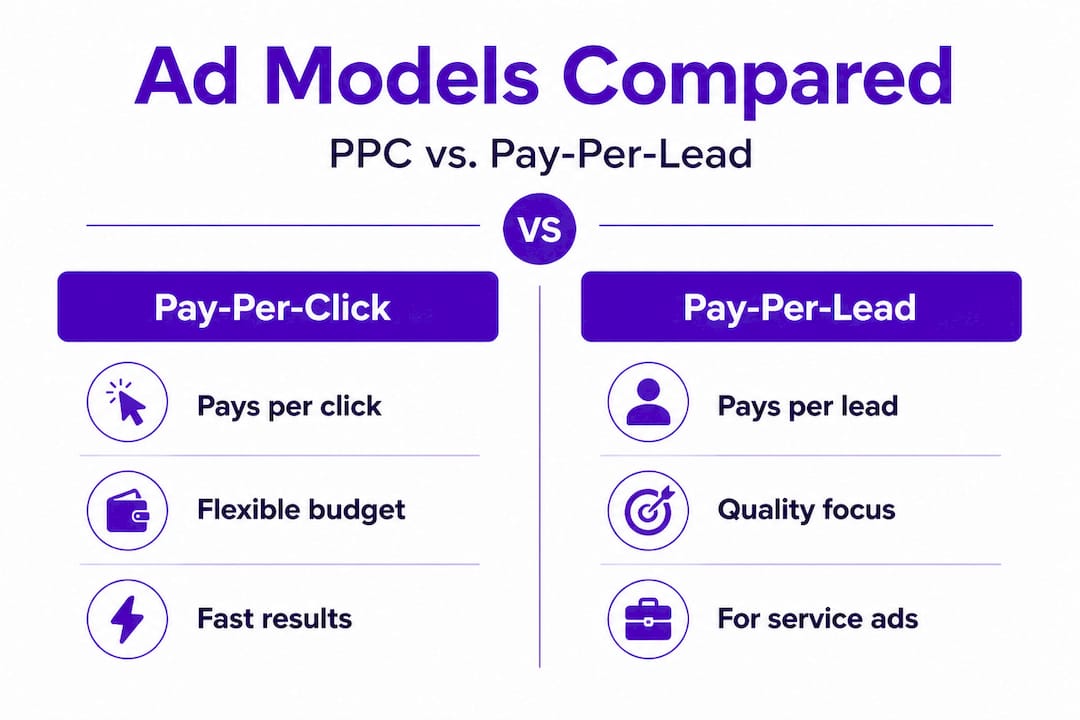
- Pay-per-click (PPC): You pay each time someone clicks your ad. This is the most common model on Google Search and social media platforms. You control a maximum bid per click, and the platform runs an auction to determine when and where your ad appears.
- Pay-per-lead (PPL): You only pay when a verified customer contacts you, whether by phone call, message, or form submission. This model is popular with Google Local Services Ads and is especially valuable for home service businesses.
- Pay-per-impression (CPM): You pay for every 1,000 times your ad is shown, regardless of whether anyone clicks. This model is common on display networks and social platforms when your goal is brand awareness rather than immediate leads.
Understanding why invest in Google Ads starts with knowing which model aligns with your goal. If you want phone calls today, PPL or PPC on search is your best bet. If you want your brand seen across a neighborhood before the busy season, CPM display ads can build that awareness at a low cost.
Where paid ads actually appear is just as important as how you pay for them. Ads can show up in Google search results, on websites across the internet through display networks, inside social media feeds like Facebook and Instagram, on YouTube videos, and even within mobile apps. Each placement reaches a different type of customer at a different moment in their decision process.
| Payment model | You pay for | Best use case | Example platform |
|---|---|---|---|
| Pay-per-click | Each click | Lead generation, search intent | Google Ads, Bing |
| Pay-per-lead | Each verified contact | Home services, local calls | Google LSAs |
| Pay-per-impression | Every 1,000 views | Brand awareness, seasonal push | Facebook, Display |
For a deeper breakdown of how the search side works, the Google Ads explained guide covers the auction system, quality scores, and bidding strategies in plain language.
One important stat: businesses that run paid search ads are far more likely to appear above organic results, which means customers see them first before scrolling to any unpaid listing. For competitive service categories like HVAC or emergency plumbing, that top position is often the difference between winning a job and losing it to a competitor.
Paid ads tailored to local service businesses
Having clarified the major paid ad models, let’s focus on what matters most to local service businesses: their own advertising options and advantages.
Google Local Services Ads (LSAs) are the most important paid advertising format for home service businesses to understand. LSAs appear at the very top of Google search results, even above traditional PPC ads, and they use a pay-per-lead model rather than pay-per-click. You only pay when a customer calls or messages you directly through the ad.
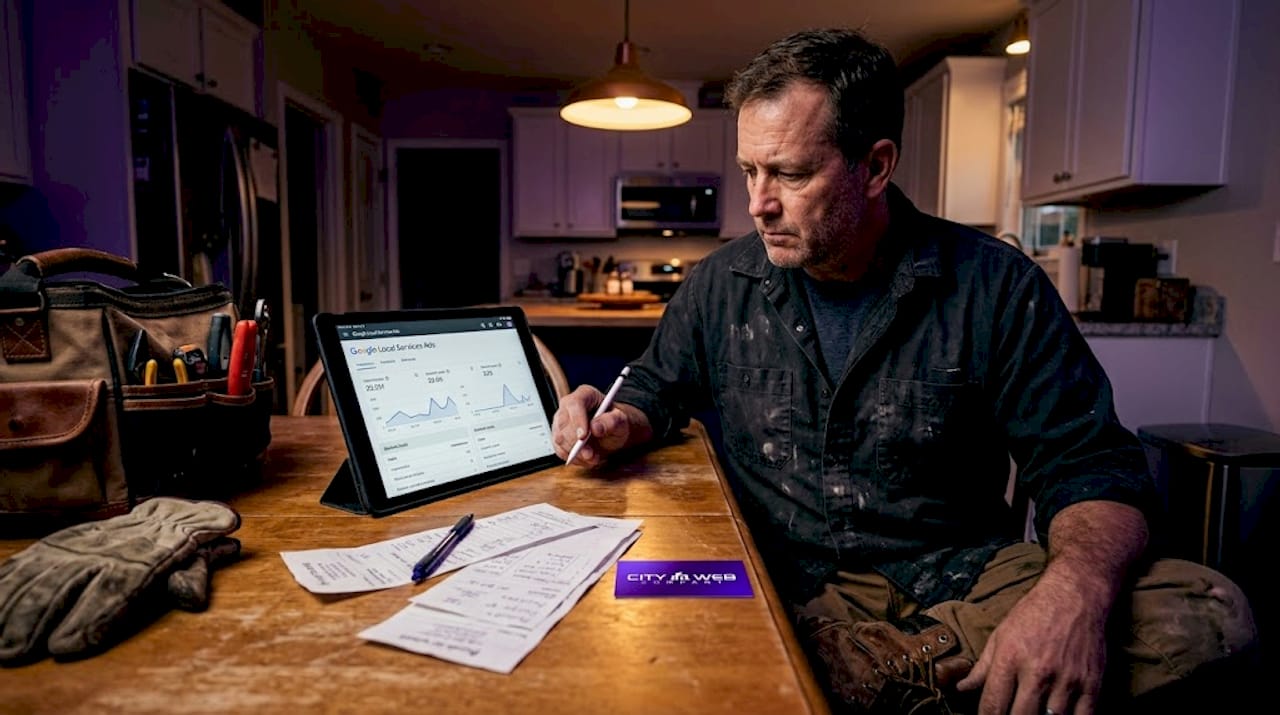
What makes LSAs different from regular Google Ads is the verification process. Google requires businesses to pass background checks, verify their license and insurance, and maintain a strong review profile. In exchange, verified businesses earn a “Google Guaranteed” or “Google Screened” badge that appears on their ad. That badge is a powerful trust signal because customers can see at a glance that Google has vetted the business.
Industries that qualify for LSAs include:
- HVAC installation and repair
- Plumbing services
- Pest control
- Electrical contractors
- Roofing and gutters
- Locksmith services
- Carpet cleaning
- Moving companies
Pro Tip: Your LSA ranking is influenced heavily by your review count and rating. Before launching LSAs, make sure you have a system in place to ask satisfied customers for Google reviews immediately after each job. Even a few extra reviews per month can push your ad significantly higher.
Here is a simple overview of how a local service business sets up and benefits from LSAs:
- Create a Google Business Profile if you don’t already have one. LSAs pull your business information directly from this profile.
- Apply for LSA verification through the Google Local Services portal. Submit your license, insurance, and consent to a background check.
- Set your service area and categories so Google knows which searches to match your ad against.
- Set your weekly budget based on how many leads you want. Google will pace your spending to stay within that limit.
- Respond to leads quickly. Google tracks your responsiveness and rewards businesses that reply promptly with better ad placement.
- Dispute invalid leads. If a lead comes in for a service you don’t offer or from outside your area, you can request a credit. This is one of the biggest financial advantages of the PPL model.
For more detail on maximizing this format, the Google Local Service Ads tips guide walks through advanced strategies. If you want a broader picture of your local options, the ways to advertise locally guide covers everything from LSAs to Google Maps ads. And if you’re ready to go deeper on traditional search campaigns, the Google Ads for service pros resource is a strong next read.
| Feature | Google LSAs | Traditional Google Ads |
|---|---|---|
| Payment trigger | Per verified lead | Per click |
| Ad position | Above PPC ads | Below LSAs |
| Verification required | Yes (license, insurance) | No |
| Trust badge | Google Guaranteed | None |
| Review visibility | Shown in ad | Not shown |
Is paid advertising right for your local business?
Now that you see your choices, it’s time to decide if and when jumping into paid advertising is worth it for your business.
The honest answer is that paid advertising works best when certain conditions are already in place. It is not a magic fix for a business with no reviews, a slow website, or no one available to answer the phone. But when those basics are covered, it can accelerate growth faster than almost any other marketing channel.
Service businesses that benefit most from paid ads share these traits:
- They operate in a market where customers search for services online before calling
- They have a clear service area and can handle increased call volume
- They offer services with a strong average job value, meaning the revenue from a single new customer justifies the cost of the lead
- They have the capacity to respond to inquiries within minutes, not hours
Signs that paid advertising will deliver a strong return for your business:
- Competitors are already running ads in your area, which means customers are clicking on ads and converting
- Your organic search rankings are low or new, and you need visibility now while SEO builds over time
- You have a seasonal spike coming up and want to capture demand at its peak
- You’ve tried other channels and have a baseline understanding of your cost per customer
Factors like local competition level, monthly search volume for your services, and your available budget all shape how quickly you’ll see results. In a mid-size city with moderate competition, a plumbing company running LSAs can often generate leads within the first week of going live. In a major metro with heavy competition, it may take a few weeks of optimization to find the right balance.
For a look at how other service businesses have structured their campaigns, real service-based ad examples shows what’s working across HVAC, pest control, and similar industries right now.
Pro Tip: Before you spend a dollar on paid ads, make sure your phone is answered live during business hours. A missed call from a paid lead is money thrown away. If you can’t staff the phones, set up an answering service or use a call tracking tool that sends you instant notifications.
Getting started: Steps to launch your first paid ad campaign
Once you’ve decided that paid advertising is a fit, you’ll need a clear path to get started. Here’s how.
Pre-campaign essentials to handle first:
Before you touch any ad platform, make sure these four things are solid. First, define your goal clearly. Are you trying to generate phone calls, form submissions, or direction requests? Your goal determines which platform and model to use. Second, identify your best offer. A seasonal discount, a free estimate, or a guaranteed response time gives customers a reason to choose you over the competitor above or below you. Third, prepare a landing page or confirm your website is ready. If you’re running Google Ads, the page customers land on after clicking must match the ad’s promise and load fast on mobile. Fourth, set up call tracking so you know exactly which ads are generating real calls. Without tracking, you’re guessing.
Step-by-step launch sequence:
- Choose your platform. Start with either Google LSAs (if you qualify) or Google Search Ads. Both are built for lead generation and work well for home services.
- Set your geography. Define your service area tightly. Paying for clicks or leads from outside your service zone wastes budget fast.
- Select your keywords or service categories. For LSAs, Google matches you automatically based on your categories. For PPC, research which specific search terms your customers use.
- Write your ad copy. Keep it direct. State what you do, where you serve, and what makes you the right choice. Include a clear call to action like “Call now for same-day service.”
- Set your budget. Start conservatively. A daily budget of $20 to $50 is enough to gather meaningful data in most local markets.
- Launch and monitor daily for the first two weeks. Check which keywords or lead types are converting, and pause anything that’s spending without results.
- Optimize based on data. Shift budget toward what’s working. Adjust bids, refine your service area, and test different ad copy variations.
The biggest mistake first-time advertisers make is launching a campaign and then ignoring it for a month. Paid advertising rewards active management. Check your campaigns at least three times per week in the first 30 days.
The step-by-step Google Ads setup guide goes deeper on the technical side of campaign structure. If you want a current look at what’s working in 2026 specifically, launch Google Ads in 2026 covers platform updates and new features worth knowing.
Keep in mind that paid advertising supports multiple goals depending on the model you choose, and LSAs use pay-per-lead pricing that protects your budget by only charging for real customer contacts.
Why paid advertising only works when paired with trust
After laying out the practical details, here’s a candid perspective on what truly determines paid advertising success.
We’ve worked with enough local service businesses to see a clear pattern. The companies that get the best results from paid ads are rarely the ones with the biggest budgets or the most sophisticated campaign structures. They’re the ones customers trust on sight.
Think about what happens after someone sees your LSA or PPC ad. They might click it. But before they call, most people check your reviews. They look at your star rating, read a few comments, and decide in about 30 seconds whether you feel like a safe choice. If your reviews are thin, outdated, or negative, the ad spend that got them to your listing is wasted. You paid for the attention but couldn’t hold it.
This is the uncomfortable truth about paid advertising for local service businesses: most wasted ad spend is not caused by bad ads. It’s caused by weak trust signals. A competitor with a lower bid but 200 five-star reviews will consistently outperform a business with a higher bid and 15 mixed reviews.
Responsiveness is the second piece. Google’s LSA algorithm explicitly factors in how quickly and consistently you respond to leads. But beyond the algorithm, customers in urgent situations (a burst pipe, an AC failure in July) will call the next business on the list if you don’t pick up within a few minutes. Speed of response is a competitive advantage that no ad budget can substitute for.
The businesses we see succeed long-term with paid advertising treat it as one layer of a larger system. They build local search ranking factors into their strategy, which means strong reviews, consistent business information across the web, and a website that converts visitors. Paid ads accelerate that system. They don’t replace it.
If you’re considering paid advertising, audit your trust signals first. Get your review count above 25 with a strong average rating. Make sure someone answers your phone during business hours. Then launch your campaign and watch the results compound.
Grow your local business with expert digital marketing help
Paid advertising delivers its best results when it works alongside a strong local SEO foundation, a fast website, and a consistent review strategy. For local service businesses, combining these elements is what separates businesses that grow steadily from those that burn through ad budgets without traction.
City Web Company specializes in digital marketing for local leads across HVAC, plumbing, pest control, and other service industries. Whether you need help setting up your first campaign, managing ongoing ads, or building the full digital presence that makes paid ads actually convert, our team knows this space inside and out. Explore our full range of digital marketing services or start with our online advertising guide to see exactly how we approach local paid media for service businesses like yours.
Frequently asked questions
What is the difference between pay-per-click and pay-per-lead for local services?
Pay-per-click charges you each time someone clicks your ad, while pay-per-lead charges only when a potential customer actually contacts you, making it a lower-risk model for home service businesses.
Do I need a large budget to be successful with paid advertising?
No. Both Google and social platforms let you set strict daily limits, and since paid ads support multiple models including pay-per-lead, you can control costs tightly from day one.
Are Google Local Services Ads available for my industry?
LSAs cover home service categories including HVAC, plumbing, pest control, electrical, and other qualified local businesses, though availability varies by region and category.
What is the main benefit of using paid advertising for home service businesses?
Paid advertising helps local service businesses appear at the top of search results immediately, capturing high-intent customers who are ready to book a service right now.
Can I run paid ads on social media platforms for my local service business?
Yes. Paid ads run across social platforms, apps, and websites, allowing local service businesses to target specific geographic areas using whichever pricing model fits their goal.
Recommended
- Social media ads guide: more local leads, less wasted spend
- Why Invest in Google Ads for Local Services
- Why invest in online advertising for local services
- Online Advertising Guide 2026: Boost Local Leads Easily
- Stop Wasting Money: How Paid Ads Can Skyrocket Your Business Growth
- Structured paid advertising: A step-by-step growth guide – Nu Life Digital
These articles were popular with other readers too: