Learn how to design service websites that attract local leads with our proven strategies, transforming visitors into paying customers.
What is website design? A guide for small businesses
Most small business owners think website design is just about picking colors and fonts. That’s like saying a storefront is only about the sign above the door. In reality, website design combines visual elements, functionality and user experience to create a digital platform that attracts customers, builds trust, and drives business growth. This guide breaks down what website design actually involves and shows you how to use it strategically to strengthen your online presence and connect with more customers in 2026.
Table of Contents
Table of Contents
- Understanding Website Design: Beyond Aesthetics
- Core Principles Of Effective Website Design For Small Businesses
- How Website Design Impacts User Engagement And Business Growth
- Choosing The Right Website Design Approach For Your Business Needs
- Get Professional Website Design Help Today
- Frequently Asked Questions
Key takeaways
| Point | Details |
|---|---|
| Design is more than visuals | Website design includes layout, navigation, speed, and mobile responsiveness alongside aesthetics. |
| Trust drives conversions | Professional design elements like consistent branding and clear calls to action build customer confidence. |
| Mobile matters most | Responsive design is essential since mobile devices generate the majority of web traffic in 2026. |
| Measure your results | Track bounce rates, time on site, and conversion metrics to evaluate design effectiveness. |
| Choose the right approach | Match your design strategy to your budget, goals, and growth plans for maximum impact. |
Understanding website design: beyond aesthetics
Website design is the combined process of creating visual and functional elements that shape how visitors interact with your online presence. It goes far beyond choosing attractive images or trendy color schemes. Innovative web design and development encompasses everything from the arrangement of content on each page to how quickly information loads on a visitor’s screen.
The core components of website design work together like instruments in an orchestra. Layout determines where elements appear and how visitors navigate through your content. Color schemes and typography create visual hierarchy and reinforce your brand identity. Navigation systems guide users to the information they need without confusion. Responsiveness ensures your site adapts seamlessly across devices from desktop monitors to smartphones. Performance optimization keeps pages loading quickly, preventing frustrated visitors from leaving.
These elements directly affect how potential customers perceive your business online. A cluttered layout suggests disorganization. Slow loading times communicate that you don’t value their time. Difficult navigation implies you make everything complicated. Conversely, clean design with intuitive structure signals professionalism and competence.
Effective website design includes these key elements:
- Clear visual hierarchy that guides attention to important information
- Intuitive navigation with logical menu structures
- Fast loading speeds across all pages and devices
- Mobile responsive layouts that work on any screen size
- Accessible design that accommodates users with disabilities
- Strategic placement of contact information and calls to action
- Consistent branding through colors, fonts, and imagery
Pro Tip: Prioritize easy navigation and fast loading times above fancy animations or complex features. Visitors will forgive simple design, but they won’t wait for slow pages or struggle to find basic information.
Core principles of effective website design for small businesses
Small businesses need website design that builds immediate trust with first-time visitors. Unlike large corporations with established brand recognition, you have seconds to convince someone your business is legitimate and capable. Building customer confidence with professional websites starts with consistent visual elements that signal reliability.

Consistency across your website creates subconscious comfort. Use the same header layout on every page. Maintain uniform button styles and colors. Keep your logo positioned identically throughout the site. These small details add up to a cohesive experience that feels intentional rather than haphazard. Typography choices matter more than most business owners realize. Professional fonts at readable sizes communicate competence, while decorative or tiny text suggests amateur work.
Accessibility has shifted from optional feature to core requirement in 2026. Your website must work for visitors using screen readers, keyboard navigation, or other assistive technologies. This isn’t just ethical practice; it expands your potential customer base and often improves usability for everyone. Simple changes like proper heading structure, descriptive link text, and sufficient color contrast make your site more inclusive.
Mobile responsiveness is non-negotiable now that smartphones drive the majority of web traffic. Your design must adapt gracefully to screens of all sizes without requiring horizontal scrolling or microscopic text. Test every page on actual mobile devices, not just desktop browser windows resized to look smaller. The mobile experience should feel native and intentional, not like a cramped version of your desktop site.
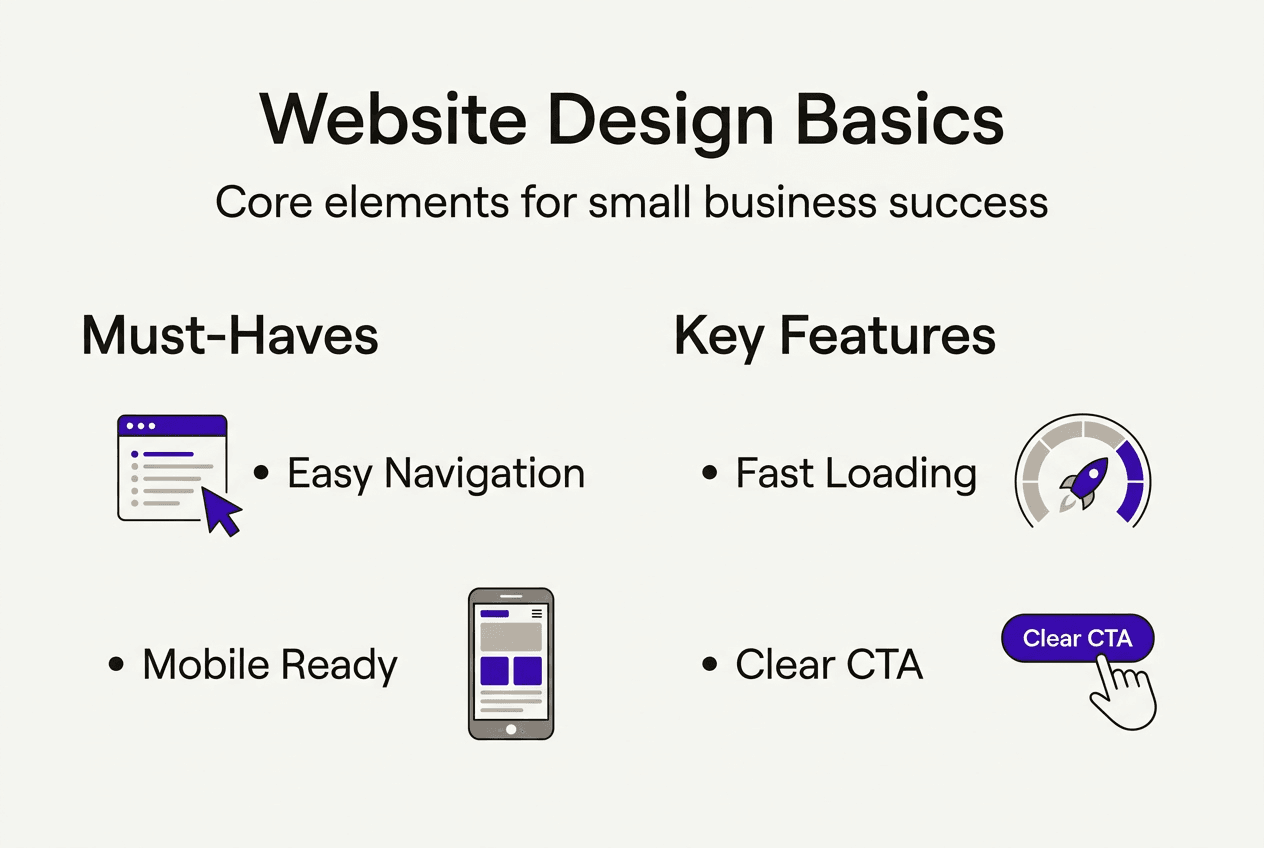

Calls to action need crystal clarity. Visitors should never wonder what step to take next or how to contact you. Place your phone number prominently in the header. Use contrasting button colors for key actions like “Get a Quote” or “Schedule Consultation.” Make contact forms easy to find and simple to complete. Every page should offer a clear path toward becoming a customer.
Pro Tip: Use consistent branding and professional visuals to strengthen credibility. Stock photos of generic office workers undermine trust, while authentic images of your actual team, location, or work build connection.
How website design impacts user engagement and business growth
The quality of your website design directly determines whether visitors stay, explore, and eventually contact you. Website design to boost trust and leads translates into measurable business outcomes through improved engagement metrics. Time on site increases when clear navigation and engaging content make exploration effortless. Bounce rates drop when pages load quickly and deliver exactly what headlines promise. Contact form completions rise when trust signals and strategic placement remove friction from the conversion process.
Here’s how design elements boost engagement sequentially:
- Fast loading speed keeps visitors from abandoning your site before it even displays
- Clear value proposition in the hero section immediately communicates what you offer
- Intuitive navigation allows effortless exploration of services and information
- Strategic content hierarchy guides attention to your most important messages
- Trust signals like testimonials and credentials overcome skepticism
- Prominent calls to action provide obvious next steps at decision moments
- Mobile optimization ensures seamless experience regardless of device
- Accessible design removes barriers for all potential customers
The difference between optimized and poor design shows up clearly in the data:
| Metric | Optimized Design | Poor Design | Impact |
|---|---|---|---|
| Average Time on Site | 3.5 minutes | 45 seconds | 367% increase |
| Bounce Rate | 35% | 68% | 49% reduction |
| Pages per Session | 4.2 | 1.3 | 223% increase |
| Contact Form Completion | 8.5% | 2.1% | 305% increase |
| Mobile Traffic Retention | 82% | 41% | 100% increase |
Small businesses can measure and improve website effectiveness through targeted design adjustments. Start by installing analytics to track visitor behavior patterns. Identify pages with high exit rates and examine what might be driving people away. Test different call to action placements and button colors to see what generates more clicks. Use heat mapping tools to understand where visitors focus attention and where they ignore content.
Simple changes often yield dramatic results. Moving a contact form from a separate page to the homepage sidebar might double submissions. Reducing image file sizes to improve loading speed could cut bounce rates in half. Adding customer testimonials near service descriptions might increase quote requests significantly. The key is measuring before and after each change to understand actual impact rather than guessing.
Choosing the right website design approach for your business needs
Business owners face three main paths for getting a website designed: DIY builders, pre-made templates, or hiring a web design company guide. Each approach offers distinct advantages and limitations depending on your situation.
| Approach | Cost | Time Investment | Customization | Technical Skills Needed | Best For |
|---|---|---|---|---|---|
| DIY Website Builders | $10-50/month | 20-40 hours initial setup | Limited to platform features | Minimal | Very tight budgets, simple sites |
| Premium Templates | $50-200 + hosting | 10-20 hours customization | Moderate within template structure | Basic HTML/CSS helpful | Standard business sites, faster launch |
| Professional Design | $3,000-15,000+ | Minimal owner time | Fully custom to your needs | None required | Competitive markets, growth focus |
DIY website builders like Wix or Squarespace lower the barrier to entry with drag and drop interfaces and included hosting. You can launch a basic site quickly without coding knowledge. However, you’re limited to the features and layouts the platform provides. Customization beyond preset options requires workarounds that often look amateurish. These platforms work for very simple sites but struggle to support complex functionality or unique branding as your business grows.
Premium templates offer middle ground between DIY and custom design. You purchase a professionally designed template, then customize colors, images, and content to match your brand. This approach provides better design quality than most DIY efforts at lower cost than custom work. The tradeoff is that your site shares its basic structure with potentially hundreds of other businesses. Standing out requires significant customization, which demands some technical skill.
Professional design services from agencies like professional website design development deliver tailored solutions built specifically for your business goals and market position. Designers bring expertise in user experience, conversion optimization, and technical implementation that most business owners lack. The higher upfront investment pays off through better results and less time spent struggling with technical issues.
Consider these factors when choosing your approach:
- Budget available for initial investment and ongoing maintenance
- Competitive intensity in your market and need to differentiate
- Technical skills and time you can dedicate to website management
- Specific functionality requirements beyond basic pages
- Growth plans and need for scalability
- Importance of SEO and conversion optimization
- Desire for ongoing support and professional guidance
Pro Tip: Assess your business growth plans when choosing the design approach to future-proof your investment. A DIY site might save money now but cost more later if you need to rebuild everything as you expand.
Get professional website design help today

Professional website design services combine creativity and technical strategy to deliver measurable business growth rather than just attractive pages. City Web Company offers tailored innovative web design and development alongside comprehensive digital marketing services specifically for local businesses facing the challenges of standing out online. Our team understands that small business owners need websites that attract customers and generate revenue, not just look impressive in a portfolio. Getting professional help saves you countless hours of frustration while maximizing your website’s potential to engage visitors and convert them into customers. Reach out to experts who know how to translate your business goals into effective online presence.
Frequently asked questions
What is the difference between website design and web development?
Website design focuses on the visual elements and user experience, including layout, colors, typography, and how visitors interact with content. Web development handles the technical coding and functionality that makes the design work, like databases, forms, and interactive features. Both disciplines work together to create a functional website, with designers creating the blueprint and developers building the technical foundation.
Why is mobile-friendly website design important in 2026?
Mobile devices generate over 60% of web traffic, making mobile optimization essential for reaching your audience where they actually browse. Responsive design ensures visitors can navigate, read content, and complete actions seamlessly on any device without pinching, zooming, or horizontal scrolling. Search engines also prioritize mobile-friendly sites in rankings, directly impacting your visibility to potential customers.
How can small businesses measure if their website design is effective?
Track key metrics like bounce rate, average time on site, pages per session, and conversion rates through analytics tools. High bounce rates or short visit times often signal design problems that confuse or frustrate visitors. Use website analytics platforms and consider user testing with actual customers to identify specific design strengths and weaknesses that affect business results.
How much should a small business budget for professional website design?
Professional website design typically ranges from $3,000 to $15,000 depending on complexity, custom features, and ongoing support needs. Consider this an investment in your digital storefront rather than an expense, as effective design directly impacts lead generation and revenue. Factor in both initial design costs and ongoing maintenance, hosting, and update expenses when budgeting.
Can I update my website design myself after hiring a professional?
Most professional designers build sites on content management systems that allow you to update text, images, and basic content without technical skills. However, significant design changes or new functionality typically require professional help to maintain quality and avoid breaking existing features. Discuss content management capabilities and ongoing support options with your designer before starting the project.
Recommended
- Hiring a Web Design Company: A Business Owner’s Guide – City Web Company | Digital Marketing Agency
- Website design: boost trust and local leads in 2026
- SEO Services for Small Businesses: A Complete Starter Guide – City Web Company | Digital Marketing Agency
- Innovative Web Design & Development – City Web Company Grand Junction
These articles were popular with other readers too: