

Pass Google Business verification with a video-first checklist. Film one continuous 30 second take, fix flagged issues, and know when to hire help.
Google Ads in Legal Services: Driving Client Growth
Competing for new cases in busy American and Canadian legal markets often leaves smaller firms searching for smarter ways to connect with clients. Understanding how Google Ads optimization strategies can deliver high quality leads is essential for attorneys aiming to grow without wasting budget. This article explores how Google Ads works for legal services, guides you through ad types, compliance, costs, and the actionable steps that turn clicks into real clients.
Table of Contents
Table of Contents
- Defining Google Ads For Legal Services
- Types Of Google Ads For Law Firms
- How Google Ads Targets Legal Clients
- Compliance And Ethical Advertising Rules
- Budgeting, Costs, And Roi Analysis
- Common Pitfalls And Optimization Strategies
Key Takeaways
| Point | Details |
|---|---|
| Targeted Advertising | Google Ads allows law firms to display ads based on specific keywords, connecting them directly with potential clients seeking legal representation. |
| Type of Ads | Various formats such as Search Network, Display Network, Video Ads, and Local Service Ads cater to different client needs and behaviors. |
| Performance Tracking | Continuous monitoring and optimization of ad campaigns are essential for maximizing return on investment and client acquisition. |
| Compliance Requirements | Attorneys must adhere to ethical advertising guidelines and state regulations to avoid penalties and ensure truthful representation of services. |
Defining Google Ads for Legal Services
Google Ads represents a powerful digital marketing platform that enables law firms to strategically target potential clients searching for legal services online. Unlike traditional advertising methods, these targeted ads appear directly in search results when potential clients are actively seeking legal representation. By leveraging precise Google Ads setup strategies, attorneys can connect with individuals experiencing specific legal challenges.
The platform allows law firms to create customized advertisements that appear for specific keyword searches related to legal services. For instance, a personal injury attorney might display ads when someone searches “car accident lawyer near me” or “compensation for workplace injury”. These ads are charged on a pay per click model, meaning law firms only pay when an interested potential client actually clicks on their advertisement, making it a cost effective marketing approach.
Successful Google Ads campaigns for legal services require careful keyword research, compelling ad copy, and strategic targeting. Attorneys must understand their target client demographics, practice area specialties, and geographic service regions to develop precise ad configurations. The ads can be further refined using location targeting, device preferences, and scheduling options that maximize visibility during peak search times.
Pro tip: Start with a modest budget and continuously monitor your ad performance, adjusting keywords and targeting to improve your return on investment over time.
Types of Google Ads for Law Firms
Law firms have multiple Google Ads formats available to reach potential clients, each designed to target specific client needs and search behaviors. Search network ads represent the most common type, appearing directly in Google search results when potential clients enter keywords related to legal services. These text-based advertisements allow attorneys to maximize advertising ROI by displaying targeted messages precisely when individuals are seeking legal assistance.
Display network ads offer an alternative approach, showing visual banner advertisements across websites frequented by potential clients. These graphic advertisements can showcase law firm branding, highlight practice area specialties, or promote free consultation offers. Remarketing display ads take this strategy further by targeting individuals who have previously visited the law firm’s website, helping maintain brand visibility and encourage return engagement.
Video and local service ads provide additional sophisticated targeting options for legal practices. YouTube video advertisements can demonstrate attorney expertise, share client testimonials, or explain complex legal processes. Local service ads appear at the top of search results with a distinctive green “verified” badge, helping smaller law firms compete against larger competitors by highlighting their local presence and credibility.
Pro tip: Experiment with different ad formats and track performance metrics closely, allocating more budget to the advertisements generating the highest quality client leads.
Here is a structured comparison of Google Ads formats commonly used by law firms:
| Ad Format | Visual Style | Typical Use Case | Unique Advantage |
|---|---|---|---|
| Search Network | Text only | Capturing active search intent | High visibility in search results |
| Display Network | Visual banners | Brand awareness across websites | Wide exposure on diverse platforms |
| Video Ads | Video (YouTube) | Showcasing expertise | Engaging demonstrations/testimonials |
| Local Service Ads | Text + “verified” badge | Promoting local credibility | Higher trust and top placement |
How Google Ads Targets Legal Clients
Google Ads employs sophisticated targeting mechanisms that allow law firms to connect with potential clients precisely when they are seeking legal services. By utilizing keyword targeting, attorneys can display advertisements to individuals searching for specific legal issues like personal injury, divorce, estate planning, or criminal defense. Local PPC strategies enable lawyers to narrow their audience to specific geographic regions, ensuring ads reach clients within their practice coverage area.

Demographic targeting provides another powerful tool for legal advertising. Law firms can refine their ad audiences based on age, income level, education, and other relevant characteristics that align with their ideal client profile. For instance, a family law attorney might target middle income individuals between 35 and 55 years old, while a personal injury lawyer could focus on working age adults more likely to experience workplace or automotive accidents.
Intent-based targeting represents a critical component of Google Ads for legal services. This approach analyzes user search behaviors, browsing history, and online interactions to identify individuals most likely to need legal representation. By tracking signals such as recent life events, search queries about legal problems, or visits to relevant websites, law firms can craft highly personalized advertisements that speak directly to potential clients’ immediate legal needs.
Pro tip: Regularly update your keyword lists and audience targeting parameters to maintain ad relevance and prevent spending money on non converting search terms.
Compliance and Ethical Advertising Rules
Legal advertising through Google Ads requires strict adherence to professional ethics and regulatory guidelines that vary by state and practice area. Attorneys must carefully navigate complex rules surrounding client solicitation, confidentiality, and truthful representation of legal services. Fixing underperforming ads demands not just marketing skill, but a deep understanding of legal advertising restrictions.
Each state bar association maintains specific regulations governing attorney advertising. These rules typically prohibit misleading statements, guarantee of outcomes, direct personal solicitation, and comparisons that could damage the legal profession’s reputation. Common restrictions include preventing dramatic claims about potential case results, using testimonials without proper disclaimers, or implying expertise without substantiation. Law firms must ensure their Google Ads content remains factual, reserved, and aligned with professional conduct standards.
Confidentiality and privacy represent critical considerations in legal advertising. Google Ads campaigns must protect potential clients’ sensitive information and avoid any language that might suggest previous case details or client experiences without explicit consent. Attorneys must implement robust data protection measures, secure communication channels, and transparent opt in processes that respect individual privacy while effectively marketing legal services.
Pro tip: Consult your state bar association’s advertising guidelines before launching any Google Ads campaign to ensure full compliance and avoid potential disciplinary actions.
Budgeting, Costs, and ROI Analysis
Law firms must approach Google Ads budgeting with strategic precision, understanding that cost per click in legal services can range from $50 to $300 depending on practice area and geographic location. Personal injury and medical malpractice keywords typically command the highest advertising costs, while more niche legal services may have lower competitive pricing. Brand awareness strategies play a critical role in determining overall marketing investment and potential client acquisition costs.
Calculating return on investment requires tracking multiple key performance indicators beyond simple click volumes. Successful law firms evaluate metrics such as cost per lead, conversion rate, and client lifetime value. A typical Google Ads campaign might require an initial monthly budget of $2,000 to $5,000, with sophisticated practices investing up to $10,000 monthly in highly competitive markets. Attorneys should expect approximately 3 to 5 qualified leads per $1,000 spent, though this can vary significantly based on practice area and targeting strategies.
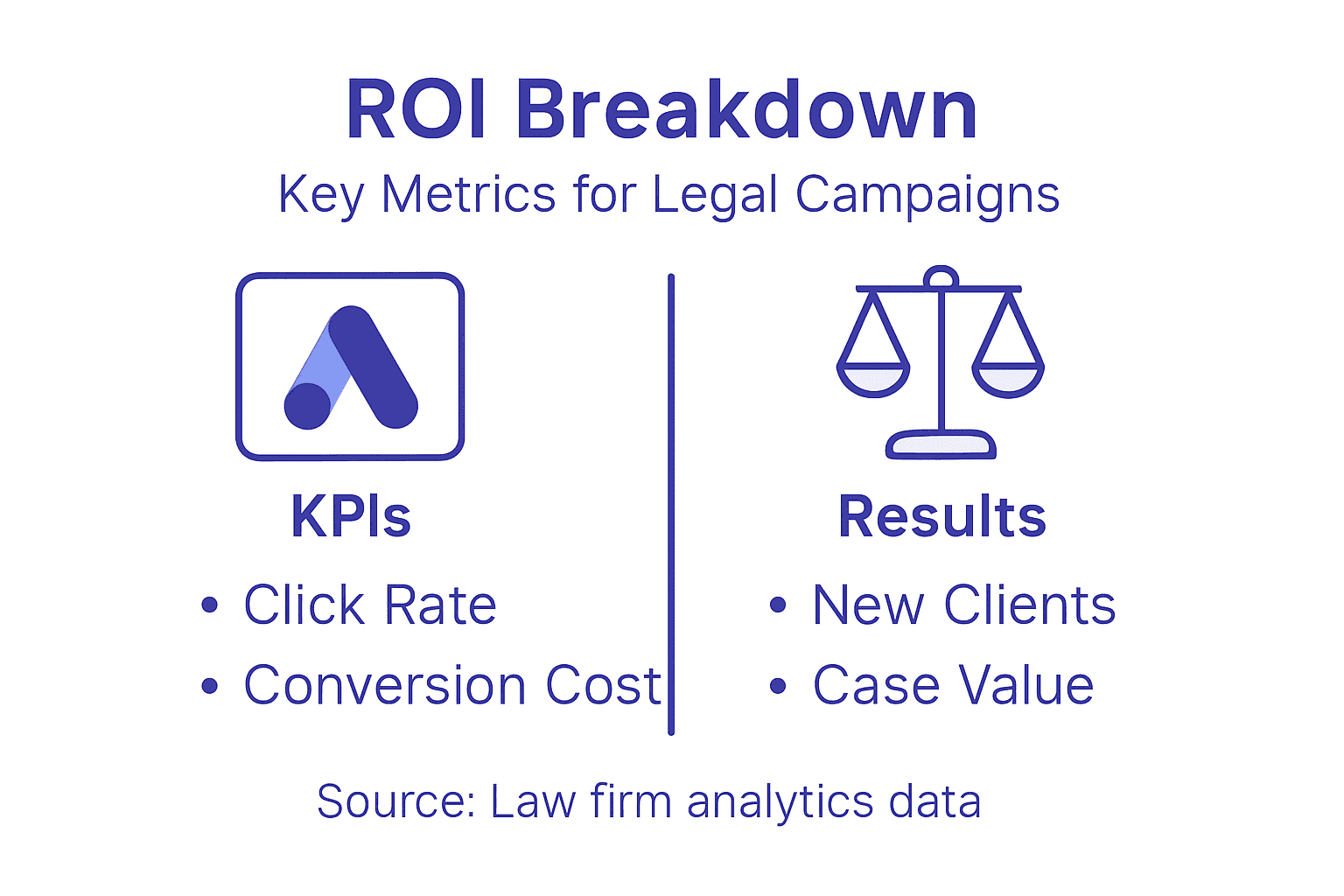

Advanced ROI analysis involves comprehensive tracking of client acquisition costs against potential case values. For instance, a personal injury lawyer spending $200 per click might consider the investment worthwhile if a single case generates $10,000 to $50,000 in legal fees. Smaller practices can optimize budgets by focusing on long tail keywords, implementing strict geographic targeting, and continuously refining ad performance through detailed analytics and ongoing campaign management.
Pro tip: Allocate at least 20% of your monthly advertising budget for testing and experimenting with different keyword combinations and audience targeting approaches.
Below is a concise summary of common legal Google Ads budgeting scenarios and potential ROI metrics:
| Practice Area | Typical Cost Per Click | Suggested Monthly Budget | Expected Qualified Leads |
|---|---|---|---|
| Personal Injury | $150 – $300 | $5,000 – $10,000 | 15 – 30 |
| Family Law | $50 – $120 | $2,000 – $5,000 | 6 – 15 |
| Estate Planning | $40 – $90 | $1,500 – $4,000 | 5 – 10 |
| Criminal Defense | $80 – $200 | $3,000 – $7,000 | 8 – 20 |
Common Pitfalls and Optimization Strategies
Law firms often encounter significant challenges when managing Google Ads campaigns, with common mistakes that can dramatically reduce advertising effectiveness and waste marketing budgets. Many attorneys struggle with overly broad keyword selections, failing to implement precise targeting that connects with potential clients. Google Ads optimization strategies emphasize the critical importance of developing highly specific, practice area focused keyword lists that capture genuine legal service inquiries.
One of the most frequent pitfalls involves neglecting landing page quality and relevance. Successful Google Ads campaigns require seamless alignment between advertisement messaging, keyword intent, and destination page content. Law firms must create dedicated landing pages that directly address user search queries, provide clear value propositions, and include compelling calls to action. High converting legal advertisements typically feature specific practice area details, transparent contact information, and trust signals such as professional credentials or client testimonials.
Advanced optimization requires continuous performance monitoring and strategic adjustments. Law firms should implement robust tracking mechanisms to analyze metrics like click through rates, conversion costs, and lead quality. Automated bidding strategies and machine learning tools can help attorneys refine targeting, allocate budget more efficiently, and identify the most promising client acquisition channels. Regular A/B testing of ad variations, ongoing keyword refinement, and responsive adjustments based on performance data are essential for maintaining a competitive digital marketing approach.
Pro tip: Dedicate at least one hour weekly to reviewing your Google Ads performance metrics and making incremental campaign improvements.
Maximize Your Legal Practice Growth with Expert Google Ads Management
Navigating the complexities of Google Ads for legal services requires precise targeting, ongoing optimization, and compliance with ethical guidelines. If you are struggling with high advertising costs, ineffective keywords, or converting clicks into quality leads, City Web Company offers tailored solutions designed specifically for law firms aiming to grow their client base. Our specialized team understands the importance of strategic PPC & Paid Ad Strategies that align with your practice areas and geographic focus to deliver measurable results.

Take control of your digital advertising and improve your return on investment by partnering with experts who continuously analyze campaign data and adapt your ads for maximum impact. Learn how to leverage proven Digital Advertising Tips & Strategies combined with robust Analytics & Conversion Tracking Tips to connect with the right clients when they need your services most. Don’t let costly, underperforming ads hold your firm back. Contact City Web Company today at https://citywebcompany.com/contact and start growing your legal practice with smarter advertising.
Frequently Asked Questions
What are Google Ads for legal services?
Google Ads is a digital marketing platform that allows law firms to create targeted advertisements that appear in search results when individuals are actively seeking legal representation. This ensures that ads reach potential clients at the right moment.
How do I set a budget for Google Ads in legal services?
Law firms should approach Google Ads budgeting with strategic precision, understanding the cost per click can vary widely based on practice area. It’s advisable to start with a modest budget and allocate around 20% for testing different keywords and targeting approaches.
What are the common types of Google Ads for law firms?
Law firms can utilize several Google Ads formats, including Search Network ads for capturing active search intent, Display Network ads for brand awareness, Video ads on YouTube for showcasing expertise, and Local Service ads to enhance local credibility.
How can I improve my Google Ads campaign performance?
To optimize a Google Ads campaign, regularly monitor performance metrics, ensure landing pages are relevant and effective, refine keyword selections, and consider A/B testing to identify what works best for attracting qualified leads.
Recommended
These articles were popular with other readers too: