
Pass Google Business verification with a video-first checklist. Film one continuous 30 second take, fix flagged issues, and know when to hire help.
10 Powerful Lead Generation Marketing Strategies for Local Businesses
Many business owners believe the digital marketing equation is simple: more website traffic should equal more leads. Yet, month after month, the analytics show visitors arriving while the phone remains quiet and the inbox stays empty. This is not a traffic problem. It is a conversion problem.
This situation reveals a fundamental gap between getting attention and turning that attention into tangible business opportunities. The common approach of layering on disconnected tactics, a social media post here and a paid ad there, often creates activity without a coherent system for generating revenue. The result is wasted spend and mounting frustration.
This article moves past surface-level metrics. We will deconstruct the most effective lead generation marketing strategies, revealing the underlying frameworks that separate busy marketing from profitable growth. Instead of just adding more noise, you will learn how to build a deliberate structure that guides potential customers from initial awareness to a scheduled appointment or a signed contract.
Here, we will explore ten distinct strategies, from optimizing your local search presence to deploying targeted streaming TV ads. Each section provides a clear roadmap covering:
- Why the strategy works for service businesses.
- Step-by-step implementation guidance.
- Key performance indicators (KPIs) to track success.
- Realistic budget expectations and time-to-results.
You will see exactly how to implement these methods for businesses like HVAC companies, dental practices, and home remodelers. The goal is to provide the clarity needed to build a marketing machine that does not just attract visitors but consistently delivers qualified, high-value leads.
Table of Contents
1. Local SEO & Google Business Profile Optimization
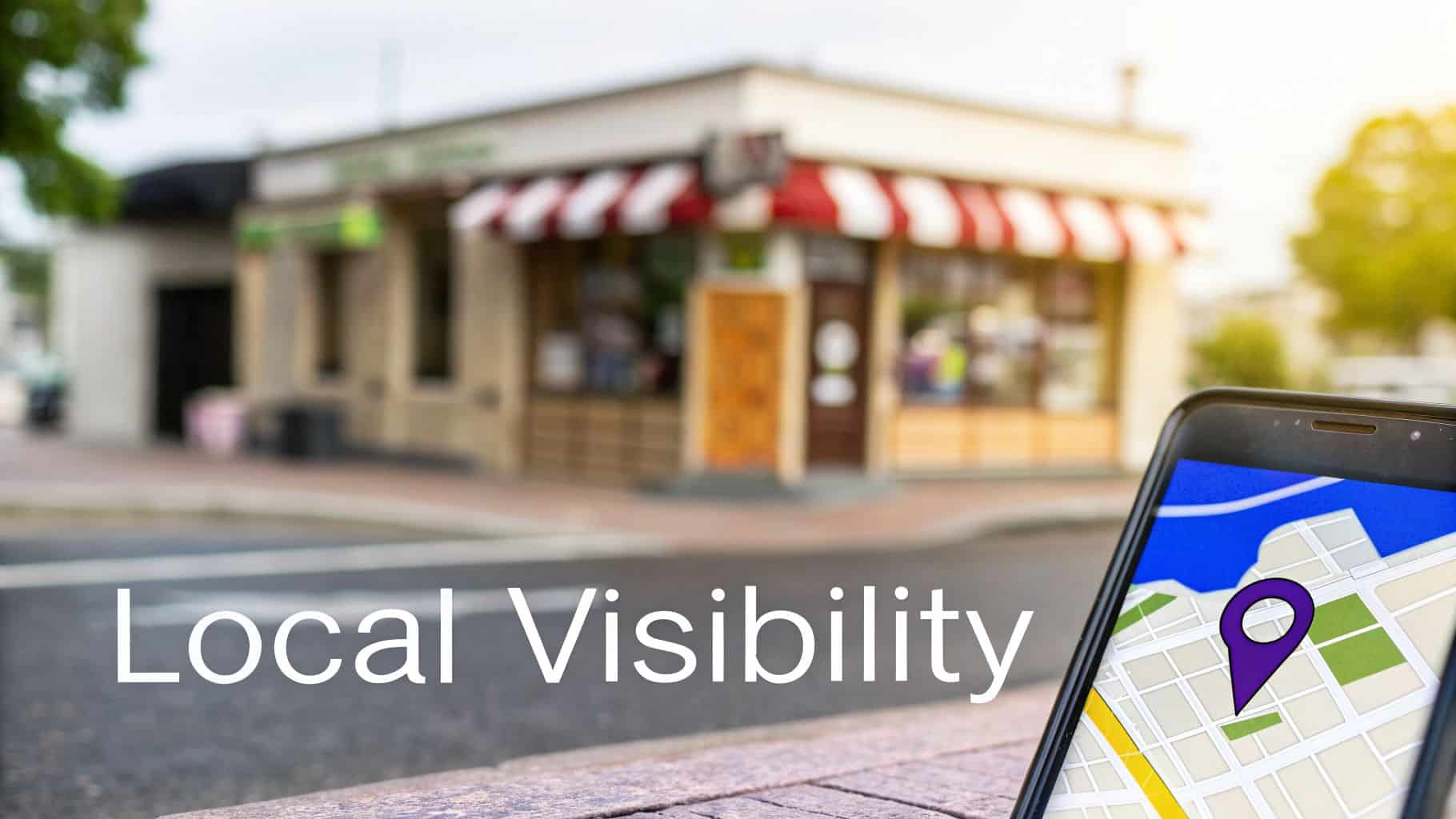
Many service businesses invest heavily in their website but neglect the single most important asset for local visibility: their Google Business Profile (GBP). A strong website is crucial, but if potential customers searching "emergency furnace repair near me" cannot find you in the Google Map Pack, you are losing high-intent leads to your competitors. Effective lead generation marketing strategies must begin where your customers are searching, and for local services, that is overwhelmingly on Google Maps and local search results.
Your GBP is the digital storefront that appears directly in search results. Optimizing it is not a passive task but an active strategy. It involves ensuring every detail, from your service areas to your hours of operation, is precise and compelling. This is the foundation upon which all other local marketing efforts are built.
Why It Works for Lead Generation
A fully optimized Google Business Profile acts as a direct sales funnel. For instance, an HVAC company that ranks in the top three of the Google Map Pack for ‘emergency AC repair Denver’ can generate 15-20 qualified phone calls monthly without any ad spend. Similarly, a dental practice with a robust GBP, filled with positive reviews and high-quality photos, might see over eight new patient inquiries each week directly from its listing.
These are not just impressions; they are leads from people actively seeking your services right now. For businesses in highly specific fields, understanding the deeper mechanics of search engine optimization, such as with specialized law firm SEO, can provide a significant advantage in capturing this local clientele. The impact of a well-managed Google Business Profile on local SEO is profound and directly measurable.
Actionable Implementation Steps
- Claim & Verify Your Listing: Ensure you have sole ownership of your profile.
- Achieve NAP Consistency: Your Business Name, Address, and Phone number must be identical across all online directories (Yelp, Angie's List, etc.).
- Populate Every Section: Complete all fields, including services, products, accessibility details, and a thorough business description.
- Implement a Review Strategy: Systematically request reviews from happy customers post-service. Respond to all reviews, both positive and negative, within 24 hours to show you are engaged.
- Upload High-Quality Media: Add clear photos of your team, your work, your service vehicles, and your location.
- Use GBP Posts Weekly: Share updates, offers, and news to keep your profile active and engaging.
2. Pay-Per-Click (PPC) Advertising & Google Ads
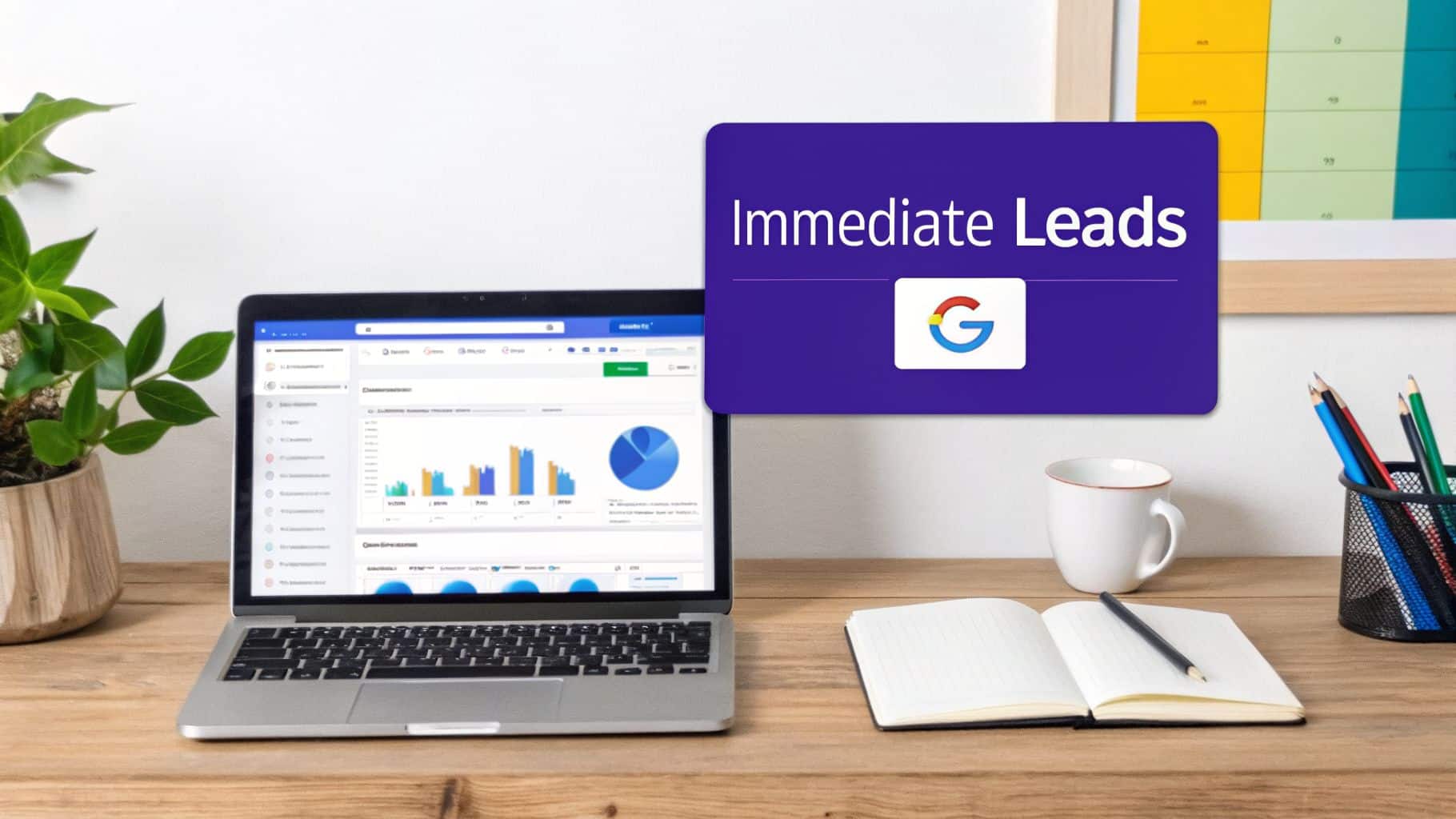
While organic strategies build long-term authority, many businesses need a direct and immediate flow of qualified leads. Waiting for SEO to mature can mean months of missed revenue. Pay-Per-Click (PPC) advertising, primarily through Google Ads, offers a solution by placing your business at the very top of search results precisely when a potential customer is looking for your service. This is not about broad brand awareness; it is a direct-response mechanism for capturing high-intent leads at the moment of need.
PPC allows you to bypass the gradual climb of organic rankings and pay for premium visibility. When someone searches for a keyword you have targeted, like "emergency plumber," your ad appears instantly. You only pay when that person clicks your ad, making it a highly accountable form of advertising. Properly managed, PPC is one of the most effective and measurable lead generation marketing strategies available, delivering a predictable stream of inquiries.
Why It Works for Lead Generation
A well-executed PPC campaign functions as a scalable lead generation machine. For instance, an emergency roofing contractor can dominate search results for "storm damage roof repair" immediately following a hailstorm, capturing dozens of urgent leads while competitors are still updating their websites. Similarly, a dental practice can run a campaign promoting teeth whitening services and generate 12-15 new patient calls weekly by targeting specific local queries.
The power of Google Ads lies in its immediacy and precision. You connect with customers who have already identified their problem and are actively searching for a solution. For an HVAC company, this could mean investing $1,200 a month to generate 25-30 qualified service calls, with each lead costing between $40 and $50. This direct correlation between ad spend and lead volume provides a clear return on investment that few other channels can match.
Actionable Implementation Steps
- Set Up Conversion Tracking: Before spending a dollar, ensure you can accurately measure what constitutes a lead, such as a phone call from an ad or a form submission on your landing page.
- Use Specific Ad Groups: Create separate campaigns and ad groups for each of your core services (e.g., "drain cleaning" vs. "water heater installation") to ensure ad copy is highly relevant to the search query.
- Build High-Converting Landing Pages: Send ad traffic to a dedicated landing page that mirrors the ad's message, not your website's homepage. The page should have a clear call-to-action and minimal distractions.
- Implement Negative Keywords: Actively build a list of negative keywords (e.g., "jobs," "free," "DIY") to prevent your ads from showing for irrelevant searches that waste your budget.
- Utilize Ad Extensions: Add location extensions, call extensions, and site links to your ads. These increase the size of your ad and provide more ways for customers to contact you, improving click-through rates.
- Run Call-Only Campaigns: For service businesses where a phone call is the primary goal, call-only campaigns prompt users to call you directly from the search results page.
3. Content Marketing & Blog Strategy
Many businesses view their blog as an obligation, a place to post company news or occasional updates. This perspective misses the true function of content as a powerful engine for lead generation. Instead of a digital bulletin board, your blog should operate as a library of solutions, answering the exact questions your potential customers are typing into search engines. This strategic approach to content is one of the most effective lead generation marketing strategies for building trust and attracting qualified buyers.
Effective content marketing is about creating and distributing valuable, relevant information to attract and educate a clearly defined audience. For a service business, this means moving beyond self-promotion and becoming the go-to resource for problems your customers face. This shift in mindset from selling to educating is what builds authority and drives organic traffic from high-intent searches.
Why It Works for Lead Generation
A well-executed blog strategy captures leads by addressing customer pain points at the exact moment they are looking for a solution. For example, a plumbing company’s article titled ‘Signs You Need a Water Heater Replacement’ can rank #1 on Google for that search term, attracting homeowners who are actively considering a major purchase. By providing a clear, helpful guide, the company establishes credibility and can direct the reader to schedule a consultation, turning a search query into a booked appointment.
Similarly, a dental practice publishing guides on preventive care can capture new patient leads every month. These are not just website visitors; they are individuals seeking expert advice who are now one step closer to becoming a patient. As you delve deeper into the subject, understanding the role of content marketing in lead generation provides a clear framework for turning your website's content into a consistent source of new business.
Actionable Implementation Steps
- Focus on Customer Questions: Use tools like AnswerThePublic or Google's "People Also Ask" feature to find the real questions your customers are searching for.
- Target Long-Tail Keywords: Optimize articles for specific, high-intent phrases (e.g., "cost to repair a leaking furnace in Ohio") rather than broad, competitive terms.
- Include Clear Calls-to-Action: Every article should guide the reader on what to do next, whether it is downloading a guide, requesting a quote, or scheduling a call.
- Create Downloadable Resources: Offer valuable checklists, guides, or eBooks in exchange for an email address to build your lead nurturing list.
- Publish Consistently: Aim for at least two to four quality blog posts per month to build momentum with search engines and your audience.
- Promote Your Content: Share new articles through your email newsletter and social media channels to expand their reach beyond organic search.
- Update High-Performing Content: Regularly refresh your best articles with new information to maintain their search engine rankings and relevance.
4. Social Media Advertising (Facebook, Instagram, TikTok)
Many businesses treat social media as a passive brand-building tool rather than a direct-response engine for new business. This misses the potential of paid social advertising, one of the most powerful lead generation marketing strategies available today. Unlike organic posting, paid ads on platforms like Facebook, Instagram, and TikTok allow you to reach highly specific, local audiences with compelling offers, turning passive scrollers into active leads.
These platforms provide advanced demographic, behavioral, and interest-based targeting that goes far beyond general brand awareness. You can place your message directly in front of homeowners in specific zip codes who have shown interest in home improvement, for example. This precision transforms social media from a megaphone into a magnet, attracting qualified customers who are ready to engage.
Why It Works for Lead Generation
Paid social advertising generates immediate and measurable results by meeting potential customers where they spend their time. For instance, a home improvement contractor can run carousel ads showcasing before-and-after kitchen remodels, generating 20+ website visits daily from interested homeowners. An HVAC company could use geo-targeted ads to promote seasonal maintenance specials in specific neighborhoods, resulting in dozens of booked appointments.
The key is the ability to combine compelling visuals with precise targeting and a direct call to action. A veterinary clinic sharing client testimonials in video format might generate a steady stream of new appointment requests directly through Messenger. These are not just impressions; they are tangible inquiries from people in your service area who have been prompted to take action.
Actionable Implementation Steps
- Define Your Audience: Create specific audience segments based on demographics (age, income), location (zip codes, city), and interests (home repair, pet care).
- Focus on Visuals: Use high-quality before-and-after photos and short videos (30-60 seconds) to showcase your work quality and build trust.
- Craft Compelling Offers: Promote a specific, valuable offer, such as a "Free Consultation," "$50 Off First Service," or a seasonal maintenance package.
- Use Lead Forms: Implement on-platform lead generation forms (like Facebook Lead Ads) to capture contact information without making users leave the app, reducing friction.
- Include Clear CTAs: Your ad must have a clear call-to-action button, such as ‘Book Now,’ ‘Get Quote,’ or ‘Learn More,’ to guide user behavior.
- Retarget Website Visitors: Install the Meta Pixel on your website to run follow-up ads for people who visited your site but did not convert.
5. Streaming TV & Connected TV (CTV) Advertising
Many local businesses assume television advertising is an unattainable luxury, reserved for national brands with massive budgets. They see it as a relic of a past marketing era, disconnected from the trackable, data-driven world of digital. This view overlooks the powerful evolution of TV into a highly targeted and surprisingly affordable digital channel: Connected TV (CTV). Forgoing this medium means missing out on one of the most effective lead generation marketing strategies for reaching cord-cutting households.
Connected TV advertising on platforms like Hulu, Roku, and YouTube TV combines the high-impact visual storytelling of television with the precision targeting of digital marketing. It allows a regional roofing company or a multi-location dental practice to place compelling video ads directly in front of local viewers watching their favorite shows. This is no longer about broad, untargeted broadcasting; it is about strategic, hyper-local digital placement on the biggest screen in the house.
Why It Works for Lead Generation
CTV advertising places your brand message in a premium, high-engagement environment where viewers are relaxed and receptive. For example, a regional HVAC company can run 15-second ads on Hulu that are geo-targeted to specific zip codes, reaching homeowners just before the summer heat arrives. This builds top-of-mind awareness so when an AC unit fails, that company is the first one they remember and search for online.
These campaigns directly influence search behavior and drive high-intent leads. A pest control service, for instance, might pair a CTV campaign building brand awareness with a targeted Google Ads campaign. The result is a measurable lift in branded search queries and direct website traffic from people who saw the ad and were prompted to act. It connects the dots between brand visibility and direct-response lead capture, making your marketing budget work harder.
Actionable Implementation Steps
- Create Optimized Video Spots: Develop 15 or 30-second video advertisements with a strong visual hook in the first three seconds to capture attention immediately.
- Implement Geo-Targeting: Restrict your ad delivery to the specific zip codes, cities, or counties you serve to eliminate wasted ad spend.
- Include a Clear Call-to-Action: Display a memorable local phone number or a clean, trackable URL (e.g., yoursite.com/offer) on screen in the final frames.
- Monitor Ad Frequency: Work with your ad provider to cap the number of times a single household sees your ad to avoid viewer fatigue.
- Test Creative Variations: Run A/B tests with different ad creatives or offers to identify which message resonates most with your target audience and drives the most leads.
- Integrate with Other Channels: Pair your CTV campaign with local SEO or search advertising to capture the demand you create.
6. Email Marketing & Lead Nurturing
Many businesses collect customer emails but fail to see them as a direct revenue channel, letting valuable leads grow cold in a database. A lead that has given you their email address has expressed direct interest. Ignoring this signal is like hanging up on a potential customer who just called your office. Effective lead generation marketing strategies require a system to convert this interest into booked appointments and sales.
Email marketing is not about sending random promotions; it is the art of building a relationship through consistent, valuable communication. It allows you to guide prospects from initial awareness to a final purchasing decision through automated sequences and targeted campaigns. For a service business, this consistent contact keeps you top-of-mind, so when a need arises, your company is the first one they call.
Why It Works for Lead Generation
A well-executed email nurture sequence transforms a passive contact list into an active sales pipeline. For example, a dental practice can use an automated welcome series to convert a website lead into a new patient appointment, with emails detailing the practice's approach, introducing the staff, and sharing patient testimonials. This systematic follow-up builds trust and demonstrates value before the patient ever steps through the door.
Similarly, an HVAC company sending seasonal maintenance reminders can secure dozens of annual service contracts that would otherwise be missed. These are not cold outreach efforts; they are targeted messages to an audience that has already opted in. The result is a predictable stream of high-quality leads generated from an asset you already own: your email list. This direct line of communication is a core component of sustainable growth.
Actionable Implementation Steps
- Build Your List: Offer valuable content like a "Home Maintenance Checklist" or a "First Visit Discount" on your website to capture emails.
- Create a Welcome Series: Develop a 3-5 email automated sequence that introduces your business, highlights your core value proposition, and provides an immediate benefit or helpful tip.
- Segment Your Audience: Group contacts by the service they were interested in or their customer stage (e.g., prospect, new customer, repeat client) to send more relevant messages.
- Write Benefit-Driven Subject Lines: Focus on what the reader gains. Instead of "Our New Offer," try "Save 15% on Your Fall Furnace Tune-Up."
- Maintain a Consistent Schedule: Send emails on a regular basis, such as weekly or bi-weekly, to stay familiar to your audience without overwhelming them.
- Focus on One Clear CTA: Each email should guide the reader toward a single, clear action, whether it is "Book an Appointment" or "Learn More About Our Services."
- Monitor Key Metrics: Track open rates, click-through rates, and unsubscribe rates to understand what content resonates with your audience and refine your approach.
7. Landing Pages & Conversion Funnel Optimization
Many businesses direct their expensive ad traffic to a generic homepage. This is the equivalent of sending a customer with a specific need into a crowded department store without any signs. A homepage serves many purposes and speaks to all audiences, but this general messaging dilutes the focus required to convert a high-intent visitor into a qualified lead. Effective lead generation marketing strategies require dedicated pathways that match a visitor's exact intent.
Landing pages solve this problem by creating a focused environment. These are standalone web pages designed with a single goal: to capture a lead. By removing site navigation, competing offers, and other distractions, you guide the visitor directly toward the action you want them to take. This is the foundation of optimizing your conversion funnel and maximizing the return on your advertising spend.
Why It Works for Lead Generation
A well-designed landing page dramatically increases conversion rates by aligning precisely with a visitor's expectations. For example, an HVAC company running a Facebook ad for a "$59 AC Tune-Up" can see its conversion rate jump from 2% to over 8% simply by sending users to a page dedicated to that offer instead of its homepage. Similarly, a dental practice can increase new patient bookings by creating neighborhood-specific landing pages that speak directly to local residents searching for care.
These are not just improvements; they are fundamental changes to the efficiency of your marketing budget. Reducing form fields from ten to four can prevent 30% of potential leads from abandoning the process out of frustration. Optimizing each step, from the ad click to the final "thank you" message, ensures you are not wasting valuable traffic that you have already paid to acquire.
Actionable Implementation Steps
- Match Message & Headline: Ensure your landing page headline is a direct echo of the ad copy that brought the visitor there. Consistency builds trust.
- Remove All Distractions: Eliminate the main website navigation menu and any outbound links that do not contribute to the conversion goal.
- Focus on a Single CTA: Use one clear, prominent call-to-action (CTA) button. Avoid offering multiple, competing choices.
- Minimize Form Fields: Only ask for the absolute essential information needed to qualify the lead. Name, phone, email, and a brief description are often enough.
- Build Trust Instantly: Display trust signals prominently above the fold, such as customer reviews, star ratings, and industry certifications (e.g., BBB, NATE).
- Ensure Mobile Performance: With over 60% of traffic coming from mobile devices, your page must load in under three seconds and be easy to navigate on a small screen.
- Use High-Quality Visuals: Include relevant images or, even better, a short video testimonial that builds credibility and connection.
- Make Calling Easy: Place a click-to-call phone number in a highly visible location for users who prefer to speak directly.
8. Directory Listings & Citation Building
Many businesses see directory listings as a "set it and forget it" task, a box to check during initial setup. This perspective misses a core principle of digital authority. Each directory, from Yelp to HomeAdvisor, is a signal to Google about your business's legitimacy and relevance. Inconsistent information across these platforms creates a fractured online identity, confusing both search engines and potential customers who are looking for reliable service providers.
Effective lead generation marketing strategies recognize that these listings are not just contact cards but foundational elements of your local SEO. Every time your business name, address, and phone number (NAP) appear correctly, you build a "citation" that reinforces your geographic and service-area authority. For a customer comparing two plumbing services, the one with a consistent, professional presence across multiple trusted sites appears more established and dependable.
Why It Works for Lead Generation
Consistent citations directly influence your ranking in the Google Map Pack and local search results. Think of each accurate listing as a vote of confidence. For example, a home improvement contractor who methodically builds out profiles on HomeAdvisor, Angie's List, and Houzz, ensuring every detail matches their Google Business Profile, will often outrank competitors who only focus on their website. This heightened visibility generates direct leads from customers actively searching on these industry-specific platforms.
An HVAC company in a competitive market might secure 5-10 high-quality leads per month just from its well-managed Angie's List and Yelp profiles, separate from any Google traffic. These are often high-intent customers who trust the directory's vetting process. The collective impact of dozens of accurate citations is a stronger search presence that produces leads without direct ad spend, making it a cornerstone of sustainable growth.
Actionable Implementation Steps
- Audit Your Core NAP: Confirm your precise business Name, Address, and Phone number. This is your single source of truth.
- Prioritize Major Directories: Start by claiming and fully optimizing listings on Google, Apple Maps, Yelp, and Facebook.
- Target Niche Directories: Identify and create profiles on platforms specific to your industry, such as HomeAdvisor, Thumbtack, or even healthcare-focused directories.
- Achieve 100% Profile Completion: Fill out every available field in each directory, including service descriptions, hours, photos, and service areas.
- Use a Citation Management Tool: Consider services like BrightLocal or Yext to efficiently distribute and maintain your business information across dozens of directories at once.
- Systematically Monitor and Respond: Check your key profiles weekly. Respond promptly and professionally to all reviews and questions to show you are an engaged and customer-focused business.
9. Referral & Review Generation Programs
Many businesses chase new leads through paid ads while overlooking the highest-converting source already within their reach: their existing happy customers. A passive hope that satisfied clients will spread the word is not a strategy. An active program that turns your best customers into vocal advocates is one of the most powerful lead generation marketing strategies you can deploy.
Referral and review generation programs formalize this process. They create a simple, repeatable system for incentivizing customers to recommend your business and share their positive experiences online. This builds immense trust with prospective clients, improves local search rankings, and generates a steady stream of leads from the most trusted source possible: a personal recommendation.
Why It Works for Lead Generation
Leads generated from referrals and positive reviews convert at a significantly higher rate than those from any other channel. For example, a plumbing service offering a $50 credit for each successful referral can consistently generate two to three new jobs each week, directly attributable to their program. Likewise, a dental practice that systematically requests reviews can see its online rating climb from 4.2 to 4.8 stars, leading to a noticeable increase in new patient phone calls.
These are not just leads; they are pre-qualified prospects who arrive with a high degree of trust already established. An HVAC company with a robust referral program might find that 30% of its new customers each month come directly from its existing client network. This creates a self-sustaining growth engine powered by customer satisfaction and advocacy.
Actionable Implementation Steps
- Design a Simple Program: Make your referral offer clear and easy to understand. Define the incentive (e.g., a discount, gift card, or service credit) and how customers can claim it.
- Automate Review Requests: Use email or text automation to send a review request link 1-2 days after service is completed. Focus on getting reviews on Google, Yelp, and other relevant industry sites.
- Train Your Team: Instruct your technicians and staff to mention the referral program and ask for reviews in person when a customer expresses satisfaction with their work.
- Respond to All Reviews: Acknowledge every review, both positive and negative, within 24 hours. This shows you are engaged and value customer feedback.
- Use QR Codes: Place QR codes on invoices, business cards, and service magnets that link directly to your review pages to make the process effortless for customers.
- Showcase Positive Feedback: Share your best reviews and video testimonials on your website and social media profiles to build social proof.
- Track Your Sources: Monitor where your referrals are coming from to measure the program's effectiveness and identify your top advocates.
10. Retargeting & Remarketing Campaigns
Most business owners assume a website visitor who leaves without converting is a lost opportunity. This perspective overlooks a fundamental aspect of consumer behavior: very few people are ready to make a decision on their first visit. Effective lead generation marketing strategies account for this by re-engaging users who have already shown interest, transforming a missed chance into a second, third, and fourth opportunity to connect.
Retargeting, or remarketing, is the strategy of showing targeted ads specifically to people who have previously visited your website or interacted with your brand. It serves as a persistent, gentle reminder of your services, keeping your business top-of-mind as potential customers continue their research. This approach is not about chasing cold traffic; it is about nurturing warm prospects who are already familiar with you.
Why It Works for Lead Generation
Retargeting is effective because it targets an audience that has already qualified itself. For example, a plumbing website visitor who researched 'water heater replacement' but did not fill out a form might later see a Facebook ad for that exact service. A dental practice can retarget visitors who abandoned a booking form with a special offer, converting an additional 15% of those users into confirmed appointments.
These follow-up ads are significantly more efficient than ads shown to a cold audience. An HVAC company might find that a person who viewed their furnace repair page and later saw a retargeting ad is three times more likely to book a service than a brand new visitor. It bridges the gap between initial interest and final action by systematically building familiarity and trust.
Actionable Implementation Steps
- Install Tracking Pixels: Immediately place the Meta (Facebook) Pixel and Google Ads Tag on every page of your website to begin building audiences.
- Create Specific Audience Segments: Group visitors based on the pages they viewed (e.g., 'AC Repair' vs. 'Furnace Installation') to deliver highly relevant ads.
- Build Sequential Messaging: Develop a series of ads that tell a story over time instead of showing the same creative repeatedly. Your first ad might remind them of your brand, while a later one could feature a customer testimonial.
- Use Dynamic Ads: If possible, show ads that feature the specific service or product a user viewed on your site.
- Implement a Frequency Cap: Limit how often one person sees your ad (e.g., 8-12 impressions per week) to avoid ad fatigue.
- Exclude Converted Customers: Create an exclusion list to stop showing ads to people who have already booked a service or become a lead.
- Set a Time Window: Retarget visitors for a specific period, typically 30-60 days, after their last website visit.
10-Point Lead Generation Strategy Comparison
| Strategy | Implementation complexity | Resource requirements | Expected outcomes | Ideal use cases | Key advantages |
|---|---|---|---|---|---|
| Local SEO & Google Business Profile Optimization | Moderate | Local citations, review management, location pages, monitoring | Improved local search & map visibility; steady high-intent leads (3–6 months) | Local service providers with defined service areas (HVAC, plumbers, dentists) | Cost-effective, sustainable visibility, builds trust via reviews |
| Pay-Per-Click (PPC) Advertising & Google Ads | High | Ad budget, keyword research, landing pages, analytics | Immediate visibility and leads; highly measurable and scalable | Emergency/time-sensitive services and competitive local markets | Fast results, precise targeting, clear ROI tracking |
| Content Marketing & Blog Strategy | Moderate–High | Writers, SEO, time, promotion, content calendar | Long-term organic traffic, authority, lead nurturing (3–6+ months) | Businesses needing education-driven sales or long sales cycles | Evergreen leads, lower long-term cost, trust and authority building |
| Social Media Advertising (Facebook, Instagram, TikTok) | Moderate | Visual assets, ad budget, platform management, targeting setup | Increased brand awareness and traffic; variable lead quality, lower CPC than search | Visual/service businesses, local promotions, seasonal offers | Visual storytelling, granular audience targeting, in-platform lead capture |
| Streaming TV & Connected TV (CTV) Advertising | High | Video production, platform spend, geo-targeting tools | Brand reach and emotional engagement; indirect lead uplift, measurable impressions | Regional/multi-location brands, brand-building alongside performance channels | Premium video environment, reaches cord-cutters, less direct competition |
| Email Marketing & Lead Nurturing | Moderate | Email platform, CRM integration, content, list building | High ROI over time; improved retention and conversion through sequences | Nurturing leads, repeat business, seasonal campaigns for service firms | Extremely cost-effective, personalized, highly measurable |
| Landing Pages & Conversion Funnel Optimization | High | Designers/devs, CRO tools, A/B testing, analytics | Significantly higher conversion rates and better ROI from traffic | PPC campaigns, high-traffic sites, targeted lead-generation funnels | Directly improves lead capture efficiency; highly testable and measurable |
| Directory Listings & Citation Building | Low–Moderate | Time, directory accounts, NAP consistency, photo assets | Better local visibility and credibility; incremental direct leads over time | Local service businesses and multi-location companies | Cost-effective, supports local SEO and cross-platform presence |
| Referral & Review Generation Programs | Moderate | Incentives, review automation tools, staff training | High-quality, low-cost leads and improved online ratings; stronger retention | Relationship-heavy industries with satisfied customers | Highest lead quality, builds advocacy and long-term retention |
| Retargeting & Remarketing Campaigns | Moderate | Pixels, ad creatives, sufficient site traffic, ad budget | Higher conversion rates from warm audiences; lower CAC | Longer decision cycles, sites with steady traffic, conversion optimization | Cost-effective for warm prospects, boosts conversions and ROI |
From Tactics to a Cohesive Growth System
We have explored ten distinct and powerful lead generation marketing strategies, from the foundational importance of local SEO to the precision targeting of remarketing campaigns. Each one, when implemented correctly, represents a direct path to acquiring new customer inquiries and opportunities for your service business.
The common point of failure for many businesses is not a lack of effort but a lack of integration. A plumber might run a successful PPC campaign but neglects the email nurturing required to convert leads who are not ready to book immediately. A dental practice might generate excellent reviews but fails to amplify that social proof through their website and social media ads. This disjointed approach creates temporary spikes in activity, not sustainable, predictable growth.
The real shift occurs when you stop viewing these as isolated tactics and begin assembling them into a cohesive system.
- A strong content marketing strategy provides the fuel for your social media channels and the substance for your email newsletters.
- PPC and social media ads become more efficient when they send traffic to high-converting landing pages, not just a generic homepage.
- Review generation programs directly strengthen your Local SEO authority, making your business more visible and credible in map searches.
- A well-optimized Google Business Profile serves as the central hub, benefiting from every other marketing activity you undertake.
This systemic view is what separates businesses that constantly struggle for leads from those that build a reliable growth engine. It moves you from reacting to the market to proactively shaping your pipeline. To truly transform tactics into a powerful and cohesive growth system, understanding fundamental principles and embracing a full spectrum of effective lead generation techniques, such as these 10 Lead Generation Best Practices, is critical for achieving lasting success.
Mastering these concepts means you are no longer just buying traffic or chasing visibility. You are building an asset. This system becomes a proprietary engine for your business, one that consistently attracts, engages, and converts your ideal customers. The ultimate benefit is not just more leads, but a more stable, profitable, and defensible business.
If you are ready to move past disjointed tactics and build an integrated system that drives measurable growth, our team can provide the strategic clarity you need. City Web Company specializes in designing and managing the cohesive lead generation marketing strategies that turn visibility into revenue. Visit City Web Company to schedule a discovery call and identify the most direct path to achieving your business goals.
These articles were popular with other readers too: