

Pass Google Business verification with a video-first checklist. Film one continuous 30 second take, fix flagged issues, and know when to hire help.
Website Optimization Guide 2026 for Local Businesses
Struggling to get your HVAC or plumbing website noticed by local customers in America or Canada is a common challenge. Without a strong online presence, even the best service can be overlooked. By focusing on website performance metrics and advanced optimization, you can transform your site into a reliable lead generator. This guide breaks down actionable strategies that align your business goals with proven digital tactics, helping you attract more visitors and turn them into loyal customers.
Table of Contents
Table of Contents
- Step 1: Assess Current Website Performance And Goals
- Step 2: Implement Advanced On-Page SEO Tactics
- Step 3: Optimize For Local Search And Voice Queries
- Step 4: Integrate Conversion-Focused Design Improvements
- Step 5: Test And Track Website Optimization Results
Quick Summary
| Key Point | Explanation |
|---|---|
| 1. Assess Current Website Performance | Examine key metrics like page speed and user engagement to identify improvement areas. |
| 2. Implement Advanced On-Page SEO | Use topic clustering and semantic optimization to enhance content relevance and visibility. |
| 3. Focus on Local and Voice Search | Optimize for conversational language and local keywords to capture nearby customers effectively. |
| 4. Enhance Conversion-Focused Design | Create intuitive designs with clear calls-to-action and trust signals to boost user engagement. |
| 5. Continuously Test and Track Results | Utilize analytics tools to measure performance and make data-driven decisions for ongoing optimization. |
Step 1: Assess current website performance and goals
Before diving into website optimization, you need a clear snapshot of your current digital landscape. Understanding your website’s performance is crucial for creating targeted improvement strategies that drive real business results.
To conduct a comprehensive performance assessment, start by examining key website performance metrics that reveal your site’s current health and potential. Focus on these critical areas:
- Page load speed: Measure how quickly your pages render
- Mobile responsiveness: Check performance across different devices
- User engagement: Analyze bounce rates and time spent on site
- Conversion rates: Track how many visitors complete desired actions
Your assessment should also include a strategic goal-setting process. Determine specific, measurable objectives like:
- Increase website traffic by 25% in the next quarter
- Reduce page load time under 3 seconds
- Improve mobile conversion rates by 15%
- Lower bounce rates from 65% to 45%
Performance metrics aren’t just numbers – they’re a roadmap to your digital success.
Utilize free tools like Google Analytics and Google PageSpeed Insights to gather comprehensive data about your website’s current performance. These platforms provide detailed insights into speed, user behavior, and potential optimization areas.
Here’s a comparison of popular website analytics and optimization tools and their business benefits:
| Tool Name | Primary Function | Unique Business Benefit |
|---|---|---|
| Google Analytics | Visitor tracking & behavior | Understand customer journeys |
| Google PageSpeed | Page speed diagnostics | Improve load time efficiency |
| SEMrush | SEO & keyword analysis | Gain search visibility faster |
| Google Search Console | Search presence monitoring | Fix indexing and crawl errors |
| Yelp | Local review platform | Build local reputation |
| A/B Testing Tools | Design experiment management | Optimize conversions reliably |
Pro Tip: Schedule quarterly performance reviews to track progress and continuously refine your website optimization strategy.
Step 2: Implement advanced on-page SEO tactics
Advanced on-page SEO goes far beyond simple keyword placement. Your goal is to create a sophisticated strategy that signals relevance and authority to search engines while delivering exceptional value to your visitors.
Advanced SEO techniques focus on building comprehensive content strategies that align with search intent and user experience. Key tactics include:
- Topic clustering: Create interconnected content around core subjects
- Semantic keyword optimization: Use related terms and concepts
- Content structure: Place key information prominently
- Internal linking: Develop strategic connections between pages
Improve your on-page optimization by implementing these critical steps:
- Conduct in-depth keyword research targeting user intent
- Develop comprehensive content that thoroughly addresses user questions
- Optimize header tags (H1, H2, H3) with strategic keywords
- Enhance metadata with descriptive, click-worthy language
- Improve page loading speed and mobile responsiveness
Strategic on-page SEO transforms your website from merely visible to genuinely valuable.
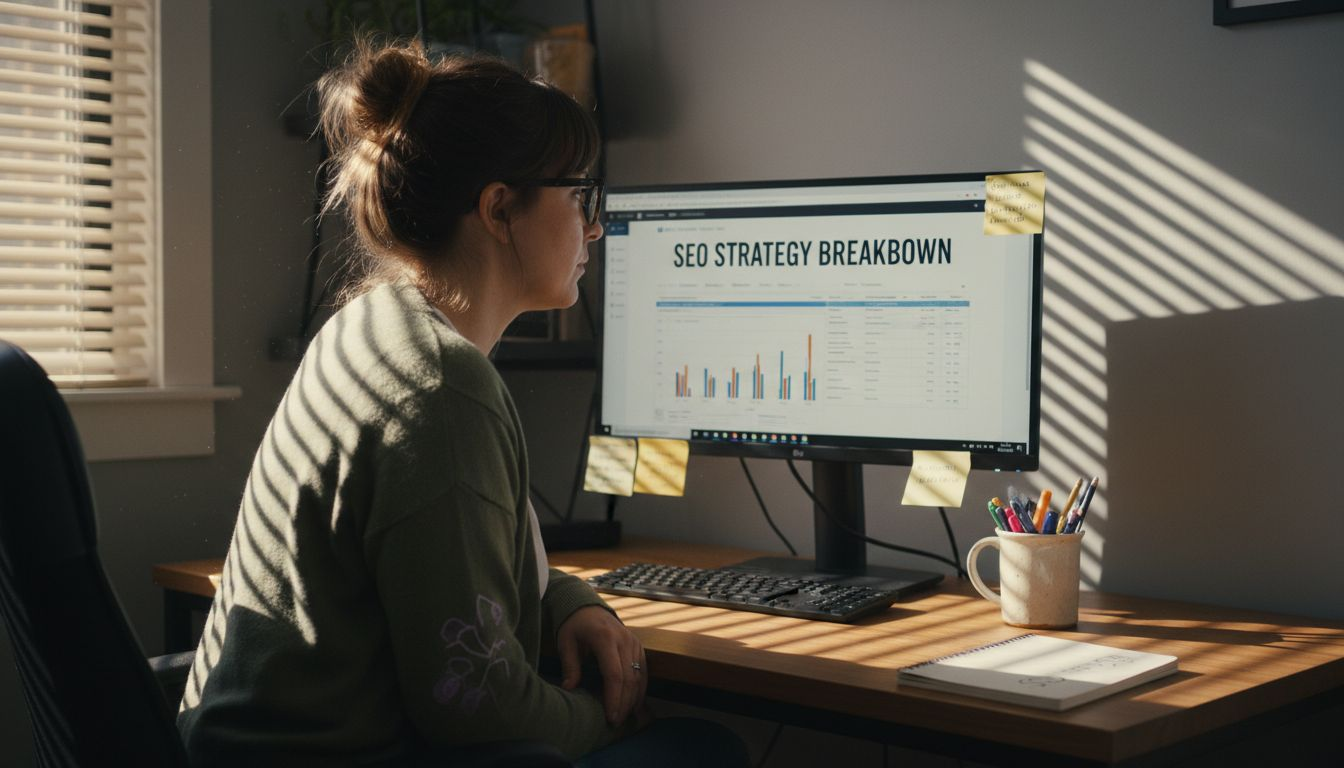
Utilize advanced tools like Google Search Console and SEMrush to analyze your current performance and identify optimization opportunities. These platforms provide granular insights into how search engines perceive your content.
Pro Tip: Update and refresh your top-performing content quarterly to maintain its competitive edge in search rankings.
Step 3: Optimize for local search and voice queries
Local businesses need a strategic approach to dominate both traditional and voice-based search results. Your optimization strategy must target how local customers actually search for services in your area.
Start by integrating voice search optimization techniques that align with natural conversational language. Local service businesses must adapt their content to match how people actually speak when searching for solutions:
- Conversational keywords: Use natural phrases people say out loud
- Question-based content: Address specific local service inquiries
- Location-specific language: Include neighborhood and city names
- Schema markup: Add structured data for local business information
Implement these critical local SEO optimization steps:
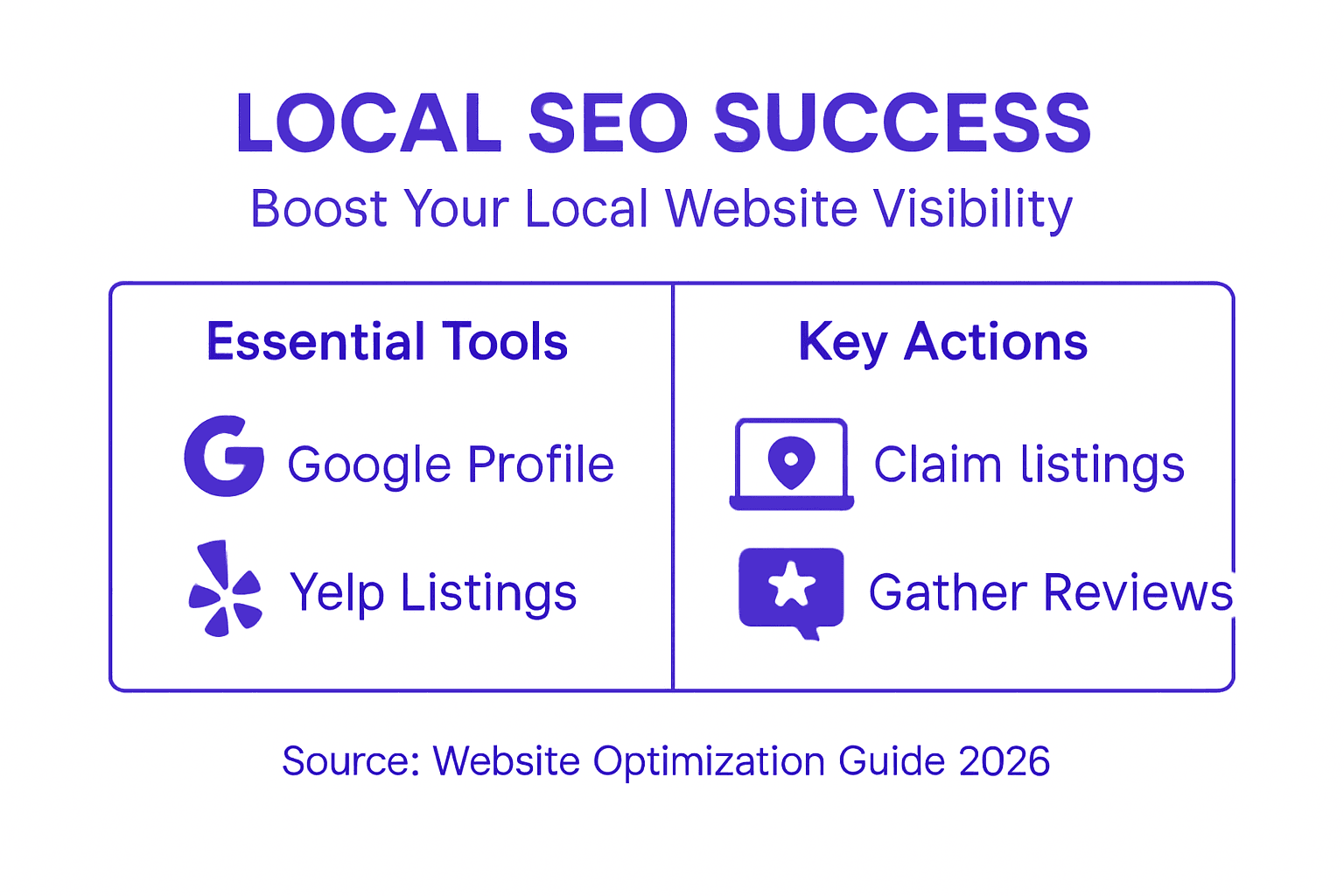
- Claim and optimize your Google Business Profile
- Generate local customer reviews
- Create location-specific content pages
- Develop FAQ sections using conversational language
- Ensure consistent NAP (Name, Address, Phone) information across platforms
Local search optimization transforms your digital presence into a targeted lead generation machine.
Utilize tools like Google Business Profile, Yelp, and local directory platforms to enhance your visibility. These platforms provide crucial opportunities to showcase your local expertise and attract nearby customers.

Pro Tip: Record and transcribe real customer conversations to identify natural language patterns for voice search optimization.
Step 4: Integrate conversion-focused design improvements
Transforming your website from a digital brochure to a powerful lead generation tool requires strategic design thinking. Your goal is to create an intuitive visual experience that guides visitors toward taking immediate action.
Conversion-centered design techniques strategically leverage psychological triggers and visual cues to drive user engagement. Focus on these key design principles:
- Visual hierarchy: Direct attention to critical conversion elements
- Trust signals: Display customer testimonials and credentials
- Clear call-to-action buttons: Use contrasting colors and prominent placement
- Emotional resonance: Connect with user pain points and aspirations
Implement these conversion optimization strategies:
- Simplify your website navigation
- Use high-contrast action buttons
- Add social proof elements
- Create streamlined contact forms
- Optimize page load speeds
Design is not just about aesthetics. It is about creating a seamless path to conversion.
Utilize A/B testing tools to experiment with different design elements and continuously refine your approach. Track user interactions and make data-driven design decisions that improve your conversion rates.
Pro Tip: Conduct user testing sessions to directly observe how visitors interact with your website design and identify potential friction points.
Step 5: Test and track website optimization results
Successful website optimization requires continuous measurement and strategic analysis. Your goal is to transform raw data into actionable insights that drive meaningful business improvements.
Performance metrics integration enables you to understand the true impact of your optimization efforts across multiple dimensions. Focus on tracking these critical indicators:
- Page load speed: Measure actual user experience times
- Conversion rates: Track visitor-to-customer transformation
- User engagement: Analyze time spent and interaction depth
- Bounce rates: Understand content and design effectiveness
Implement these comprehensive tracking strategies:
- Set up Google Analytics advanced tracking
- Configure goal tracking for key business actions
- Create custom dashboards for real-time insights
- Establish baseline performance metrics
- Schedule monthly performance review sessions
Data without interpretation is just numbers. Insights drive transformation.
Utilize tools like Google Analytics, SEMrush, and Google Search Console to gather comprehensive performance data. These platforms provide deep insights into how visitors interact with your website and where optimization opportunities exist.
Pro Tip: Create a standardized monthly reporting template to consistently track and compare website performance metrics across different time periods.
Below is a summary of optimization strategies mapped to specific business outcomes:
| Optimization Focus | Key Strategy Applied | Expected Business Outcome |
|---|---|---|
| Technical Performance | Speed & mobile enhancements | Lower abandonment, more visits |
| On-Page SEO | Semantic keywords & structure | Higher organic rankings |
| Local & Voice Search | Conversational content | Boost local lead generation |
| Conversion Design | Trust signals & CTAs | Increased form submissions |
| Continuous Tracking | Custom analytics dashboards | Identify growth opportunities |
Unlock Your Local Business Potential with Expert Website Optimization
Struggling to convert online visitors into loyal customers? The “Website Optimization Guide 2026 for Local Businesses” highlights challenges like improving page load speed, enhancing mobile responsiveness, and crafting conversion-focused design elements. These pain points directly impact your ability to generate quality leads and increase revenue. At City Web Company, we specialize in tailored strategies that address these exact issues including local SEO, advanced analytics, and conversion tracking tailored for service industries.

Ready to transform your website into a powerful lead generation engine? Explore our Digital Marketing Strategy Guides and Analytics & Conversion Tracking Tips | City Web Company to learn proven tactics. Then take the next step by contacting us today at City Web Company. Act now to start turning website visitors into paying customers with expert help customized for your local business.
Frequently Asked Questions
How can I assess my website’s current performance for local business optimization?
Start by measuring key performance metrics like page load speed, mobile responsiveness, user engagement, and conversion rates. Use tools like Google Analytics within the first week to track these metrics and establish a baseline for your optimization efforts.
What advanced on-page SEO tactics should I implement to enhance my local search visibility?
Focus on creating comprehensive content that incorporates topic clustering and semantic keyword optimization. Aim to develop a network of related content that answers common local inquiries within 30 days.
How do I optimize my website for voice search in 2026?
Integrate conversational keywords and structure your content to address specific questions that potential customers might ask aloud. Update your content to include natural language that reflects these queries during your next content refresh cycle.
What design improvements can help convert visitors into customers?
Implement clear call-to-action buttons, trust signals, and an intuitive layout to guide users toward taking action. Test different designs and track conversion rates to identify improvements within 60 days.
How can I track the performance of my website optimization efforts?
Set up advanced tracking for key performance metrics using analytics tools to monitor changes in visitor behavior and conversion rates. Schedule monthly reviews to analyze the data and adjust your strategies accordingly, aiming for consistent growth.
What local SEO steps should I take to improve my business’s online visibility?
Claim and optimize your Google Business Profile, encourage customer reviews, and create location-specific content. Complete these actions within the first few weeks to boost your local online presence rapidly.
Recommended
- Search Optimization: Growing Leads for Local Service Businesses
- Local SEO Secrets Every Small Business Must Know Now – City Web Company | Digital Marketing Agency
- Why Choose Local Marketing for Service Businesses
- Local SEO Services for Small Businesses: Drive More Traffic – City Web Company | Digital Marketing Agency
These articles were popular with other readers too: