

Pass Google Business verification with a video-first checklist. Film one continuous 30 second take, fix flagged issues, and know when to hire help.
What Is Digital Marketing Strategy and Its Impact
Running a local service business in the United States means facing real competition every day. Achieving meaningful online visibility calls for more than basic website updates or sporadic social media posts. By applying strategic digital marketing principles, you can reach the right customers where they search, connect, and buy. This article breaks down actionable strategies, tools, and frameworks proven to help service businesses maximize engagement and grow revenue in American communities.
Table of Contents
Table of Contents
- Defining Digital Marketing Strategy Principles
- Types of Digital Marketing Strategies Explained
- Key Features of Successful Marketing Strategies
- Real-World Applications for Local Service Industries
- Risks, Costs, and Common Mistakes to Avoid
Key Takeaways
| Point | Details |
|---|---|
| Digital Marketing Strategy | A successful digital marketing strategy integrates targeted audience identification, multi-channel integration, data-driven decision making, and continuous adaptation to achieve business goals. |
| Key Digital Strategies | Utilize various approaches such as SEO, Content Marketing, Social Media Marketing, Email Marketing, PPC Advertising, and Influencer Marketing to effectively reach target audiences. |
| Successful Marketing Features | Effective digital marketing emphasizes customer-centricity, technological integration, personalization, and an agile, multichannel approach. |
| Risk Management | Businesses must proactively address risks such as budget misallocation, inadequate audience targeting, and cybersecurity vulnerabilities to optimize digital marketing efforts. |
Defining Digital Marketing Strategy Principles
A digital marketing strategy represents a comprehensive plan that leverages online channels, technologies, and platforms to achieve specific business objectives. Transformative digital technologies have fundamentally reshaped how businesses connect with consumers, requiring strategic approaches that integrate multiple digital touchpoints.
Effective digital marketing strategies are built around several core principles that enable businesses to navigate the complex online landscape:
- Targeted Audience Identification: Understanding precise customer demographics, behaviors, and preferences
- Multi-Channel Integration: Coordinating marketing efforts across websites, social media, email, and mobile platforms
- Data-Driven Decision Making: Utilizing analytics to measure performance and optimize campaigns
- Continuous Adaptation: Remaining flexible and responsive to emerging digital trends and consumer expectations
Strategic planning involves creating a systematic approach that aligns digital marketing activities with broader business goals. Marketing management strategies emphasize the importance of positioning, brand management, and consumer engagement through strategic digital tools.
The digital marketing landscape requires businesses to develop robust frameworks that support consistent messaging, track performance metrics, and create meaningful customer interactions. Successful strategies combine creative content development, technical optimization, and precise audience targeting.
Pro tip: Develop a flexible digital marketing strategy that allows for rapid experimentation and data-informed adjustments to maximize your online marketing effectiveness.
Types of Digital Marketing Strategies Explained
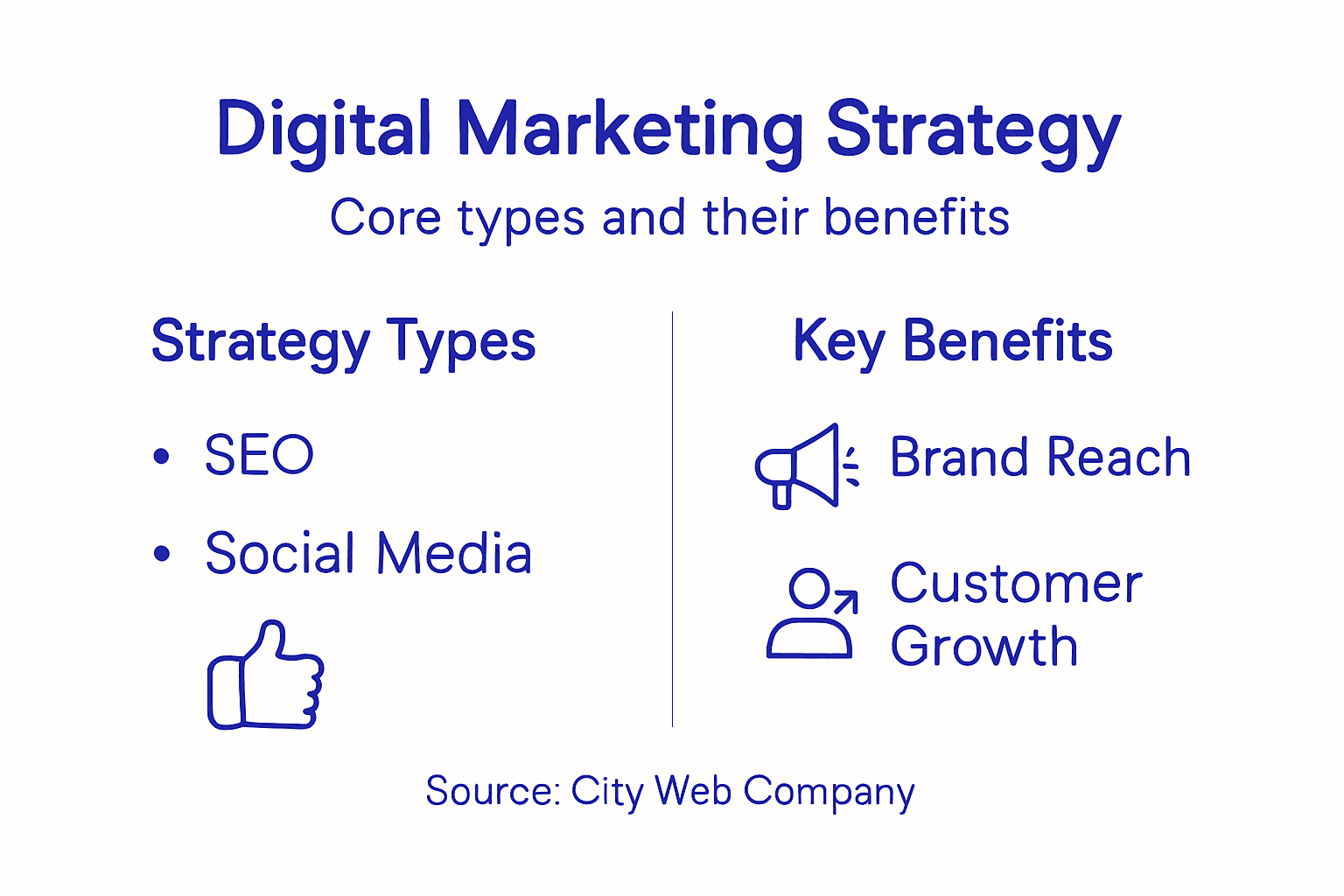
Digital marketing strategies encompass a diverse range of approaches designed to help businesses effectively reach and engage their target audiences online. Digital marketing practices offer multiple pathways for businesses to connect with potential customers across various digital platforms.
Businesses can leverage several key types of digital marketing strategies:
Here is a summary of how major digital marketing strategies differ in focus and expected outcomes:
| Strategy Type | Primary Focus | Typical Outcome |
|---|---|---|
| SEO | Increase search visibility | Higher organic website traffic |
| Content Marketing | Deliver valuable information | Build audience trust and loyalty |
| Social Media Marketing | Engage users on platforms | Strengthen brand awareness |
| Email Marketing | Personalized direct outreach | Boost repeat customer actions |
| PPC Advertising | Paid visibility boost | Fast traffic and lead growth |
| Influencer Marketing | Leverage social proof | Broaden brand reach quickly |
- Search Engine Optimization (SEO): Improving website visibility in organic search results
- Content Marketing: Creating valuable, relevant content to attract and retain audiences
- Social Media Marketing: Engaging customers through targeted social media campaigns
- Email Marketing: Developing personalized communication strategies
- Pay-Per-Click (PPC) Advertising: Running targeted advertising campaigns on digital platforms
- Influencer Marketing: Collaborating with online personalities to expand brand reach
Search engine marketing strategies demonstrate how businesses can optimize their online presence by understanding audience behavior and selecting the most appropriate digital channels. Each strategy requires a nuanced approach tailored to specific business goals, target demographics, and industry characteristics.

Successful digital marketing demands a holistic approach that integrates multiple strategies. Businesses must continuously analyze performance metrics, adapt to emerging digital trends, and develop flexible marketing frameworks that can quickly respond to changing consumer behaviors and technological advancements.
Pro tip: Develop a comprehensive digital marketing strategy by combining multiple approaches and regularly measuring their individual and collective performance to maximize online engagement.
Key Features of Successful Marketing Strategies
Digital marketing strategies require a sophisticated approach that goes beyond traditional marketing techniques. Successful digital marketing features demonstrate the complex landscape of modern business communication and customer engagement.
Key features that define successful marketing strategies include:
- Customer-Centricity: Placing customer needs and experiences at the core of marketing efforts
- Data-Driven Decision Making: Utilizing advanced analytics to inform strategic choices
- Technological Integration: Seamlessly incorporating emerging digital tools and platforms
- Personalization: Creating tailored experiences for different customer segments
- Agile Adaptability: Quickly responding to market changes and consumer behavior
- Multichannel Approach: Maintaining consistent messaging across various digital platforms
Business process innovation highlights the importance of developing marketing strategies that balance operational efficiency with customer experience. Successful approaches require a holistic view that integrates technological capabilities with deep understanding of target audience behaviors and preferences.

Companies must develop dynamic marketing strategies that can evolve rapidly. This means creating flexible frameworks that leverage data insights, embrace technological advancements, and maintain a laser focus on delivering exceptional value to customers through every digital touchpoint.
Pro tip: Regularly audit your digital marketing strategy by measuring key performance indicators and being prepared to pivot quickly based on real-time data and customer feedback.
Real-World Applications for Local Service Industries
Digital marketing strategies transform how local service businesses connect with their community and potential customers. Digital marketing applications provide powerful tools for targeted outreach and engagement across various service sectors.
Local service industries can leverage digital marketing through multiple strategic approaches:
- Local Search Optimization: Improving visibility in geographic search results
- Targeted Social Media Advertising: Reaching specific community demographics
- Reputation Management: Building trust through online reviews and testimonials
- Hyperlocal Content Marketing: Creating region-specific valuable content
- Geotargeted Email Campaigns: Sending personalized communications to local audiences
- Mobile-Friendly Website Design: Ensuring easy access for local mobile users
Local market digital strategies demonstrate the critical importance of understanding community-specific consumer behaviors. Successful implementation requires deep insights into local market dynamics, technological infrastructure, and customer preferences.
Service businesses must develop adaptable digital marketing frameworks that can quickly respond to changing local market conditions. This means continuously analyzing performance metrics, understanding customer feedback, and refining strategies to maintain competitive advantage in their specific geographic areas.
Pro tip: Conduct monthly audits of your local digital marketing performance, focusing on geographic-specific metrics and customer engagement rates to continuously optimize your approach.
Risks, Costs, and Common Mistakes to Avoid
Digital marketing investments require careful strategic planning to minimize potential pitfalls and maximize return on investment. Digital marketing practices reveal critical risks and challenges businesses must navigate when developing their online marketing approach.
Common risks and potential mistakes in digital marketing include:
The following table highlights common digital marketing risks and proactive ways to avoid them:
| Risk Area | Example Challenge | Mitigation Strategy |
|---|---|---|
| Budget | Overspending on ads | Set strict campaign caps |
| Targeting | Reaching wrong audience | Refine audience profiles |
| Security | Data breach threats | Invest in updated security tools |
| Platform | Overreliance on one channel | Diversify digital presence |
| Analytics | Poor performance tracking | Implement robust analytics setup |
- Budget Misallocation: Spending resources on ineffective channels
- Inadequate Audience Targeting: Failing to define precise customer segments
- Cybersecurity Vulnerabilities: Exposing business and customer data to potential breaches
- Algorithmic Dependency: Over-relying on single platform marketing strategies
- Inconsistent Messaging: Lack of unified brand communication across digital platforms
- Performance Tracking Gaps: Insufficient analytics and measurement capabilities
Digital marketing risk management emphasizes the importance of comprehensive strategies that address potential technological and operational challenges. Businesses must develop robust frameworks that anticipate potential vulnerabilities and create contingency plans to mitigate potential performance limitations.
Successful digital marketing requires continuous learning and adaptation. Companies need to invest in ongoing training, stay updated with emerging technologies, and maintain flexibility in their marketing approaches to minimize risks and optimize their digital marketing investments.
Pro tip: Implement a quarterly digital marketing risk assessment that reviews your strategy’s performance, identifies potential vulnerabilities, and develops proactive mitigation strategies.
Transform Your Digital Marketing Strategy for Real Results
Understanding the impact of a well-crafted digital marketing strategy is the first step toward overcoming challenges like ineffective audience targeting, fragmented messaging, and unclear performance tracking. This article highlights critical concepts such as multi-channel integration, data-driven decision making, and continuous adaptation — all essential to reaching your business goals in today’s fast-evolving digital landscape.
At City Web Company, we specialize in turning these strategic principles into powerful, customized solutions for local service industries. Whether you need expert guidance on search engine optimization, paid advertising campaigns, or robust analytics to measure your marketing ROI, our Digital Marketing Strategy Guides | City Web Company provide actionable insights backed by real-world experience.

Ready to elevate your online presence and generate more qualified leads? Connect with our team now to develop a flexible digital marketing plan that adapts to your unique business needs. Explore our Digital Advertising Tips & Strategies | City Web Company to understand how targeted ad campaigns drive quick and measurable growth. Take control of your marketing success today by reaching out through our contact page and start transforming your digital impact.
Frequently Asked Questions
What is a digital marketing strategy?
A digital marketing strategy is a comprehensive plan that utilizes online channels, technologies, and platforms to achieve specific business objectives. It involves integrating multiple touchpoints to connect with consumers effectively.
What are the key types of digital marketing strategies?
Key types of digital marketing strategies include Search Engine Optimization (SEO), Content Marketing, Social Media Marketing, Email Marketing, Pay-Per-Click (PPC) Advertising, and Influencer Marketing. Each focuses on distinct methods for engaging target audiences online.
How can businesses measure the success of their digital marketing strategy?
Businesses can measure success through performance metrics like website traffic, engagement rates, conversion rates, and return on investment (ROI). Utilizing analytics tools helps track these metrics and optimize campaigns.
What are common mistakes to avoid in digital marketing?
Common mistakes include budget misallocation, inadequate audience targeting, overreliance on a single channel, inconsistent messaging, and poor performance tracking. Avoiding these can enhance the effectiveness of digital marketing efforts.
Recommended
- The 3 Pillars of a Winning Digital Marketing Strategy – City Web Company | Digital Marketing Agency
- Role of Digital Marketing Agencies: Boosting Local Business Growth
- How Digital Marketing Helps Small Businesses Compete with Big Brands – City Web Company | Digital Marketing Agency
- How to Build a Multi-Channel Marketing Strategy – City Web Company | Digital Marketing Agency
- 7 typer av digitala marknadsföringsstrategier för tillväxt
These articles were popular with other readers too: