

Pass Google Business verification with a video-first checklist. Film one continuous 30 second take, fix flagged issues, and know when to hire help.
How to Generate Service Leads: Local Business Guide
Generating service leads is defined as the process of attracting qualified prospects who need your specific service and are ready to contact you. The most effective approach combines three channels: a structured referral program, an optimized local digital presence, and targeted outreach with consistent follow-up. Local service businesses that rely on a single channel leave significant revenue on the table. Tools like Google Local Services Ads, Google Business Profile, and account-based outreach each play a distinct role in a complete lead generation system. Reputation signals such as reviews and case studies are the foundation that makes every other channel work harder.
Table of Contents
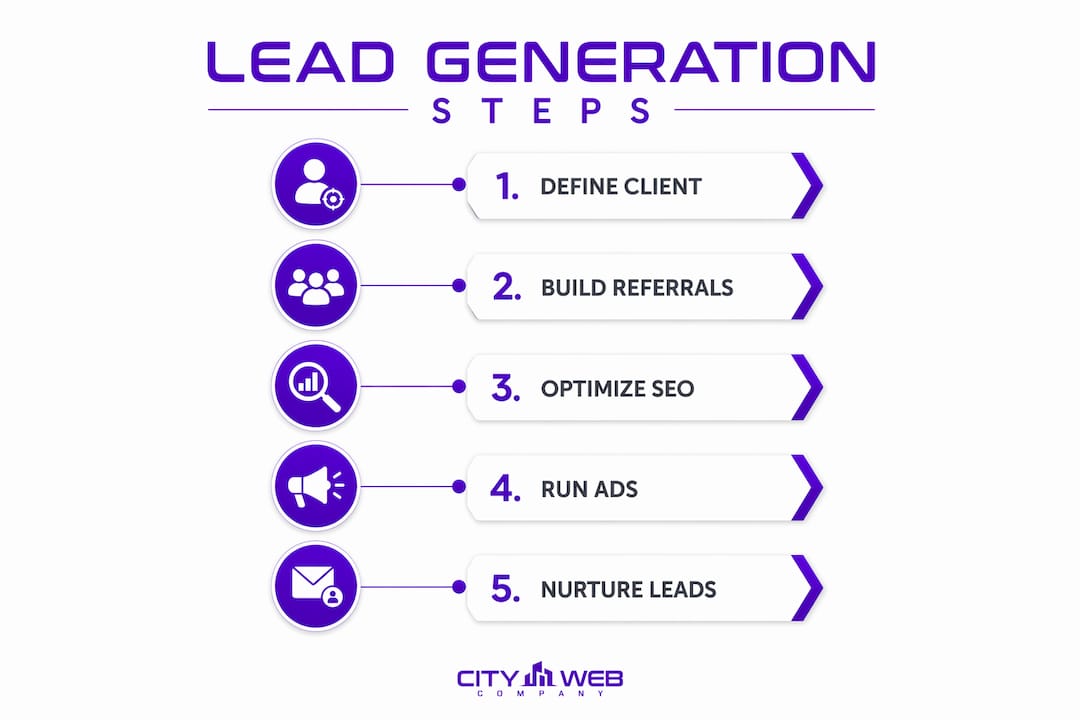
How to generate service leads with a referral program
Referral programs convert faster than any cold outreach, yet most local service businesses treat referrals as a happy accident rather than a managed system. A referred prospect already trusts you before the first call. That trust shortens the sales cycle and raises close rates.
The difference between a referral trickle and a referral engine is documentation. Write down your referral program: who qualifies, what the incentive is, and how you will communicate it. A plumber might offer a $50 gift card for every referred job that closes. An HVAC company might offer a free filter replacement. The incentive does not need to be large. It needs to be clear and delivered reliably.
Build a referral communication cadence
Quarterly touchpoints keep past clients engaged without feeling intrusive. A simple schedule works well:
- January: Send a “Happy New Year” email with a reminder of your referral incentive.
- April: Follow up with a seasonal service reminder and a referral ask.
- July: Share a short case study or before-and-after photo with a soft referral prompt.
- October: Send a pre-winter service checklist and restate the referral offer.
Each touchpoint has a purpose beyond the referral ask. That makes the communication feel helpful rather than transactional.
Develop strategic referral partnerships
Complementary local providers are your best referral partners. A landscaper and a fence installer serve the same homeowner. A pest control company and a disaster restoration firm often deal with the same property damage events. Reach out to three to five non-competing local businesses and propose a mutual referral agreement. Put it in writing, agree on how you will track referrals, and check in quarterly.
Pro Tip: When asking a past client for a referral, make it specific. “Do you know anyone who needs their gutters cleaned before winter?” converts better than “Let me know if you know anyone.” Specific asks remove the mental work from the client.
How does local SEO and Google Ads attract service leads?
Local digital presence is the infrastructure that captures demand you did not create. When a homeowner searches “emergency plumber near me” at 10 p.m., your Google Business Profile, Local Services Ads, and organic ranking determine whether they call you or your competitor.

Optimize your Google Business Profile
Google Business Profile optimization requires complete information, regular updates, photos, and active review management. Profiles with richer content get more clicks and higher rankings in local searches. That means every field matters: business hours, service areas, phone number, website link, and a description that names your core services.
Photos drive engagement more than most owners expect. Add photos of your team, your vehicles, your completed work, and your office if you have one. Update your profile at least once a month with a post, a new photo, or a seasonal offer.
Manage reviews as a lead generation asset
Service buyers trust people more than logos. Without reputation signals like reviews and case studies, even expensive ads underperform because prospects cross-check your credibility before calling. Ask every satisfied client for a Google review within 24 hours of job completion. A text message with a direct link to your review page converts better than a verbal ask.
Respond to every review, positive or negative. A professional response to a negative review shows prospects that you take accountability seriously. That response is often more persuasive than five-star reviews alone.
Local Services Ads vs. Google Ads vs. local SEO
These three channels are not interchangeable. Each serves a different function:
| Channel | How it works | Best for |
|---|---|---|
| Local Services Ads (LSAs) | Pay-per-lead model; leads sent directly to phone or email | High-intent, ready-to-hire prospects |
| Google Ads (PPC) | Pay per click; drives traffic to your website | Awareness and comparison-stage prospects |
| Local SEO | Organic rankings in Google Maps and search results | Long-term, cost-efficient lead flow |
LSAs appear at the top of search results and carry Google Guarantee or Screened badges. Those badges provide strong upfront trust signals that paid text ads cannot replicate. For most local service businesses, LSAs and local SEO should run simultaneously. You can read more about how LSAs work and why the pay-per-lead model suits service businesses specifically.
- Claim and verify your Google Business Profile.
- Apply for Google Guarantee or Screened status through the LSA platform.
- Set your LSA budget based on your target lead volume and average job value.
- Run local SEO in parallel to build organic ranking over time.
- Use Google Ads for specific promotions or to fill gaps when organic traffic is slow.
Pro Tip: Do not pause your local SEO efforts when LSAs are performing well. Organic rankings take months to build and are far cheaper per lead at scale. Run both channels together for sustained lead flow.
What is targeted outreach and how does it convert more leads?
Targeted outreach is the practice of identifying specific businesses or households that match your ideal client profile and reaching out to them directly. This is sometimes called account-based marketing, and it works particularly well for service businesses targeting commercial clients or high-value residential projects.
Define your ideal client profile
Start by listing the characteristics of your ten best past clients. What neighborhoods did they live in? What was the average job value? How did they find you? What services did they buy? That profile becomes your targeting criteria for outreach.
For commercial service businesses, a target account list typically contains 200 to 2,000 companies. For residential services, you can use geographic and demographic filters through platforms like Facebook Ads or direct mail lists to reach the right households.
Use lead scoring to prioritize your pipeline
Lead scoring assigns points to prospects based on their behavior and fit, so you spend time on the leads most likely to close. A prospect who visited your pricing page twice and filled out a contact form scores higher than one who clicked a single ad. Assign points based on:
- Website pages visited (pricing, services, contact)
- Form submissions or chat interactions
- Email opens and link clicks
- Job size and location match to your ideal client profile
- Referral source (referred leads score higher automatically)
Neglecting lead scoring is a common pitfall that slows down the sales process and risks losing qualified leads to faster-moving competitors.
Build a nurture sequence for leads not yet ready to buy
Most prospects who contact you are not ready to hire on the first touchpoint. An automated email nurture sequence keeps you visible until they are ready. A basic sequence for a home services company looks like this:
- Day 1: Thank-you email with a link to your most recent Google reviews.
- Day 3: Educational email on a common problem your service solves.
- Day 7: Case study or before-and-after photo from a recent job.
- Day 14: Soft offer, such as a free estimate or seasonal discount.
- Day 30: Final check-in with a direct call-to-action to book.
Consistent messaging across paid and organic touchpoints reduces funnel drop-off. The language in your nurture emails should match the language in your ads and on your website. Prospects notice when the tone shifts, and that inconsistency creates doubt.
Measuring success and avoiding common lead generation mistakes
Tracking the right metrics separates businesses that grow their pipeline from those that stay stuck. Most local service owners track lead volume. That is a start, but it is not enough.
Metrics that actually matter
| Metric | What it tells you |
|---|---|
| Lead volume | Total inquiries per channel per month |
| Conversion rate | Percentage of leads that become paying clients |
| Cost per lead | Total spend divided by leads generated |
| Source-to-close ratio | Which channels produce leads that actually close |
| Response time | Average minutes from inquiry to first contact |
The source-to-close ratio is the metric most owners ignore. A channel that generates 50 leads per month but closes only 5% is less valuable than one that generates 20 leads and closes 30%. Track where your revenue comes from, not just where your inquiries come from.
The five-minute follow-up rule
Fast lead follow-up within five minutes dramatically increases conversion likelihood. Studies show immediate contact is critical to capitalize on a lead’s interest and intent. A prospect who submits a form at 2 p.m. and hears from you at 2:04 p.m. is far more likely to book than one who waits until the next morning. Set up text or email automations to acknowledge every inquiry instantly, even if a human follow-up takes a few minutes longer.
Common mistakes that kill lead quality
- Relying on a single channel. When that channel underperforms, your pipeline dries up completely.
- Inconsistent branding across your website, ads, and social profiles. Prospects notice mismatched logos, phone numbers, and messaging.
- Ignoring negative reviews. Unanswered complaints signal poor customer service to every future prospect who reads them.
- No lead scoring system. Without scoring, your team spends equal time on a $200 job and a $20,000 contract.
Pro Tip: Use a CRM like HubSpot or Jobber to track every lead from first contact to closed job. Even a basic spreadsheet beats relying on memory. Attribution data tells you exactly where to invest your next marketing dollar.
For a deeper look at local SEO tactics that feed your lead pipeline over time, City Web Company has a practical breakdown built specifically for service businesses.
Key Takeaways
Generating service leads consistently requires a referral system, a strong local digital presence, and targeted outreach working together as one connected pipeline.
| Point | Details |
|---|---|
| Referrals need structure | Write down your program, set clear incentives, and schedule quarterly client touchpoints. |
| Google Business Profile drives organic leads | Complete every field, add photos monthly, and respond to every review. |
| LSAs and local SEO work best together | LSAs capture ready-to-hire prospects; local SEO builds long-term, lower-cost lead flow. |
| Lead scoring saves time | Assign points based on behavior and fit so your team focuses on the highest-value prospects. |
| Follow up within five minutes | Immediate contact after an inquiry dramatically increases the chance of booking the job. |
What I have learned about building a real lead pipeline
Most local service businesses I have worked with start in the same place: they are good at their trade, they get some referrals, and they run a few ads when things slow down. That reactive approach keeps them busy enough to survive but never builds a real pipeline.
The shift happens when owners stop treating lead generation as a campaign and start treating it as a system. Referrals do not just happen. They happen because you asked at the right moment, made it easy, and followed up. Reviews do not just accumulate. They accumulate because you built a process to request them after every job.
What I find most underestimated is the role of reputation infrastructure. You can spend thousands on Google Ads and still lose the lead if your Google Business Profile has three reviews and no photos. Prospects cross-check everything before they call. Your digital footprint needs to hold up under that scrutiny.
The businesses that grow fastest are not the ones with the biggest ad budgets. They are the ones that combine a tight referral program with a credible online presence and a fast follow-up process. Start with one channel, get it working, then add the next. Trying to run five channels at once with no tracking is how budgets disappear without results.
— Matt
How City Web Company helps local service businesses get more leads
Local service businesses need a lead generation system that runs consistently, not just during slow seasons. City Web Company builds and manages the digital marketing programs that make that possible, from local SEO and Google Ads to Google Business Profile management and paid media campaigns.
Whether you run an HVAC company, a pest control operation, or a landscaping business, the team at City Web Company builds programs around your specific market and service area. The goal is qualified inquiries, not just traffic. If you are ready to build a lead generation system that compounds over time, explore local lead generation services built for businesses like yours. You can also review the full range of digital marketing services to find the right starting point.
FAQ
What is the fastest way to generate service leads?
Referrals convert faster than any other channel because trust is already established. Pair a formal referral program with Google Local Services Ads for immediate, high-intent inquiries.
How do Local Services Ads differ from regular Google Ads?
Local Services Ads operate on a pay-per-lead model, meaning you pay only when a prospect contacts you directly. Regular Google Ads charge per click, regardless of whether the visitor becomes a lead.
How quickly should I follow up with a new lead?
Follow up within five minutes of receiving an inquiry. Studies show that immediate contact dramatically increases the likelihood of converting a lead into a booked job.
What metrics should I track to measure lead generation success?
Track lead volume, conversion rate, cost per lead, and source-to-close ratio. The source-to-close ratio reveals which channels produce revenue, not just inquiries.
How many reviews does my Google Business Profile need to compete locally?
There is no fixed number, but profiles with more recent reviews consistently outrank those with fewer. Aim to collect at least one new review per week by asking every satisfied client within 24 hours of job completion.
Recommended
These articles were popular with other readers too: