
Pass Google Business verification with a video-first checklist. Film one continuous 30 second take, fix flagged issues, and know when to hire help.
Mastering Programmatic Media Buying for Local Business Growth
If you have ever boosted a post or run a digital ad campaign only to see a dismal return, you understand the frustration. It feels like pouring money into a leaky bucket, where your budget disappears without a clear reason or tangible result.
This experience is common, but it points to a fundamental flaw in most digital advertising efforts. The problem isn't a single bad campaign; it's that the traditional approach lacks the precision required to deliver a reliable return on investment. The core issue is wasted spend on the wrong audience.
Table of Contents
Why Your Ad Budget Feels Like a Gamble
For most business owners, advertising on major platforms can feel unpredictable. You invest hard-earned capital hoping to attract new customers, but the outcomes are often inconsistent. This points directly to the largest drain on marketing budgets: showing ads to people who will never buy.
The solution isn't necessarily to spend more. It is to spend with greater intelligence. When you run a broad campaign, a significant portion of your budget is spent reaching an audience that has no need for your services.
Consider a local roofing company. An ad shown to a renter in an apartment complex is wasted money. A high-end kitchen remodeler’s ad shown to a college student is budget spent with no possibility of return. This inefficiency directly impacts your bottom line.
This scattered approach creates specific business problems:
- Wasted Spend: Every dollar spent showing your ad to an uninterested person is a dollar that could have reached a genuinely qualified prospect.
- Missed Revenue: Your ideal customers are actively looking for solutions, but they never see your message because your budget is spread too thin across the wrong audience.
- Unpredictable Growth: Without a reliable system for reaching the right people, business growth becomes a matter of luck, not a predictable process.
The gap between your advertising budget and the specific people who are actively looking for your solutions is the central challenge. The moment a business owner realizes their current methods are structurally inefficient is the moment they can begin building a more effective system.
This is what programmatic media buying is designed to solve. It replaces expensive guesswork with data-driven certainty, ensuring every advertising dollar is invested in acquiring a new customer.
What Is Media Buying Programmatic?
The traditional process of buying ad space often involves manual negotiations, phone calls, and contracts, a time-consuming process that distracts from running your business. It is an outdated model in a digital world.
Programmatic media buying fundamentally changes this. It uses technology to automate the ad buying process, turning it into a data-driven system. For a deeper look, this guide on What Is Programmatic Advertising provides excellent context.
Think of it as a high-speed, automated stock market for digital ad space. Instead of manually purchasing a banner ad on a local news site, powerful algorithms execute the entire transaction in milliseconds. This approach replaces manual guesswork with surgical precision, ensuring your budget reaches actual potential customers, not just random web traffic.
The old way of buying ads almost guarantees a portion of your budget will be wasted. This is the exact budget leak that programmatic advertising is built to plug.
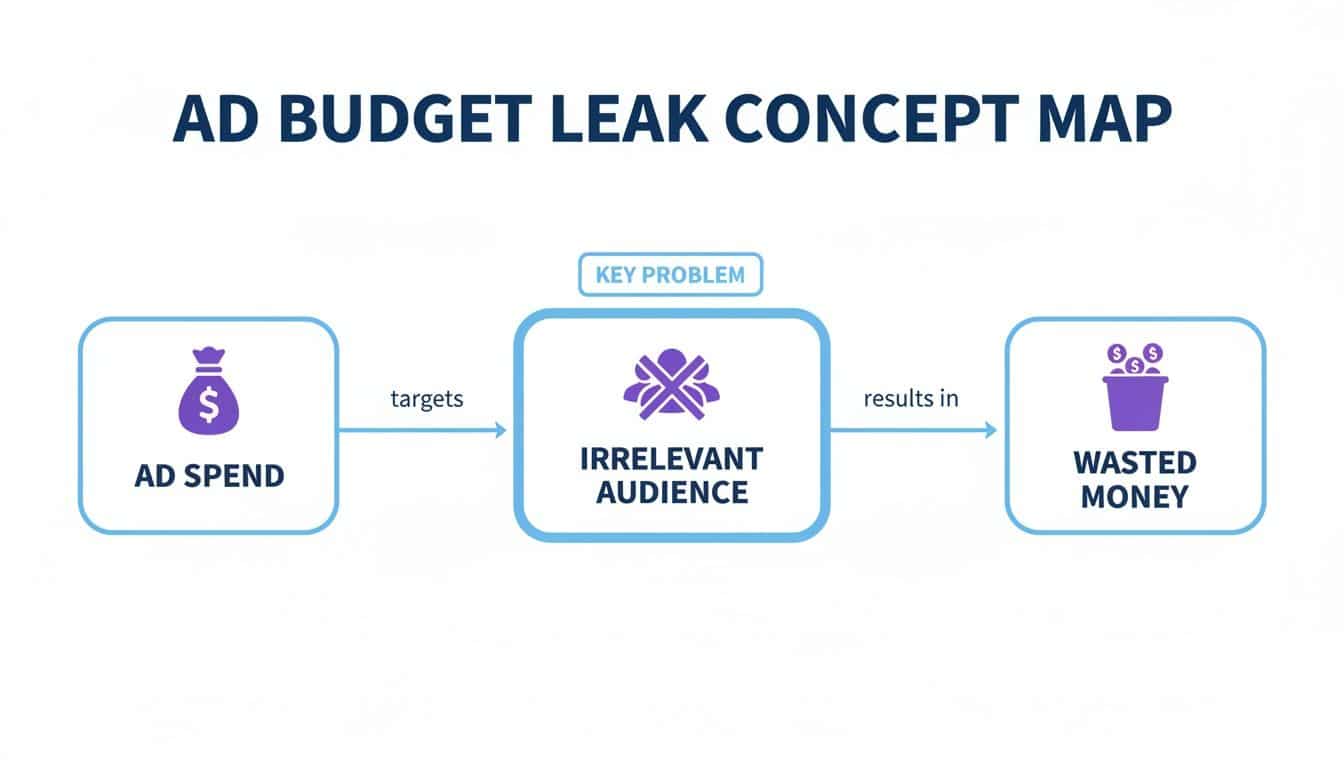
When your ads reach an irrelevant audience, your money disappears with zero return. Programmatic targeting ensures your budget is spent connecting with people who actually need your services.
The Core Components Explained
This automated marketplace runs on a few key technologies working in concert. Understanding their roles clarifies the entire process.
- Demand-Side Platforms (DSPs): This is the advertiser's command center. A DSP is software used to buy ad inventory across thousands of websites, apps, and streaming services. It is an automated "buyer" that finds placements matching your exact audience criteria and budget.
- Supply-Side Platforms (SSPs): Publishers, like local news outlets or popular industry blogs, use SSPs to sell their available ad space. The SSP is their automated "seller," connecting their inventory to the ad marketplace to find the highest-paying, most relevant advertiser.
The engine powering this system is Real-Time Bidding (RTB). This is an instant auction that happens in the milliseconds it takes for a webpage to load. Your DSP bids against other advertisers for the opportunity to show an ad to that specific user.
This rapid-fire auction means you pay a fair, market-driven price for every single ad impression, not a flat rate for a broad, untargeted placement.
This is a significant evolution from just a few years ago. Media buying was once reliant on personal relationships and manual insertion orders. The rise of RTB around 2007, followed by DSPs and SSPs, transformed the industry into the high-speed system we have today. This evolution is what allows a local service business to connect with an ideal customer at the precise moment they are looking for a solution.
How Programmatic Delivers Precision and Reduces Waste
The primary frustration with digital advertising is not the cost itself. It is watching your budget disappear on ads shown to people who will never become customers. It feels like pouring water into a leaky bucket.
Programmatic media buying plugs those leaks. It reverses the old model. Instead of buying ad space on a website and hoping the right people see it, you buy direct access to a specific person who matches your ideal customer profile, regardless of where they are online.
The Power of Data-Driven Targeting
Programmatic advertising is not about guesswork. It uses large sets of anonymized data to build a clear picture of individual users, connecting your ads to people whose online behavior indicates they need what you sell.
It works by layering different types of data to find the ideal audience:
- Demographic Data: Basic information like age, income level, and homeownership status.
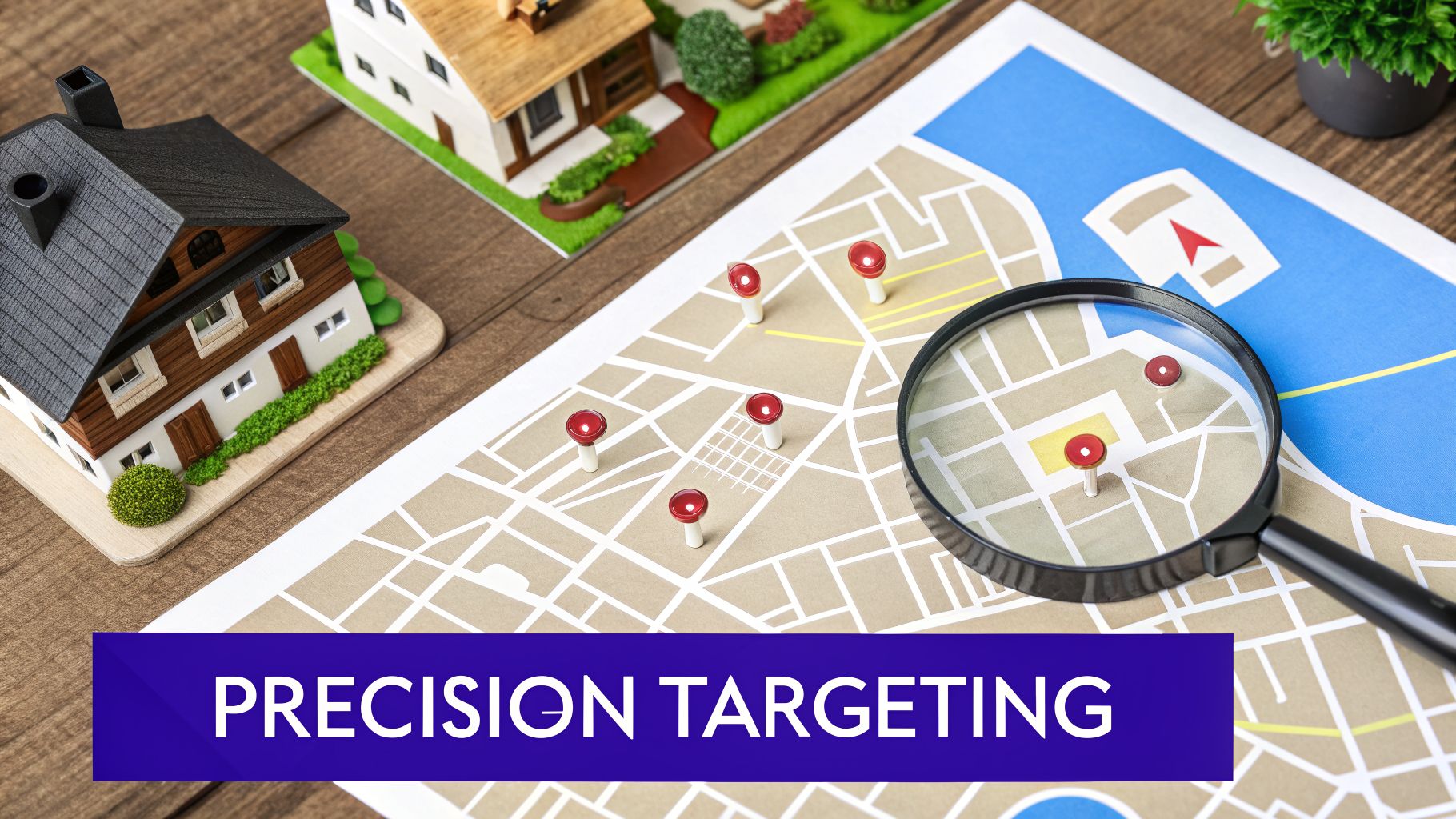
- Location Signals: Precision targeting that shows ads only to people in specific zip codes, neighborhoods, or even within a one-mile radius of your location.
- Online Behavior: The pages they visit, articles they read, and products they research online.
- Purchase Intent: The most valuable data, which includes signals that show someone is actively in the market for your services right now.
By combining these data points, you stop shouting your message to a crowd and start having a direct conversation with a highly qualified prospect. The result is a massive reduction in wasted ad spend because you are no longer paying to advertise to people who will never become customers. Programmatic advertising is not about finding more people; it is about finding the right people with precision.
A Practical Scenario for a Local Business
Imagine a local HVAC company. Using traditional ads, they might run a generic campaign across their entire service area. This means their ads are seen by renters, businesses, and homeowners who recently installed a new system. These are all wasted impressions and wasted money.
With programmatic media buying, the strategy changes. The HVAC company can now target only homeowners within their specific service zip codes.
It gets more powerful. They can then layer on behavioral data to reach users whose online activity shows they are actively researching topics like "new AC unit cost" or "furnace repair vs. replacement."
This approach is fundamentally more efficient. Instead of a broad campaign, the HVAC company invests its budget exclusively in reaching people who are not just homeowners, but homeowners showing clear intent to buy. This is how you stop the budget leak and achieve a measurable return on your advertising.
Where Do Your Ads Actually Appear?
A common question from business owners is, "If I'm using an automated system, where do my ads go?" The answer is what makes programmatic so effective: your ads appear on the exact channels where your ideal customers already spend their time.
This is not like traditional advertising, where you buy a spot on a single channel and hope for the best. Programmatic advertising builds a presence for your brand across multiple channels at once. It is less about a single ad placement and more about telling a cohesive story across all the high-quality digital places your customers visit.
You are no longer just buying a billboard on one digital highway. Instead, you are ensuring your brand appears at multiple, influential moments throughout your customer's day.
The Key Channels for Local Businesses
For a local service business, a handful of core channels deliver the most significant impact. These are not random websites; they are premium digital properties where your customers are already engaged.
- Streaming & Connected TV (CTV): This is your direct line to "cord-cutters." We can run your video ads on popular services like Hulu, Sling TV, and Peacock, putting your business inside the living rooms of households that no longer use traditional cable.
- Display Ads: These are the visual ads you see on trusted websites and mobile apps. Through programmatic, your ads do not just appear anywhere. They show up on highly relevant sites like your local news station, popular weather apps, and industry-specific blogs your customers read.
- Programmatic Social: This is more advanced than simply boosting a post. It involves using automated, data-driven ad buying on platforms like Facebook to reach hyper-specific audiences with incredible precision.
The goal is to build an ecosystem of influence. Your message is reinforced across different formats and platforms, creating powerful brand recall that a single ad could never achieve on its own.
Consider a local dentist who wants to attract more families. With programmatic, they could run a video ad on streaming TV services that specifically targets households with children, right down to the zip codes they serve.
Later, when those same parents are checking the local news on their phone or browsing a parenting blog, they see a display ad from that same dentist. This integrated approach makes the brand feel credible and present. If you are weighing your options, you can see how different strategies stack up in our digital advertising solutions comparison. It is the difference between a single shot in the dark and a sustained, intelligent campaign.
How to Measure Success and Budget for Results in 2026
When evaluating a new advertising strategy, the discussion always comes down to two questions: "How much should I budget?" and "How do I know if it’s working?" With programmatic advertising, the answers are refreshingly clear.
Forget the old model of buying ads based on vague metrics like "impressions." Programmatic is performance-based. Your budget stops being a blind spend and becomes a flexible, powerful tool, because every dollar is tied to a real-world action you can measure. We move away from simply being seen and focus on driving real business growth.
This is where we stop focusing on vanity metrics and start paying attention to what truly matters: your bottom line.
Key Metrics That Drive Growth
Instead of a confusing report filled with digital jargon, success is measured in clear business outcomes. A well-executed programmatic campaign provides total transparency, showing you exactly how your investment turned into tangible results.
We zero in on two core metrics above all else:
- Cost Per Acquisition (CPA): This is your most important metric. It tells you the exact cost to acquire a new, qualified lead or paying customer. It is the ultimate benchmark for campaign efficiency.
- Return On Ad Spend (ROAS): This is the final score. For every dollar you invest in your ads, ROAS tells you precisely how many dollars you generated in revenue.
You can dive deeper into these and other essential paid advertising metrics to track in our detailed guide. When you know these numbers, your ad budget stops being an expense and starts feeling like a predictable investment in your growth.
Managing Risks and Ensuring Transparency
No advertising is completely without challenges. Ad fraud and viewability are real concerns, but they are manageable risks, not deal-breakers. A proficient partner has the tools and expertise to address these issues, using advanced verification and constant monitoring to ensure your ads are seen by real people in the right places.
This focus on data-driven precision is why programmatic has become dominant in the advertising world. In fact, studies from previous years have shown that a majority of marketers increase their programmatic spend when they can directly tie it to revenue growth. It delivers the one thing business owners have always wanted: a clear line from ad spend to actual revenue.
The goal is to stop hoping and start knowing. We build a system where every marketing dollar has a clear purpose and a measurable return, so you can confidently invest in growth because you can see it happening in real time.
Putting Programmatic Into Action for Your Business
Understanding the power of programmatic is one thing. Putting it to work to generate more phone calls and booked jobs is another. The good news is you do not need to become a data scientist to launch an effective campaign.
What you need is a clear, strategic roadmap focused on your business goals. The technology is the engine; your strategy is the GPS telling it where to go. A successful campaign starts long before you spend your first dollar.
Your Strategic Roadmap
A strong programmatic strategy is built on a handful of core business decisions. Get these right, and you will have a campaign that delivers measurable results.
- Define Your Ideal Customer: Go beyond basic demographics. Build a detailed profile of the exact person you want to reach. What are their challenges? Where do they spend their time online? What motivates them to finally call for your services?
- Set Specific Business Objectives: A vague goal like “get more leads” is insufficient. Be specific. An objective like, “generate 20 qualified quote requests per month from homeowners in our top three service zip codes,” provides a clear target.
- Choose the Right Channels: Based on that ideal customer profile, select the channels where they spend their time. This might mean using Streaming TV to build brand awareness and then using display ads to prompt interested viewers to book an appointment.
- Develop Compelling Creative: Your ads must cut through the noise. They must speak directly to your customer’s problem and position you as the solution. Your creative has one job: to stop their scroll and get them to act.
- Partner with a Specialist: The technical side of DSPs, bidding, and daily optimization is complex. Working with a specialist ensures your strategy is executed flawlessly and your budget is allocated for maximum return.
The most sophisticated bidding algorithm in the world is useless without a clear strategy guiding it. Your success depends on the quality of your inputs: your audience, your goals, and your message.
Real-World Scenarios
What does this roadmap look like for actual local businesses?
- For an Electrician: An electrician wants to target new homeowners moving into a recent development. They can use programmatic to deliver ads only to devices within that specific geographic area. Then, they can layer on data to reach people actively searching for "home electrical inspections" or "EV charger installation."
- For a Med Spa: A local med spa wants to attract more high-value clients. They can target high-income zip codes and add behavioral data showing an interest in wellness, luxury travel, and competitor brands. Those ads can then be delivered across premium lifestyle websites and streaming TV apps.
This structured approach turns advertising from a gamble into a predictable system for growth. It ensures every dollar you spend on media buying programmatic is tied directly to a tangible business outcome.
Your Path to Predictable and Strategic Growth
Effective advertising is not about shouting the loudest; it is about speaking to the right person at the right moment. For most businesses, the real challenge has been finding a reliable system to make that connection happen predictably and at scale. This is precisely the gap programmatic media buying was built to fill.
While the technology can seem complex, the goal is refreshingly simple. It is about finally moving past the frustrating cycle of wasted ad spend and unpredictable results. It is about building a direct, efficient path from your business straight to your next customer.
This is what a true growth system looks like. It replaces guesswork with data-driven certainty, turning your ad budget from a hopeful expense into a measurable investment. The focus shifts from just buying ad space to strategically acquiring customers.
At City Web Company, we specialize in building these integrated growth systems. We go beyond just managing campaigns; we act as your strategic partner, ensuring advanced tools like programmatic advertising are used to achieve your specific business goals.
If you are ready for a marketing approach that delivers clarity and results, the next logical step is a conversation. Schedule a discovery call with our team to discuss your objectives and determine if our approach is the right fit for your business.
These articles were popular with other readers too: