
Discover the vital role of branding for home services. Learn how consistent branding boosts recognition, trust, and conversion rates.
Why Choose Digital Marketing for Service Businesses
Every local business owner wants their phone ringing with real customers, not wasting money on ads that never work. Digital marketing changes the game by offering personalized, measurable communication on smartphones and computers, giving even small service companies the tools to compete with national chains. This guide clarifies the core types and channels of digital marketing and shows how smart strategies help plumbers, healthcare providers, and lawyers reach ready-to-buy customers exactly when they need help.
Table of Contents
Table of Contents
- Defining Digital Marketing for Local Services
- Core Types and Channels Explained
- How Digital Marketing Drives Growth
- Cost, ROI, and Common Misconceptions
- Comparing Digital and Traditional Marketing
Key Takeaways
| Point | Details |
|---|---|
| Digital Marketing is Essential for Local Services | It allows businesses to reach customers actively searching for their services, enhancing visibility and engagement. |
| Utilize Multiple Channels for Best Results | Combining strategies like SEO, social media, and email marketing can provide a stronger outreach than relying on a single channel. |
| Focus on Cost-Effectiveness and ROI | Digital marketing is generally more affordable than traditional methods, allowing for targeted spending with measurable outcomes. |
| Adapt Quickly to Market Changes | Digital campaigns can be adjusted in real-time based on performance metrics, providing flexibility that traditional marketing lacks. |
Defining Digital Marketing for Local Services
Digital marketing is the practice of promoting your service business through online channels and technologies like websites, email, social media, and search engines. Unlike traditional marketing that relies on billboards, phone books, or door-to-door outreach, digital marketing enables personalized, measurable communication with customers right on their smartphones and computers.
For local service businesses, this means reaching customers at the exact moment they’re searching for what you offer. A plumber, electrician, lawyer, or healthcare provider can now connect with people in their area who actively need their services, rather than hoping ads reach the right audience.
Digital marketing encompasses several core methods that work together to build visibility and generate leads:
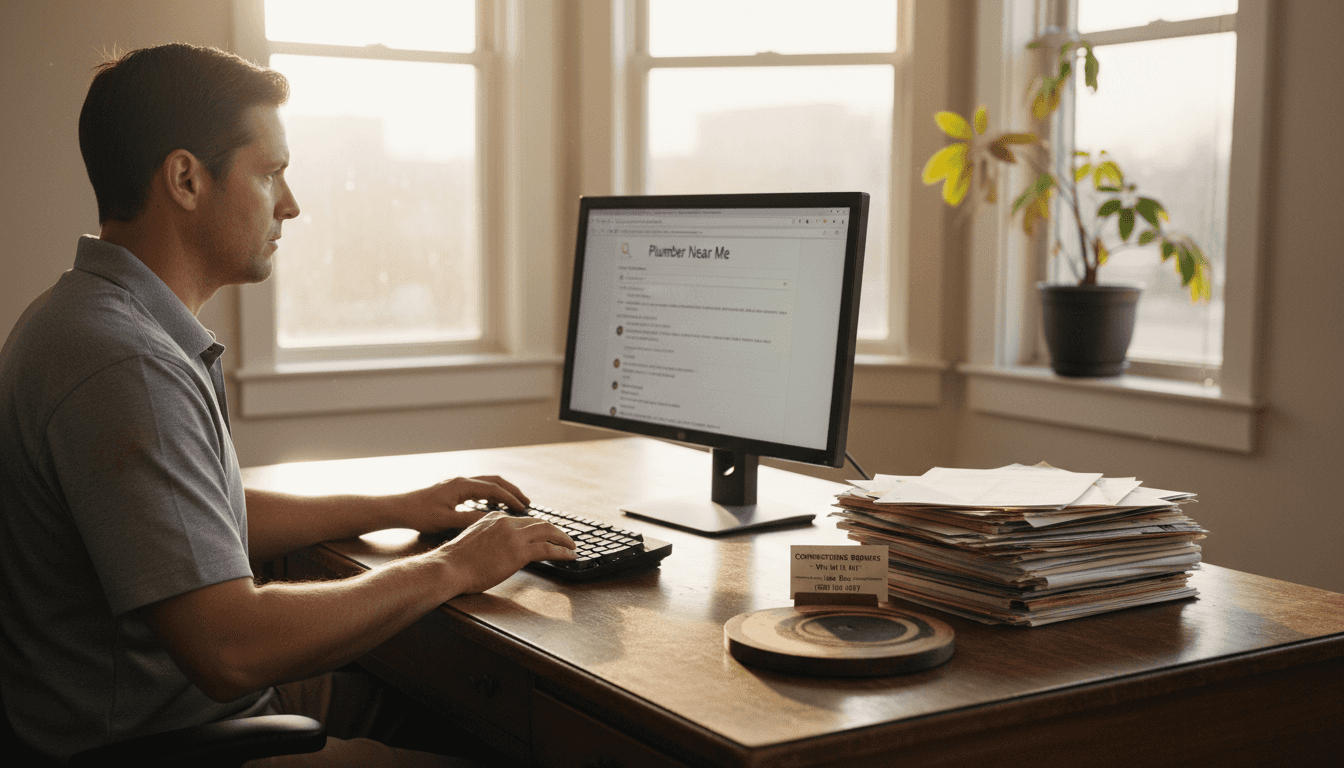
- Search engine optimization (SEO): Appearing in Google search results when potential customers look for “plumber near me” or “dental cleaning in [your city]”
- Pay-per-click (PPC) advertising: Running Google Ads or social media ads that put your business in front of interested prospects
- Social media marketing: Building presence on platforms where your customers spend time
- Email marketing: Staying connected with past and current clients through newsletters and service reminders
- Content marketing: Publishing helpful information that positions your business as trustworthy
- Website optimization: Ensuring your site loads fast, looks professional, and converts visitors into leads
Digital marketing has transformed business promotion since the 1990s by giving small service businesses the same tools as large corporations. You don’t need a massive marketing budget anymore. A local plumber can compete with national chains by being smarter about digital channels.
The biggest difference from traditional marketing is the ability to measure results. With digital marketing, you see exactly how many people visited your website, clicked your ad, or called your business. You know which strategies work and which don’t.
Digital marketing lets you reach customers actively searching for your services, not hoping they see a billboard.
For service businesses operating in specific geographic areas, digital marketing is especially powerful. Your customers live in your city or region. They use Google and social media. They search for services on mobile phones right before deciding who to hire. Digital marketing puts you where they’re already looking.
Pro tip: Start by focusing on one digital channel that matches where your customers spend time, then expand once you see results. A local HVAC company might find more success with Google Local Services Ads than Instagram, while a salon might thrive on social media before adding search optimization.
Core Types and Channels Explained
Digital marketing isn’t one-size-fits-all. Different channels work better for different types of service businesses, and understanding each one helps you pick the right mix for your goals.
Search Engine Optimization (SEO) focuses on making your website appear naturally in Google results when people search for your services. A contractor doing SEO might optimize their site so “bathroom renovation [city name]” brings them to the top. No paid ads involved.
Search Engine Marketing (SEM) is the paid side. You run Google Ads and pay only when someone clicks your ad. A dentist using SEM shows up at the top of search results with an “Ad” label.
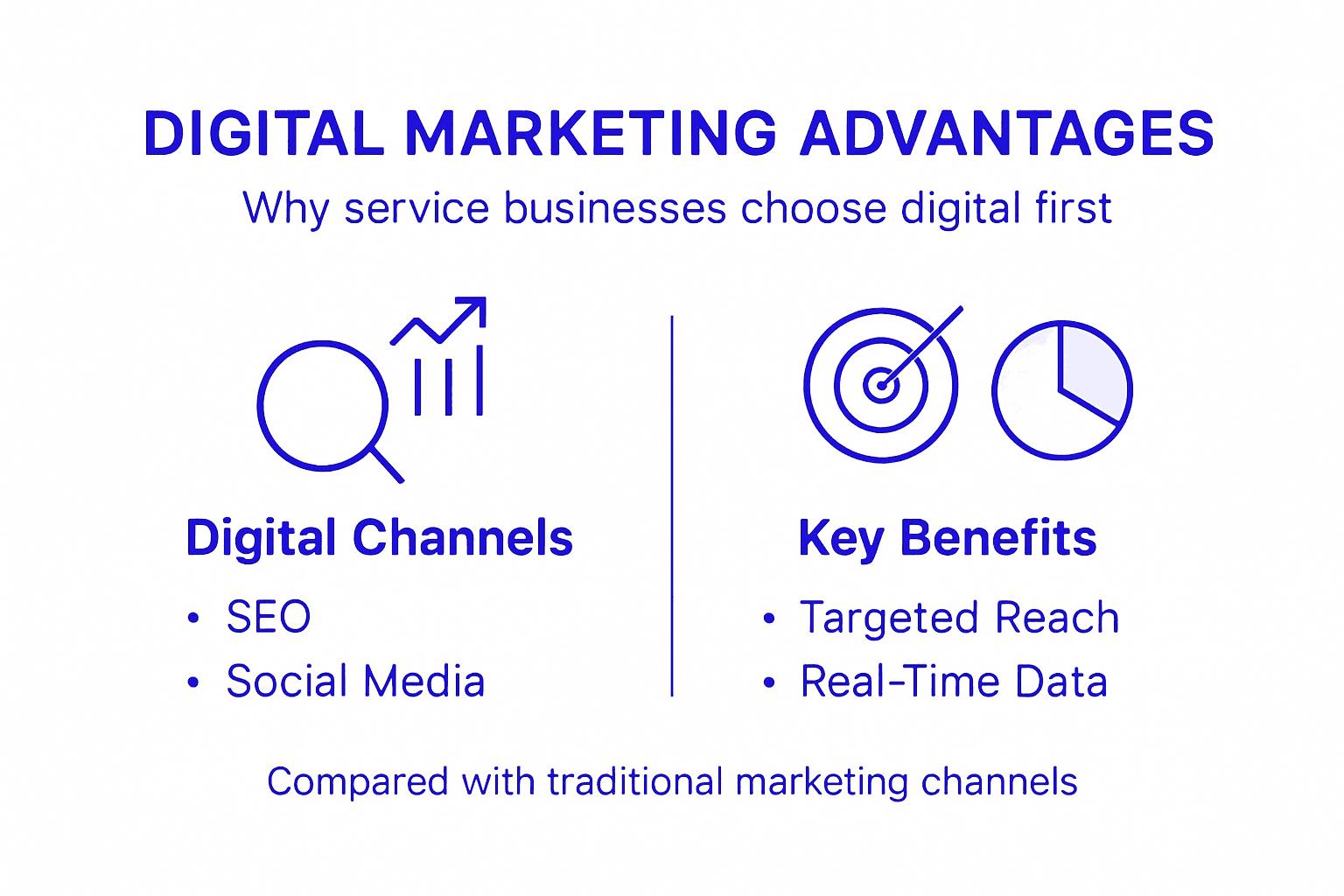
Digital marketing channels include social media platforms where you build relationships and share content. Facebook, Instagram, and LinkedIn let service businesses show before-and-after photos, client testimonials, and special offers.
Email marketing stays in touch with past clients. A hair salon sends reminders about appointments. A legal firm sends updates about case progress. It’s direct and personal.
Content marketing means creating helpful information that attracts customers. A plumber writes a guide on “signs you need a new water heater.” People find it online, trust the expertise, and call when they need service.
Paid display advertising shows banner ads across websites your customers visit. These ads follow people around the internet reminding them of your business.
Here’s how these channels break down by typical use:
- SEO and SEM: Best for reaching people actively searching right now
- Social media: Best for building brand awareness and engagement
- Email: Best for staying connected with existing customers
- Content marketing: Best for establishing authority and trust long-term
- Display ads: Best for keeping your business top-of-mind
Digital marketing techniques address different stages of the customer decision-making process. Some channels attract awareness (content, social media). Others drive consideration (reviews, case studies). Others close the sale (paid ads, email follow-up).
The strongest results come from using multiple channels together, not betting everything on one approach.
Most successful service businesses combine channels strategically. A healthcare practice might use SEO to attract new patients, email to keep them engaged, and social media to build credibility.
Pro tip: Map out where your ideal customers spend time online, then start with the two channels that reach them most effectively before expanding to others.
The following table summarizes how core digital marketing channels support local service businesses:
| Channel | Main Purpose | Ideal Business Type | Typical Outcome |
|---|---|---|---|
| SEO | Organic search visibility | Contractors, healthcare | Increased website traffic |
| SEM (Google Ads) | Immediate lead generation | Dentists, plumbers | More calls and appointments |
| Social Media | Engagement & brand building | Salons, coaches | Improved client retention |
| Email Marketing | Client relationship | Lawyers, salons | Higher repeat business rate |
| Content Marketing | Build trust & authority | All service providers | Enhanced reputation online |
| Display Advertising | Reminders & retargeting | HVAC, repair services | Greater brand recall |
How Digital Marketing Drives Growth
Digital marketing doesn’t just help you find customers. It fundamentally changes how your service business grows by connecting you with people ready to buy and giving you tools to measure what works.
When you use digital channels effectively, several things happen at once. You attract more qualified leads because people searching for your services online already want what you offer. A homeowner searching “roof repair near me” is much more likely to hire you than someone who randomly sees your billboard.
Lead generation accelerates when you appear where customers are already searching. Google Ads, SEO, and local service ads put you directly in front of people with active intent. They’re not just browsing. They need your service now.
Cost efficiency improves dramatically. Traditional marketing wastes money reaching people who don’t need your services. Digital marketing lets you target by location, age, interests, and search behavior. You pay for results, not just impressions.
Digitalization enables businesses to engage with customers online and enhance operational efficiency while expanding market reach. For service businesses, this means you can serve more clients without proportionally increasing overhead. You automate appointment booking. You send reminders by email. You manage reviews and reputation online.
Here’s how growth happens across different aspects:
- Visibility: More people find you when searching online
- Trust: Reviews, testimonials, and content establish credibility
- Conversion: Website optimization turns visitors into calls and appointments
- Retention: Email and social media keep past clients engaged
- Referral: Happy customers share your business more when you’re easy to find online
You also gain measurable data about your business. You see exactly which marketing efforts generate calls, appointments, and revenue. A traditional advertiser guesses whether their ads work. Digital marketers know.
Digital marketing reveals which strategies drive growth and which waste money, letting you reinvest in what actually works.
This feedback loop accelerates improvement. You spend less on underperforming channels and scale the winners. A plumbing company discovers Google Local Services Ads brings high-quality leads at a lower cost per job than social media ads, so they shift budget accordingly.
Service businesses also build competitive advantage. Larger corporations have bigger budgets but slower decision-making. Local businesses using digital marketing strategically can outrank national chains in Google results within their specific area.
Growth compounds over time. Better rankings mean more organic traffic. More customer data means better targeting. Better targeting means higher conversion rates. Higher conversion rates mean more revenue to reinvest in marketing.
Pro tip: Track one key metric per marketing channel (calls from Google Ads, email open rates, appointment bookings from SEO) and review monthly to see which channels drive actual growth for your business.
Cost, ROI, and Common Misconceptions
Digital marketing costs less than traditional advertising, but many service business owners misunderstand what they’re paying for and how to measure results. Let’s clear up the confusion.
Starting costs are low. You can launch a Google Ads campaign for $500 a month. A social media presence costs nothing to create. SEO requires either hiring an expert or investing time internally. Compare this to traditional radio or TV ads that demand thousands upfront before you reach anyone.
But low startup cost doesn’t mean free. Like any marketing channel, digital requires ongoing investment. The question isn’t whether to spend money. It’s whether you’re spending it wisely.
Return on Investment (ROI) measures profit gained against money spent. If you invest $1,000 in Google Ads and earn $5,000 in revenue from those ads, your ROI is 400%. But calculating true ROI involves understanding which leads came from which channels.
Key performance metrics include website traffic, engagement rates, and email open rates, though proper ROI assessment requires analyzing customer lifetime value and attribution models. A lead from a Google Ads click that converts into a $10,000 project is worth more than ten leads that go nowhere.
Common misconceptions about digital marketing costs include:
- “It’s cheaper than traditional marketing, so results should be instant.” Digital works faster than billboards, but it still takes 3-6 months to see solid ROI.
- “More clicks mean better results.” Low-quality clicks waste money. Targeted clicks from serious customers matter more.
- “I should spend equally across all channels.” Different channels have wildly different costs and returns. Budget should follow performance.
- “High click-through rates guarantee profit.” ROMI varies depending on spend level and marketing channel, and vanity metrics don’t equal revenue.
Service businesses often confuse traffic with customers. You can drive thousands of website visits but earn nothing if those visitors don’t call or book appointments. The goal isn’t clicks. It’s conversions.
Another misconception involves timeline expectations. SEO takes months to show results. Google Ads can generate leads in days. Email marketing requires a list built over time. No single channel fixes everything overnight.
ROI isn’t about spending less. It’s about spending right and measuring what actually matters to your bottom line.
Proper measurement means tracking specific outcomes tied to specific channels. A HVAC company using Google Ads should know the average cost per qualified lead and average job value from those leads. A law firm using email should track appointment requests from email campaigns.
Pro tip: Set a baseline by tracking one month of current business, then spend conservatively on one digital channel, track results for three months, and only scale what shows positive ROI.
Comparing Digital and Traditional Marketing
Traditional marketing isn’t dead, but it’s losing ground fast for service businesses. Understanding the differences helps you decide where to invest your budget.
Traditional marketing includes TV, radio, print ads, billboards, and direct mail. These channels reach broad audiences and build brand awareness over time. They feel familiar and trustworthy to older demographics.
But traditional marketing has significant limitations for local service businesses. A billboard on the highway reaches thousands of drivers daily, but most don’t need your plumbing services right now. You pay whether they see it or ignore it.
Digital marketing targets specific people based on location, interests, and behaviors. A homeowner searching “water heater installation [city]” sees your Google Ad within seconds of expressing interest. The difference is dramatic.
Here’s how they compare on what matters most:
- Cost: Traditional demands thousands upfront (TV spot, print campaign). Digital starts at hundreds monthly with scaling options.
- Targeting precision: Traditional reaches everyone in a broadcast area. Digital reaches people actively seeking your service.
- Measurability: Traditional relies on guesses about who saw your ad. Digital tracks exactly which ads generate calls and jobs.
- Speed: Traditional builds brand slowly over months. Digital can generate leads within days.
- Flexibility: Traditional requires long commitments and full payment upfront. Digital lets you pause or adjust spending instantly.
Traditional marketing methods like print and broadcast offer broad reach and credibility but often at higher cost and less precise targeting, while digital marketing delivers targeted, cost-effective, measurable campaigns through internet-based channels.
Tradditional still works for certain situations. If you operate in a small town where everyone watches local TV, a commercial might reach your entire potential customer base. Radio ads work well for attracting customers during commute times in specific geographic areas.
The real advantage comes from combining both strategically. A dental practice might run Google Ads to capture people searching for dentists online while maintaining a local magazine ad that reaches residents who aren’t digital-first. This hybrid approach covers more ground.
For most small service businesses today, digital should be the foundation. It’s cheaper, faster, and measurable. You can then add traditional tactics if budget allows.
Here’s a comparison of digital and traditional marketing for local service businesses:
| Category | Digital Marketing | Traditional Marketing | Impact on Local Businesses |
|---|---|---|---|
| Cost | Low startup, scalable | High upfront, fixed spend | Digital enables budget flexibility |
| Targeting | Location and intent | Broad demographic area | Digital finds ready-to-buy leads |
| Measurability | Real-time analytics | Limited tracking options | Digital allows precise ROI review |
| Adaptability | Instant campaign edits | Long-term fixed placements | Digital supports rapid strategy |
| Speed | Immediate lead response | Slow brand building | Digital delivers faster results |
Digital marketing reaches people ready to buy now. Traditional marketing keeps your name in front of people someday.
One critical advantage digital offers is real-time adjustment. A radio campaign runs for six weeks whether it works or not. A Google Ad campaign can be paused, tweaked, or killed within hours if it’s underperforming.
Pro tip: Start with digital channels targeting immediate customer intent (Google Ads, local SEO), then add brand-building traditional tactics only after digital ROI is proven and predictable.
Unlock Growth with Tailored Digital Marketing Solutions for Your Service Business
Digital marketing offers powerful ways to reach customers actively searching for your services while tracking exactly what drives growth. If you are looking to boost leads, improve your search rankings, and maximize your marketing budget without wasting money on ineffective ads, our Digital Marketing Strategy Guides can help you build a smart, results-driven approach. We understand the challenges you face like targeting the right audience, measuring ROI, and combining channels strategically to turn clicks into customers.
Ready to leave behind guesswork and start seeing measurable results? Partner with City Web Company to access expert guidance on analytics and conversion tracking, effective paid digital ads, and website optimization that converts visitors into clients. Don’t wait months hoping for leads. Take control now and grow your local service business the right way by contacting us today at City Web Company. Your future customers are searching online right now—make sure they find you.
Frequently Asked Questions
What are the benefits of digital marketing for service businesses?
Digital marketing allows service businesses to reach customers actively searching for their services, enhances visibility, and improves lead generation through targeted campaigns.
How does digital marketing differ from traditional marketing?
Digital marketing targets specific audiences based on their behavior and location, allows for real-time analytics, and offers lower costs compared to traditional marketing methods like TV and print ads.
What are the core digital marketing channels for local service businesses?
Core channels include Search Engine Optimization (SEO), Pay-Per-Click (PPC) advertising, social media marketing, email marketing, content marketing, and display advertising, each serving different purposes for attracting and retaining customers.
How can I measure the success of my digital marketing efforts?
You can measure success by tracking metrics such as website traffic, conversion rates, customer acquisition costs, and return on investment (ROI) to understand which channels are effective in generating leads and revenue.
Recommended
These articles were popular with other readers too: