Use website DNI, connect call reports to Google Ads and your Google Business Profile, then tie calls to booked jobs. City Web Company can handle setup.
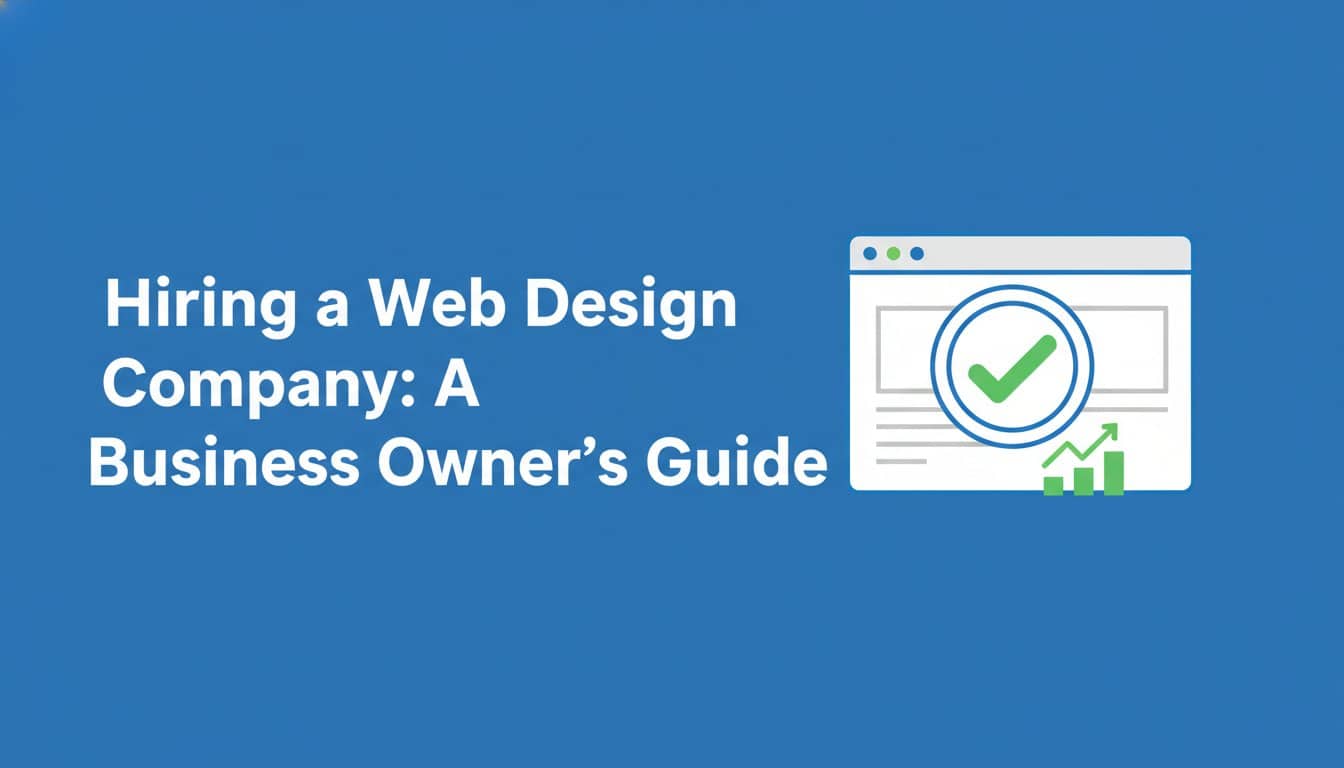
Hiring a Web Design Company: A Business Owner’s Guide
Your website should be your number one sales tool, not a source of anxiety. Yet, hiring the right web design company can feel like a minefield. You’re worried about wasting your budget on a site that looks pretty but doesn’t convert. You’re overwhelmed by technical jargon and unsure what questions to ask to get real results. This uncertainty costs you time, money, and most importantly, potential customers.
Let’s fix that. This guide eliminates the guesswork. We’ll give you a proven framework to confidently choose a partner who delivers measurable growth. You will learn how to set clear goals that drive revenue, ask the critical questions that reveal a company’s true capabilities, and understand the strategy behind a website that doesn’t just exist-it dominates. Get ready to turn your online presence into a predictable engine for leads and sales.
Table of Contents
Step 1: Define Your Goals Before You Search for a Web Design Company
Before you look at a single portfolio or schedule a consultation, the most critical step is to define what you want your website to achieve. A great website isn’t just a digital brochure; it’s a growth engine built to drive tangible business results. Starting with clear objectives-not just visual ideas-is the only way to build a site that delivers a real return on investment.
This initial planning makes it easier to find the right web design company because you’ll be able to communicate your needs with absolute clarity.
Identify Your Website’s Primary Job
Every page and feature on your site should serve a purpose. What is the number one job you’re hiring your website to do? This focus will guide every design and development decision. Your primary goal will likely be one of the following:
-
Generate qualified leads: To capture contact information from potential customers for your service-based business.
-
Sell products directly: To function as a full-featured e-commerce store that drives online revenue.
-
Build authority and trust: To serve as an information hub with expert content that positions you as a leader.
-
Streamline operations: To automate tasks like appointment bookings or provide resources through a secure client portal.
Know Your Target Audience
Your website isn’t for you-it’s for your customers. To build a site that converts, you must understand who you’re trying to reach, their biggest pain points, and what information they need to solve their problems. Understanding your audience is a foundational part of the web design process because it dictates everything from navigation and content to the calls-to-action that will resonate most effectively.
Set Measurable Key Performance Indicators (KPIs)
"A new website" is not a goal; it’s a project. A real goal is specific, measurable, and tied to a business outcome. By setting clear KPIs from the start, you and your chosen web design company will have a shared definition of success. Vague goals lead to vague results. Get specific.
-
Increase qualified contact form submissions by 20% within six months.
-
Decrease the bounce rate on key service pages by 15%.
-
Achieve page-one rankings for 5 key local search terms.
-
Grow online sales by 25% year-over-year.
Step 2: What to Look For – The Qualities of a Great Web Design Partner
Not all web design companies are created equal. A flashy portfolio is just the start. You’re not just buying a website; you’re investing in a growth engine for your business. The right partner understands that a website’s job is to generate revenue. This isn’t just about code and colors-it’s about strategy, marketing, and building a long-term asset that delivers measurable results.
A Strong Portfolio with Verifiable Results
Look beyond the homepage screenshots and demand proof of performance. A top-tier web design company will have case studies ready to go. Don’t just ask if they’ve worked in your industry; ask how they improved a similar business’s bottom line. When you review their work, check for:
-
Real Data: Ask for case studies showing measurable growth in traffic, leads, or online sales.
-
Performance: Test their sites. Are they fast? Do they work flawlessly on your phone?
-
Usability: Is it easy to find information and understand what the business does in under five seconds?
Expertise in SEO and Digital Marketing
A beautiful website is useless if no one can find it. Your partner must build search engine optimization (SEO) into the foundation of your site, not bolt it on as an afterthought. A site built for visibility from day one is designed to attract qualified traffic and dominate search rankings. Ask them directly about their process for keyword research, on-page SEO, and technical site structure. This is how you turn clicks into customers.
A Clearly Defined and Transparent Process
A professional agency runs on a proven system. They should be able to walk you through their entire process with confidence, from the initial discovery and strategy sessions to design, development, testing, and launch. A clear, documented process isn’t just about their internal workflow; it’s your insurance against missed deadlines, budget surprises, and a final product that doesn’t meet your goals. It keeps the project on track and holds everyone accountable.
Focus on Conversion and User Experience (UX)
Every element on your website should serve a purpose: to guide visitors toward taking a specific, valuable action. A great user experience (UX) builds trust and makes it easy for customers to do business with you. Look for clear calls-to-action (CTAs), intuitive navigation, and layouts that direct the user’s eye. The goal isn’t just to get visitors-it’s to convert them into paying customers.
Step 3: Key Questions to Ask Every Web Design Company
You’ve seen their portfolio. You like their style. Now it’s time to separate the true growth partners from the simple designers. Asking the right questions is how you vet a potential web design company and uncover their real value. Their answers will reveal everything about their process, expertise, and commitment to getting you results.
Don’t be afraid to dig into the details before signing a contract. This list will make you a more informed buyer and ensure you hire a team that can turn your vision into a revenue-generating asset.
Process and Strategy
A great website is built on a solid strategy, not just pretty pictures. The agency’s process should be transparent, collaborative, and focused entirely on your business objectives. Get clarity with these questions:
-
How will you ensure my new website achieves my business goals (e.g., more leads, higher sales)? Look for answers that involve strategy, conversion rate optimization, and tracking key performance indicators (KPIs).
-
Who will be my main point of contact? A dedicated project manager or single point of contact ensures communication is efficient and nothing gets lost in translation.
-
What is your process for content creation and migration? Find out if they offer copywriting services or if you need to provide it all. A clear plan for migrating existing content is essential.
-
How do you handle project feedback and revisions? A structured feedback process is a sign of an experienced and organized team.
Technology and SEO
The tech behind your website dictates its performance, security, and ability to rank on Google. Your website must be built on a solid foundation to support your growth. Ask about the engine that will power your site:
-
What content management system (CMS) do you recommend and why? They should justify their choice (e.g., WordPress, Shopify) based on your specific needs for scalability, ease of use, and functionality.
-
How do you ensure the website is built to be SEO-friendly? Expect to hear about clean code, schema markup, keyword strategy, and technical SEO best practices from day one.
-
Will the website be mobile-responsive and load quickly? These are non-negotiable. Slow, clunky sites lose customers and get penalized by search engines.
Post-Launch and Ownership
The project isn’t over when the site goes live. A professional web design company plans for a long-term partnership and empowers you for success. Make sure you understand the endgame:
-
Who owns the website and all its assets upon completion? You should have 100% ownership of your domain, website files, and all content. Period.
-
What kind of training will I receive to manage the site? They should offer training so you can handle basic updates and content management yourself.
-
What are your options for ongoing support and maintenance? Ask about their plans for security updates, backups, and technical support to keep your investment protected.
Tired of vague promises? It’s time to get answers that are directly tied to your growth. Ready to get clear answers? Schedule a strategy call with us.
Step 4: Understanding Web Design Costs and Proposals
Let’s talk numbers. Website pricing can vary dramatically, and that’s a good thing. It means the price should directly reflect the value and results you expect. The goal isn’t to find the cheapest option-it’s to find the best investment. A cheap website often costs you more in the long run through lost leads, poor performance, and the eventual need for a complete rebuild.
Think of a proposal not as a price tag, but as a strategic plan. It’s the blueprint for how a web design company will turn your digital presence into a revenue-generating asset. Focus on the potential return on investment (ROI), not just the initial cost.
Common Pricing Models Explained
Most agencies use one of three models. Project-Based pricing is the most common: a flat fee for a clearly defined scope and set of deliverables. You know exactly what you’re getting and what you’ll pay. Hourly Rates are better for projects with an undefined scope or for ongoing tweaks, while a Retainer is an ongoing monthly fee for continuous partnership, including updates, support, and marketing services.
What Factors Influence the Price?
The cost of your website is determined by the work required to meet your business goals. Key factors include:
-
Custom vs. Template: A unique, custom design built for your brand and customers will cost more than a pre-built template, but it delivers superior results.
-
Complexity & Features: A simple 5-page informational site is less complex than a 50-page e-commerce store with customer logins and payment processing.
-
Included Services: Will the project include professional copywriting, search engine optimization (SEO), and brand photography? These are critical for driving traffic and converting visitors.
-
Agency Experience: You’re paying for expertise. A proven agency with a track record of delivering results commands a higher price than a freelancer just starting out.
How to Evaluate a Web Design Proposal
A great proposal is more than a list of features. It’s a roadmap to success. When reviewing a proposal, ask yourself:
-
Is the scope crystal clear? It should detail all deliverables, from strategy sessions to final site launch.
-
Is there a project timeline? Look for key milestones and a realistic launch date.
-
Does it focus on value? The proposal should connect every feature back to your business goals, like generating leads or increasing sales.
Beware of proposals that are just a price and a list of pages. A true partner will outline a strategy for your growth. Ready to see what a results-driven proposal looks like? Let’s talk strategy.
The City Web Company Difference: Websites That Get Results
Any agency can build a website that looks good. But a pretty design is worthless if it doesn’t attract customers and generate revenue. That’s where we are different. We don’t just build websites; we build strategic marketing platforms designed to grow your business. Our entire process is reverse-engineered from your goals. We start by understanding the results you need, then build the digital engine to deliver them.
As a different kind of web design company, we are obsessed with your ROI. We specialize in helping local service businesses move from being invisible online to dominating their market. We know what it takes to get you found, trusted, and chosen over the competition.
SEO-Driven WordPress Design
A high-performance website needs a powerful foundation. We build exclusively on WordPress, the most flexible and SEO-friendly platform available. But we don’t stop there. Every site we create is a finely-tuned machine for local search visibility.
-
Built for SEO: We leverage the full power of WordPress to create a site that search engines love.
-
Local Focus: Our strategy is designed to put you on the map, attracting customers right in your service area.
-
Technical Excellence: Clean code, fast load times, and mobile-first design are baked in from day one for maximum ranking potential.
A Partnership Focused on Growth
For most agencies, launch day is the finish line. For us, it’s the starting block. A great website is a powerful tool, but it needs a strategy to drive continuous traffic and convert clicks into clients. That’s why we offer ongoing SEO and digital marketing services to ensure your investment keeps paying dividends.
We don’t want to be just your web design company; we aim to be your long-term partner in growth. We handle the digital marketing so you can focus on running your business. Ready to see what a results-driven website can do? Get a custom plan to grow your business online.
Your Next Step: Choose a Partner, Not Just a Provider
This guide has shown that choosing a web design partner goes far beyond aesthetics. The process is about clear strategy: defining your business goals, identifying a team that values measurable results, and asking questions that reveal their plan for your growth. Finding the right web design company isn’t just a technical decision; it’s a critical business move that can turn your website from a simple online brochure into your most powerful sales and lead generation tool.
At City Web Company, we specialize in exactly that. We build websites that work as hard as you do. With a proven track record helping local service businesses dominate their markets, our expertise in SEO and conversion-focused design is built into every project. We operate with a completely transparent process from start to finish, ensuring you know exactly how we’re turning your investment into tangible results.
Get a Free, No-Obligation Plan to Turn Your Website into a Lead-Generating Machine.
Stop waiting for customers to find you. It’s time to put your business on the map.
Frequently Asked Questions
How long does it take to build a new website?
A standard business website typically takes 6-8 weeks from our initial strategy session to launch. This timeline ensures we handle every critical step: strategy, design, development, and content integration. More complex projects with e-commerce or custom features can take 10-12 weeks. Our proven process is designed to get your business online and converting clicks into clients as efficiently as possible, without cutting corners on quality and results.
Will I be able to update the website myself after it’s launched?
Absolutely. We build every website on a powerful, user-friendly Content Management System (CMS). This puts you in the driver’s seat. You’ll be able to easily update text, swap out images, and add new blog posts without any technical skills. We provide full training upon launch to ensure you’re confident and ready to manage your content. Your website should be a growth tool, not a technical headache.
What is a CMS, and which one is right for my business?
A CMS, or Content Management System, is the engine that powers your website, allowing you to manage content without code. For most businesses aiming for growth and flexibility, we build on WordPress. It’s the industry leader because it’s powerful, scalable, and SEO-friendly right out of the box. This gives you a proven platform to get found by customers and dominate your market. We handle the tech; you get the results.
Do I need to provide the text and images for the website?
While you can provide all your own content, we find that professional, SEO-driven copy and high-quality images drive the best results. Our team includes expert copywriters who craft content designed to convert visitors into leads. We partner with you to create a powerful message that gets your business chosen over the competition. Let us help you build a website that doesn’t just look great-it delivers tangible business growth.
What’s the difference between a custom website and a template?
A template is a pre-built layout that gets a simple job done. A custom website is a high-performance business tool built specifically to achieve your goals. It’s designed from the ground up to reflect your unique brand, guide users to action, and convert leads effectively. While templates can be faster, a custom site built by a professional web design company gives you a competitive edge and a platform designed for long-term growth and revenue.
What ongoing costs are there after the website is launched?
After your initial investment, there are two essential ongoing costs: domain name registration (yearly) and website hosting (monthly or yearly). Beyond that, we offer website care plans to handle all security, updates, and backups-keeping your asset protected and performing at its peak. This proactive management ensures your site continues to be a reliable engine for generating leads and driving growth for your business, worry-free.
These articles were popular with other readers too: